
In a sweeping structural pivot announced Friday, February 27, 2026, NASA Administrator Jared Isaacman confirmed a major reorganization of the Artemis lunar campaign. The agency will cancel the planned Block 1B upgrade of the Space Launch System (SLS) and fundamentally redefine the Artemis III mission.
Previously intended as the first crewed lunar landing since 1972, Artemis III will now serve as a low Earth orbit (LEO) docking and systems validation flight in mid-2027, clearing the path for two potential lunar surface landings in 2028.
Standardization Over Complexity
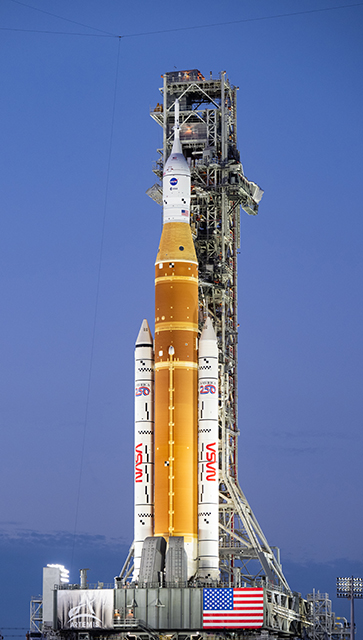
The most significant technical shift is the cancellation of the Exploration Upper Stage (EUS) and the associated SLS Block 1B configuration. NASA will instead “standardize” the SLS around the existing Block 1 architecture used for Artemis I and II. This decision aims to eliminate the multi-year development delays and massive infrastructure costs associated with the larger Block 1B, including the roughly $1 billion mobile launcher platform currently under construction.
By freezing the vehicle design, Isaacman aims to increase the launch cadence to a target of one mission every 10 months. “The current approach of launching SLS once every three years while simultaneously introducing major vehicle upgrades is not a path to success,” Isaacman stated during a press conference at Kennedy Space Center. “We need more operational muscle memory and extreme focus on the mission.”
Artemis III: An “Apollo 9” Moment for the 21st Century
Under the revised roadmap, the Artemis III mission (2027) will no longer attempt a lunar landing. Instead, an Orion spacecraft will launch with a four-person crew to rendezvous and dock in Earth orbit with either SpaceX’s Starship Human Landing System (HLS), Blue Origin’s Blue Moon lander, or potentially both.
This mission architecture is intended to validate critical technologies including:
- Docking and Proximity Operations: Testing the interfaces between Orion and the commercial landers.
- Integrated Life Support: Verifying air and water crossover systems between the vehicles.
- Propulsion and Navigation: Shakedown of the landers’ maneuvering capabilities in a “safe” orbital environment.
- Spacesuit Validation: Initial microgravity tests of the new Axiom Space Extravehicular Mobility Units (AxEMU).
Accelerating the Lunar Landing Cadence
By shifting the lunar landing goal to Artemis IV in 2028, NASA believes it can execute a more sustainable long-term campaign. The restructuring sets a goal for two crewed landings in 2028—Artemis IV and Artemis V—utilizing the flight-proven hardware from the preceding year’s test. This “cargo-and-crew” acceleration relies heavily on the progress of SpaceX and Blue Origin, both of which have reportedly agreed to the revised timeline.
Artemis II Status and Next Steps
The announcement follows the rollback of the Artemis II rocket to the Vehicle Assembly Building (VAB) on February 25, 2026. Engineers are currently troubleshooting a helium flow issue in the Interim Cryogenic Propulsion Stage (ICPS) discovered during final pad processing.
NASA is currently targeting April 1, 2026, for the launch of Artemis II, which will carry a crew of four around the Moon and back. The agency plans to release a detailed “Artemis Architecture Definition Document” update in late March to provide industry partners with specific technical requirements for the standardized SLS and the redefined Artemis III mission profiles.