
RIGA, Latvia — Latvian startup Deep Space Energy (DSE) announced on Saturday, February 21, 2026, that it has raised nearly 1 million Euro in combined private investment and public contracts. The funding is earmarked to accelerate the development of a novel radioisotopic generator designed to power satellites in strategic orbits and enable long-duration survival on the lunar surface.
The 930,000 Euro total includes a 350,000 Euro pre-seed round led by Outlast Fund and Linas Sargautis, a co-founder of NanoAvionics. An additional 580,000 Euro was secured through public grants and contracts from the European Space Agency (ESA), NATO’s Defense Innovation Accelerator for the North Atlantic (DIANA), and the Latvian government. DSE is the first Latvian company ever selected for the NATO DIANA program.
Advanced Radioisotope Technology and Specifications
The company is developing a Radioisotope Thermo-Acoustic Linear Induction Generator (RTALIG) that converts heat from the natural decay of radioisotopes into electricity. Unlike traditional Radioisotope Thermoelectric Generators (RTGs) which use solid-state thermocouples, DSE’s system utilizes a Stirling engine and dynamic converter to achieve significantly higher conversion efficiency.
Technical performance targets for the current development phase include:
- Fuel Efficiency: The system requires approximately 2kg of Americium-241 to generate 50W of power, compared to the 10kg required by legacy RTG systems for the same output.
- Operational Efficiency: The RTALIG design targets 25% efficiency, roughly five times the efficiency of traditional thermoelectric systems.
- Reliability: The generator features a single moving piston design to minimize mechanical wear during multi-year missions.
Addressing the 14-Day Lunar Night
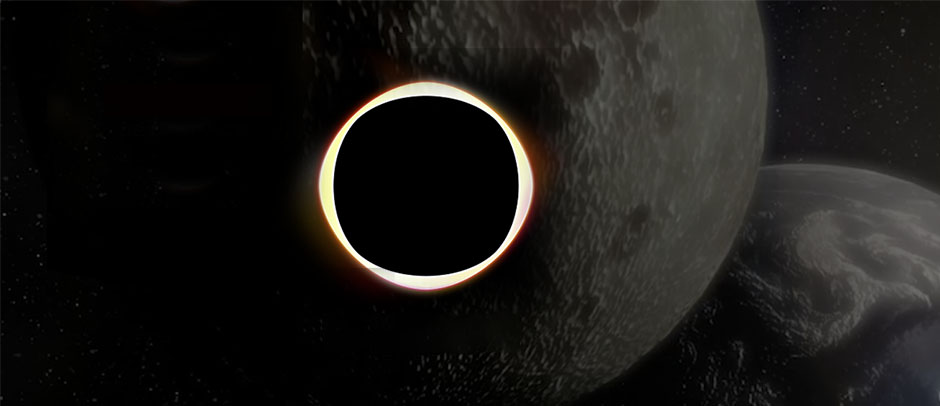
In the long term, DSE is positioning its technology to support the emerging lunar economy, including NASA and ESA’s Artemis and Argonaut programs. A primary challenge for lunar exploration is the 14-day lunar night, where temperatures drop below minus 150 degrees Celsius, rendering solar-powered rovers inoperable.
By providing a heat and power source independent of the sun, DSE’s generators would allow rovers to survive multiple day-night cycles, potentially extending mission lifetimes from weeks to years. CEO Mihails Ščepanskis noted that reducing the fuel requirement is a critical factor, as global production of Americium-241 remains highly limited.
Executive Perspective
“Our technology, which has already been validated in the laboratory, has several applications across the defence and space sectors,” said Mihails Ščepanskis, founder and CEO of Deep Space Energy. “First, we’re developing an auxiliary energy source to enhance the resilience of strategic satellites. It provides the redundancy of satellite power systems by supplying backup power that does not depend on solar energy, making it crucial for high-value military reconnaissance assets.”
Strategic Roadmap to 2035
Deep Space Energy plans to use the new capital to transition its technology from laboratory validation to industrial prototyping. The company has established a strategic roadmap focused on both orbital and lunar applications:
- 2026-2027: Technical maturation and development of a secure supply chain for raw materials.
- 2029: Planned demonstration flight, likely utilizing an electric emulator to earn flight heritage.
- Early 2030s: Deployment of operational units as auxiliary power for high-value satellites in MEO, GEO, and HEO.
- 2035 Horizon: Scaling production to support a fleet of small rovers and permanent infrastructure on the lunar surface.