
UPPER MARLBORO, Md. — In a technical analysis published on Monday, February 16, 2026, space policy analyst Robert Oler detailed the critical engineering trade-offs preventing the industry-wide adoption of fully reusable launch vehicles. While first-stage recovery is now a routine commercial standard—largely solidified by SpaceX’s Falcon 9—recovering the upper stage remains the “holy grail” of launch economics, fraught with mass-penalties and thermal complexities.
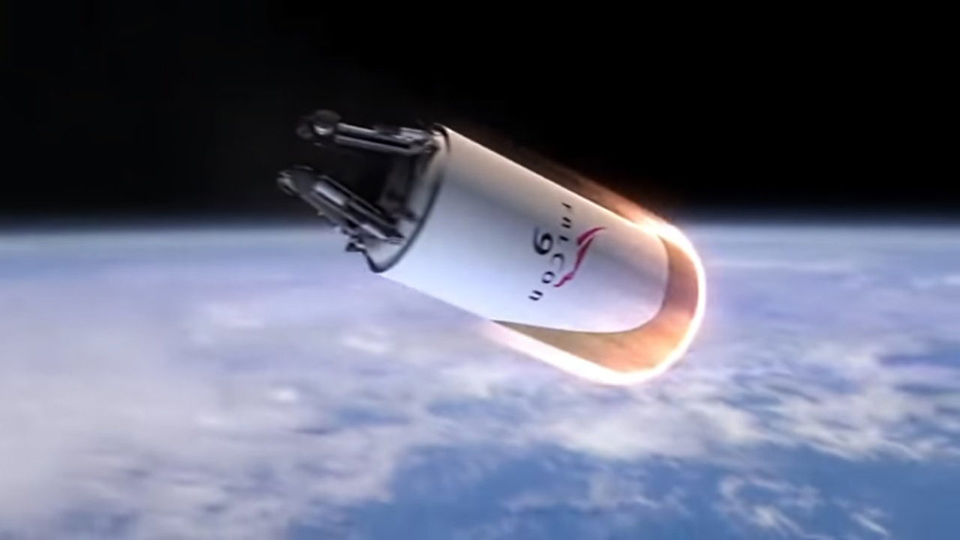
The analysis, titled “Seattle’s Lessons for Rocket Reusability,” arrives as the industry watches the high-stakes development of Starship, the first vehicle designed for total reuse, alongside competing “partial reuse” strategies from Blue Origin and United Launch Alliance (ULA).
The “Drop Tank” vs. Full Recovery Debate
Oler posits that the industry is currently split between two philosophical camps: “Airplane-like reflight” and “Modular recovery.”
- The Starship Approach (Full Recovery): SpaceX is pursuing a configuration where the entire upper stage (the Starship spacecraft) returns to Earth using a heavy Thermal Protection System (TPS) and aerodynamic surfaces. Oler notes this creates an “inefficient mix” of vacuum and sea-level engines, where the vehicle must carry the weight of its landing fuel and heat shield through the entire ascent, significantly reducing net payload capacity.
- The Modular Approach (Drop Tank Strategy): Oler advocates for treating the upper stage like an airplane with drop tanks. In this model, only the high-value components—the engines and avionics—are recovered. The massive, relatively inexpensive fuel and oxidizer tanks are disposed of in the atmosphere.
- The Entry Shield Alternative: The analysis highlights the potential of Inflatable Decelerator technology. By establishes the entire stage on a reentry trajectory and then disposing of the tankage, engines can be protected by an expandable heat shield and recovered via parachute.
Comparative Industry Dynamics: Blue Origin and ULA
The report contrasts current commercial strategies as providers move toward the “Heavy Lift Transition.”
| Provider | Vehicle | Upper Stage Strategy | Status (Feb 2026) |
| SpaceX | Starship | Full Recovery / Vertical Landing | Active flight testing; Block 2 upper stage iterations ongoing. |
| Blue Origin | New Glenn | Currently Expendable (Modular Potential) | Evaluating “outside-the-box” LEO-to-destination transport. |
| ULA | Vulcan | Expendable (SMART Recovery) | SMART (Sensible Modular Autonomous Return Technology) focused on engine-only recovery. |
Oler critiques ULA’s initial decision to make Vulcan totally expendable, suggesting the choice “doomed it to mediocrity” compared to more visionary reuse architectures. Conversely, he notes that Blue Origin appears to be picking up on NASA’s Inflatable Decelerator research to develop large entry shields.
Technical Challenges: The Thermal Protection Gap
The primary barrier to upper stage reuse is the velocity of reentry. While a first stage separates at roughly Mach 6–8, an upper stage must survive reentry from orbital velocities (approx. Mach 25). This requires:
- Exotic Materials: Transitioning from aluminum to stainless steel or high-temp composites to handle heat soak.
- Payload Penalties: Every kilogram of heat shielding or landing legs subtracted from the potential satellite mass.
- Refurbishment Costs: Ensuring that the engines (such as the Raptor or BE-4) can withstand the thermal stress of both ascent and a high-velocity descent without extensive, cost-prohibitive overhauls.
Strategic Outlook: Infrastructure over Architecture
Oler concludes that the next 20 years of spaceflight will be defined by the ability to replenish specialized orbital machines rather than replacing them entirely. He suggests that reusable upper stages could serve as the “lumber mills” of the space economy—essential infrastructure that enables broader westward expansion into the solar system.
However, the “Airplane-like” vision pursued by SpaceX remains high-risk. Recent grounding of the Falcon 9 fleet on February 2, 2026, following an upper-stage deorbit failure, underscores the complexity of managing these systems even in their current “expendable” configurations.