
Addressing the critical challenge of increasing orbital congestion, SpaceX has officially unveiled “Stargaze,” a novel Space Situational Awareness (SSA) system designed to enhance the safety of the low Earth orbit (LEO) environment.
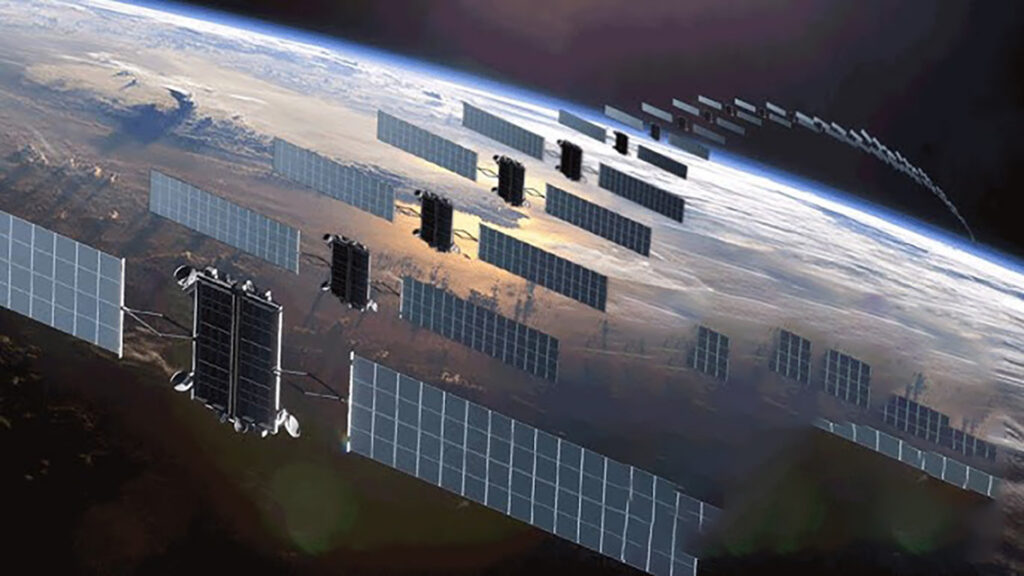
Stargaze utilizes the existing hardware on the Starlink constellation to track thousands of objects in near real-time, offering a significant upgrade over traditional ground-based radar systems.
A New Approach to Orbital Monitoring
Traditional Space Situational Awareness (SSA) relies heavily on ground-based sensors that observe satellites only a few times per day, often leading to large uncertainties in orbital predictions. By contrast, Stargaze leverages the nearly 30,000 star trackers distributed across the Starlink fleet. These sensors, originally designed for satellite orientation, now perform continuous observations of nearby objects, detecting approximately 30 million transits daily. This creates a dense, constantly refreshed map of LEO activity, allowing for the identification of potential collisions within minutes rather than hours.
Technical Performance and Collision Avoidance
The Stargaze platform autonomously aggregates observations to generate precise orbit estimates and predictions. A key feature is the generation of Conjunction Data Messages (CDMs) at a frequency previously unattainable in the industry.
- Detection Frequency: 30 million transits per day across the fleet.
- Latency: Conjunction screening results delivered within minutes.
- Maneuver Detection: The system can identify uncoordinated maneuvers by third-party satellites—a capability demonstrated in late 2025 when Stargaze allowed a Starlink satellite to avoid a collision with an uncooperative spacecraft with only five hours’ notice.
- Data Sharing: SpaceX is offering these screening results free of charge to any operator that submits its own ephemeris (trajectory) data to the platform.
Rationale: Mitigating the Risk of Orbital Debris
The launch of Stargaze comes as LEO becomes increasingly crowded with active satellites, spent rocket stages, and orbital debris. Irresponsible practices, such as anti-satellite tests or failing to share trajectory predictions, have heightened the risk of the Kessler Syndrome—a chain reaction of collisions. By providing a transparent, low-latency data layer, SpaceX aims to motivate other operators toward collaborative flight safety and more rigorous de-confliction.