
On February 12, 2026, the European Union Agency for the Space Programme (EUSPA) awarded a framework contract to Thales Alenia Space to oversee the design, development, and deployment of the European Global Navigation Satellite System (EGNSS) Service Demonstrator (ESD).
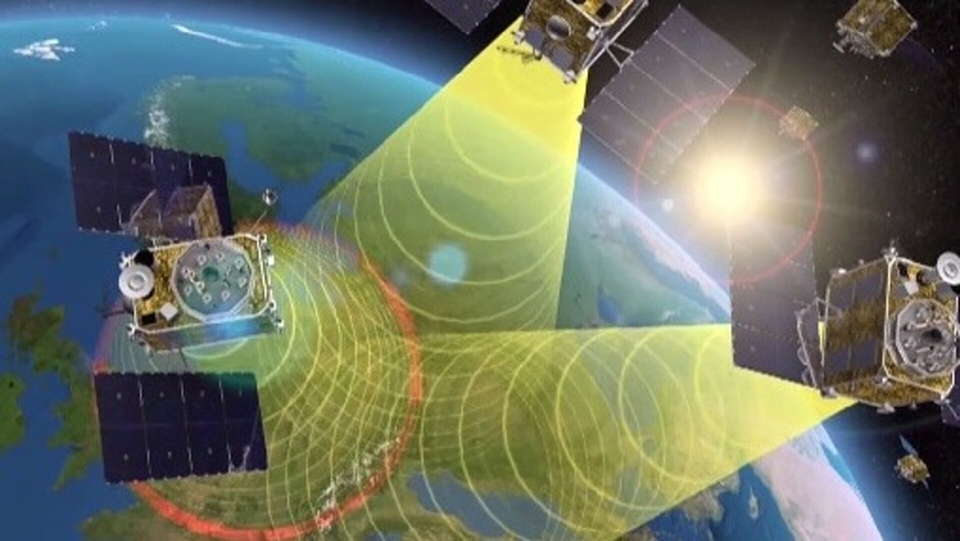
The initiative is designed to accelerate the evolution of European positioning services by providing a dedicated environment for large-scale, end-to-end testing.
Evolution of European PNT Infrastructure
The ESD acts as a centralized platform to validate future Galileo and EGNOS augmentation services. By integrating both geostationary satellite links and internet-based dissemination, the system allows EUSPA to simulate and refine service delivery before full-scale operational deployment. This contract follows a series of infrastructure upgrades aimed at maintaining European autonomy in Positioning, Navigation, and Timing (PNT) data.
Technical Capabilities and Dissemination
The demonstrator will focus on the “Service Provider” segment of the EGNSS architecture. Key technical requirements include:
- Dual-Channel Dissemination: Simultaneous testing of Signal-in-Space (SiS) via GEO satellites and terrestrial data streaming.
- End-to-End Validation: Monitoring the full data chain from the uplink station to the end-user receiver.
- Standardization Support: Providing the empirical data necessary to establish new international PNT standards for critical markets such as autonomous transport and precision agriculture.
Executive Perspective
“The EGNSS Service Demonstrator project anchors Thales Alenia Space at the forefront of the new generation of GNSS-based applications and services, delivering enhanced performance and resilience for millions of European and global users,” a Thales Alenia Space representative stated during the project kick-off.
Validating Future Requirements
As the backbone for pre-operational validation, the ESD is tasked with anticipating user needs in high-growth sectors. The platform will be used to stress-test the resilience of signals against interference and to verify the accuracy of high-integrity services required for safety-of-life applications. This framework contract ensures that as the Galileo constellation evolves toward its second generation, the ground-based service architecture remains capable of distributing new, complex data message formats.