
CARLSBAD, California – A major new report from Viasat, Inc. (NASDAQ: VSAT) reveals a rapidly closing window for industrial IoT (Internet of Things) transformation, as 91% of decision-makers now plan to adopt Direct-to-Device (D2D) technology within the next 18 months.
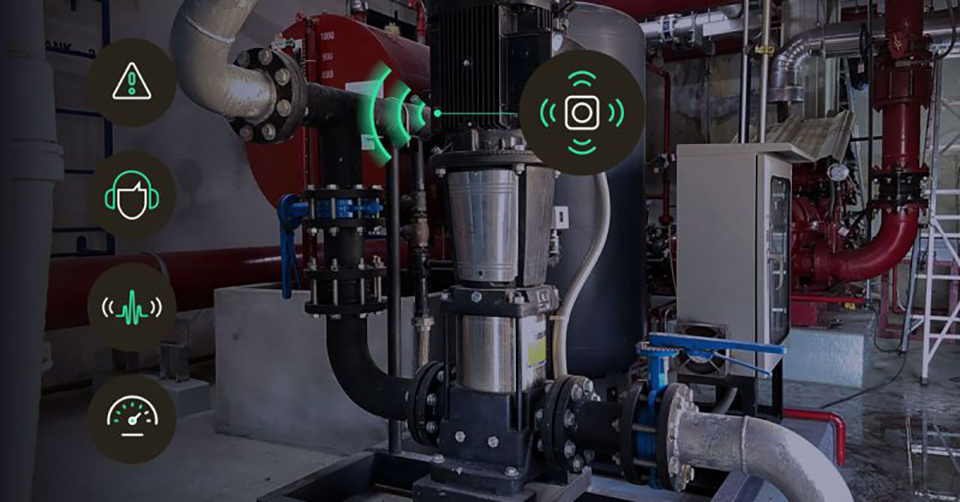
Released on Feb. 10, 2026, the study—The Great Connectivity Convergence: NTN in Industrial IoT—highlights a fundamental shift in how global industries perceive satellite connectivity: no longer as a “last resort” for remote areas, but as a critical layer of operational resilience.
The survey, conducted by Vanson Bourne, sampled 600 IoT leaders across the agriculture, energy, mining, utilities, and logistics sectors.
From Proprietary Terminals to 3GPP Standards
The primary driver of this convergence is NB-NTN (Narrowband Non-Terrestrial Network), a capability introduced in 3GPP Release 17. Previously, satellite-enabled IoT required specialized, expensive VSAT terminals or proprietary hardware. Under the new standard, standard chipsets can switch between terrestrial cellular and satellite networks seamlessly.
This shift effectively democratizes satellite access, allowing enterprises to scale IoT portfolios without the heavy capital expenditure (CAPEX) associated with traditional satellite ground equipment.
Industry Adoption Metrics: High-Fidelity Growth
The report identifies a clear performance gap between “hybrid” users—those blending satellite and cellular—and terrestrial-only organizations.
| Sector | Key D2D Use Case | Planned Adoption (18 mo) |
| Mining | Automated haulage vehicles & remote safety | 91% |
| Utilities | Water infrastructure & smart grid monitoring | 91% |
| Transport | Vehicular tracking & route optimization | 91% |
| Energy | Remote wellhead & pipeline monitoring | 61%* |
| Agriculture | Crop storage & soil sensor monitoring | 91% |
*Note: Energy sector adoption lags slightly (61% within 12 months) due to stringent site safety protocols for hardware swaps.
Statistical Breakdown
- Growth Velocity: 78% of organizations reported increased IoT progress over the past 12 months.
- The “Hybrid Advantage”: 86% of hybrid connectivity users reported progress gains, compared to only 70% for terrestrial-only users.
- Spending Intent: 93% of respondents plan to increase IoT budgets in 2026, with an average increase of 27%.
- Near-Term Adoption: 69% plan to adopt D2D within the next year, while 32% of current terrestrial users intend to move within 6 months.
Leadership Perspective
“The excitement makes sense because we know new devices can lower the barrier to entry for organizations by reducing the cost, complexity, and physical size of IoT terminals,” stated Andy Kessler, Vice President of Enterprise at Viasat. “Organizations are rightly excited by the potential for standards-based D2D and are planning to deploy new technology quickly, and at scale.”
Barriers to Implementation and 2027 Outlook
Despite the enthusiasm, significant hurdles remain. According to the data, 47% of terrestrial-only users report difficulty linking satellite feeds into existing data platforms. Furthermore, 88% of respondents noted that senior leadership still requires “extensive convincing” to approve the shift to D2D, primarily due to concerns over security and integration.
However, the outlook remains aggressively positive. Approximately 89% of organizations indicated they would consider replacing their current, siloed IoT connectivity with unified D2D solutions within the next 2-3 years. This suggests that by 2027, the “industrial blind spot” in global supply chains—where assets vanish once they leave cellular range—could be effectively eliminated.