
By Abbey White, Staff Writer, SatNews
Dispatch from SmallSat Symposium. Coverage and analysis from across the conference, tracking the forces shaping the next phase of the SmallSat market.
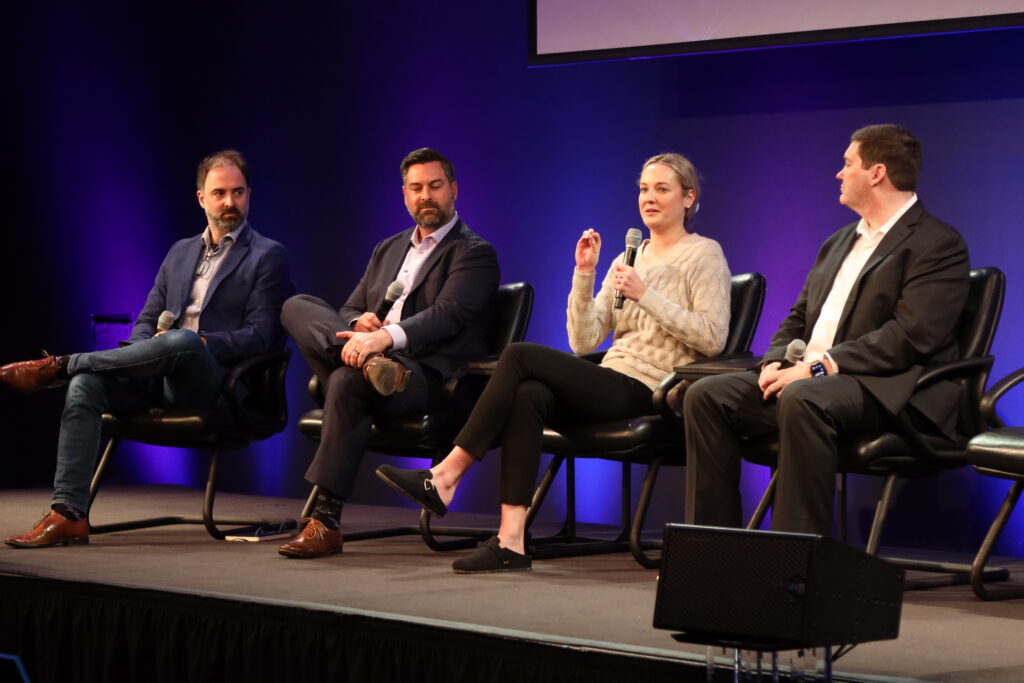
MOUNTAIN VIEW. The familiar pleasantries of the commercial space industry are evaporating. For years, the SmallSat Symposium acted as a showcase for cheaper data relays and internet-from-the-sky optimism. But inside the Grand Hall today, the mask slipped during the session on Building the Physical Layer of Autonomy. The industry isn’t just building smarter cameras but constructing the nervous system for orbital combat.
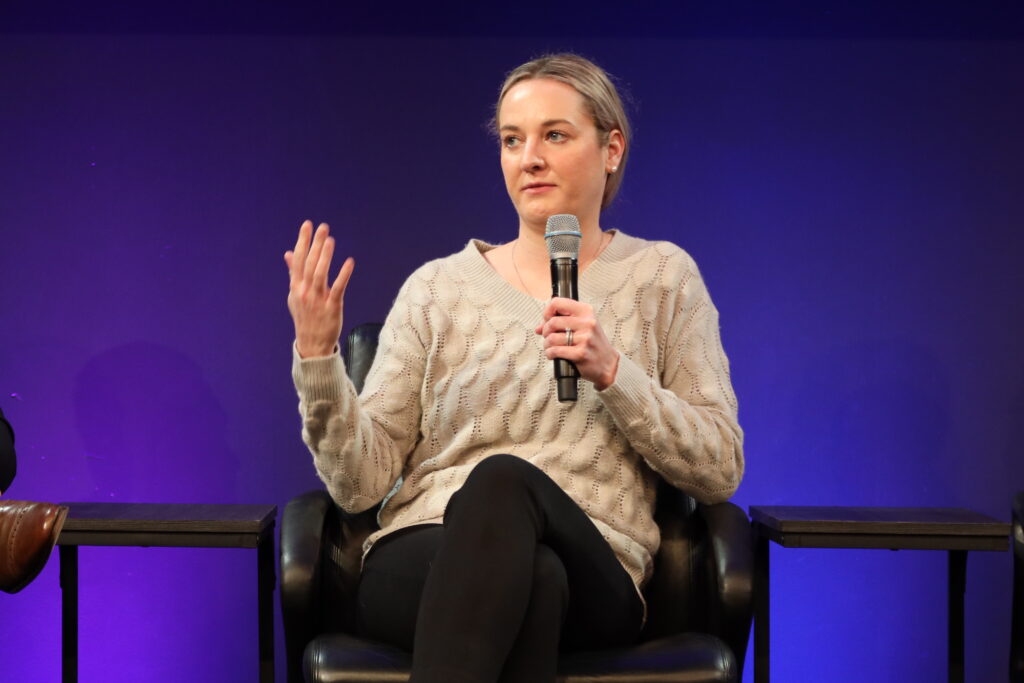
The panel’s premise appeared technical: how to install high-performance computing and agility into small satellites. Courtney Sayles, Chief Product Officer at Scout Space, wasted no time cutting to the geopolitical chase.
“It is pretty widely known that the next war is going to be fought in space,” Sayles told the quieted room. “And to be able to do that and both be on the offense and the defense, you need to apply autonomy across the board.”
This is the new reality facing Mountain View. The lag time between a ground operator seeing a threat and sending a command, known as the speed-of-light delay, constitutes a fatal vulnerability. If an adversary’s satellite moves, you cannot wait for permission to react appropriately.
The Speed of the OODA Loop
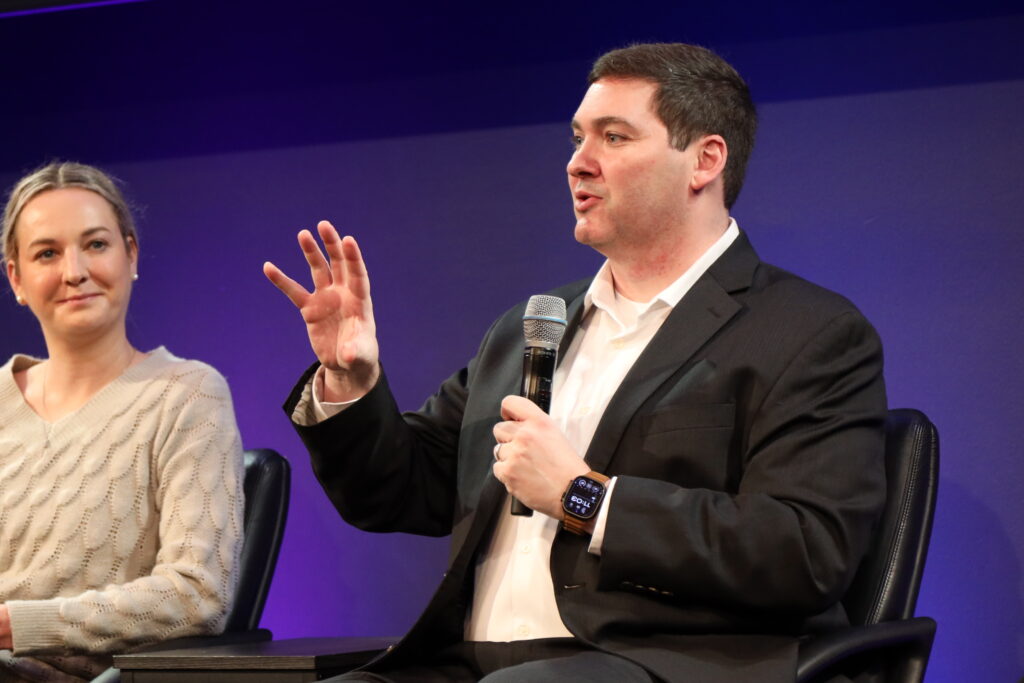
Ryan McDevitt, CTO of Benchmark Space Systems, framed the engineering challenge not as a matter of convenience, but of survival. His company builds the propulsion systems that make spacecraft move, but, he argued, engines are useless if the brain is too slow.
“Fundamentally it always comes down to when you need to be able to react faster than the communication loop to the ground,” McDevitt said.
He described a future of proliferated constellations capable of intricate orbital approaches known as rendezvous and proximity operations. This innocuous phrasing covers a wide spectrum of maneuvers, from harmless docking to aggressive inspection and interception. In this environment, the satellite must understand its own physical state and the intent of the object next to it without phoning home.
McDevitt also highlighted the terrifying stakes of automating propulsion. Unlike software, which engineers can patch, a thruster firing in the wrong direction is permanent.
“There are no take-backs,” McDevitt warned. “If you do a bad maneuver, you put yourself in a weird spot.”
Hardware Overkill as a Strategy
To mitigate that risk, the industry is throwing massive computing power at the problem. Patrick Butler, EVP at Sidus Space, revealed his company is already flying hardware that would have been unthinkable in orbit just a few years ago. Sidus has rapidly iterated from Google Tensor chips to NVIDIA’s Jetson NX, and now are preparing to launch systems with the NVIDIA AGX, capable of 248 trillion operations per second. To put that figure in context, Sidus is essentially cramming a modern AI server cluster into a box the size of a toaster.
Such capacity is excessive for many current missions, Butler admitted, but the surplus is intentional as it provides headroom for future, unwritten algorithms to handle complex tasks like autonomous docking and refueling without needing new hardware.
“The time is now,” Butler said. “We have these components flying in space.”
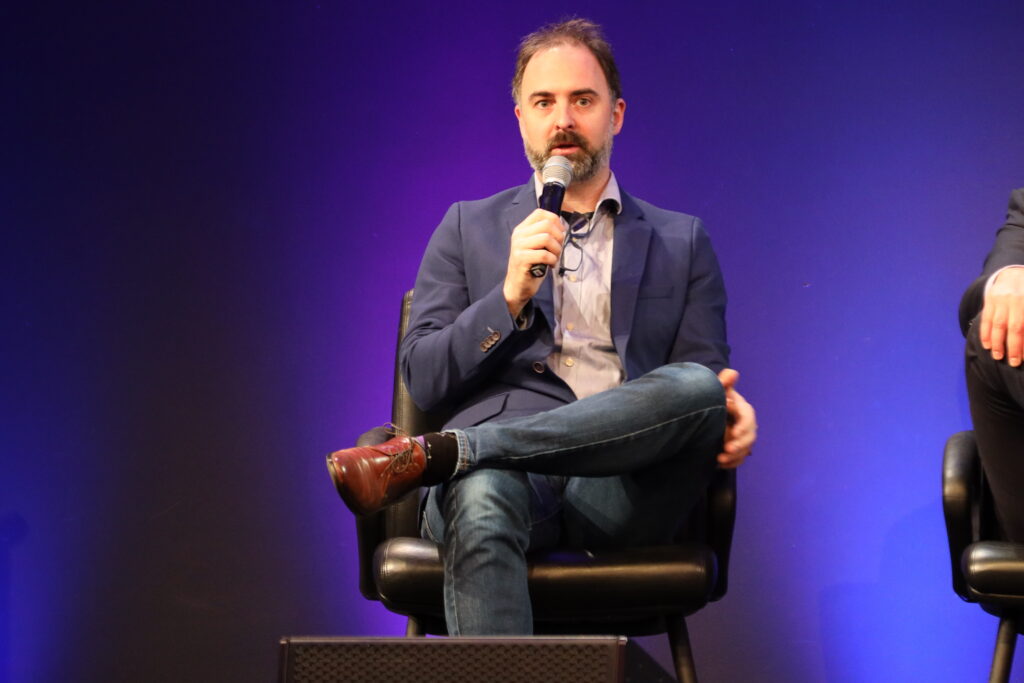
Julien Tallineau, CEO of VEOWARE SPACE, added the final piece of the physical puzzle: agility. While McDevitt provides the thrust and Butler provides the brain, Tallineau provides the torque to snap the satellite’s sensors toward a target instantly.
“He translates and we rotate,” Tallineau joked, gesturing to McDevitt. But his point was serious. To track a fast-moving object in Low Earth Orbit, a satellite must turn aggressively and stabilize instantly. Such a maneuver requires massive torque, not the slow drift of traditional reaction wheels.
The Business of War
Despite the clear technical path, the business model for this militarized autonomy remains murky. The panelists described a tension between what they want to sell—primarily subscriptions and software licenses—and what defense customers want to buy.
Tallineau vented his frustration with customers who refuse to pay recurring fees for the autonomous software that makes their satellites agile.
“I want you to buy it every time for every single satellite,” Tallineau said. “And the customer says, ‘Yeah, but that’s the same software. So why would I need to pay for . . . ? Okay, let’s forget it.'”
His solution is to hide the autonomy inside the hardware price by selling the physical box rather than the code.
Courtney Sayles echoed this disconnect, noting that while the technology for rapid-response missions is ready, government buyers are still scrambling to figure out procurement.
“Every customer I talk to has a different idea of how they want to get this data,” Sayles said. “They haven’t standardized how they want to receive it.”
The Final Dance
Moderator Steven Kaufman tried to keep the mood light by joking that the combination of Veoware’s turning and Benchmark’s moving resembled a satellite dance class.
But the laughter in the room was uneasy. The capabilities described on stage, specifically autonomous detection of rival assets, independent decision-making, and high-thrust maneuvering, are the prerequisites for a kinetic conflict in orbit.
As Sayles bluntly put it, we need to “understand quickly when an adversary is trying to move into an orbit near you, to do a flyby, to do something worse.”
In Mountain View today, the tech industry proved it can build the machine. Now, the world has to decide what happens when that machine decides to pull a trigger.