
DENVER, Colorado – In the wake of the sudden departure of long-time President and CEO Tory Bruno, United Launch Alliance (ULA) is moving to stabilize its flight manifest and rebuild launch cadence as it enters a pivotal 2026 operational phase.
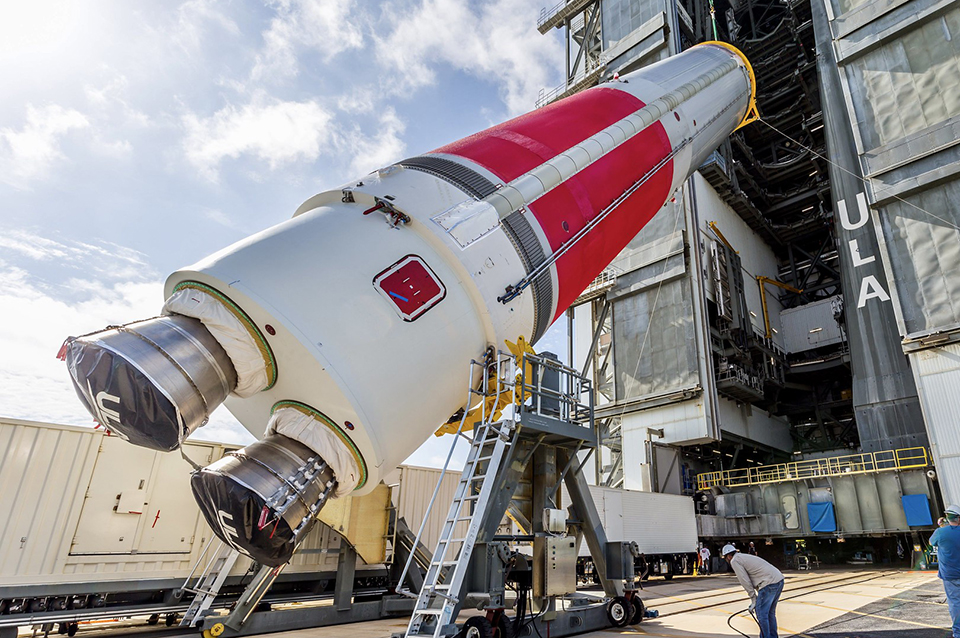
The company, now under the interim leadership of John Elbon, is shifting focus from the developmental hurdles of the Vulcan Centaur program to a high-rate production model designed to meet mounting backlogs for both the U.S. Space Force and Amazon’s Amazon Leo (formerly Project Kuiper).
The leadership change, announced on Dec. 22, 2025, saw Bruno exit the joint venture after nearly 12 years. Elbon, the former Chief Operating Officer, has delayed his planned retirement to shepherd the company through the first quarter of 2026, supported by newly appointed COO Mark Peller.
Defense Priorities and the Vulcan Ramp-Up
ULA is currently preparing for its first national security mission of the year, USSF-87, scheduled to lift off on Feb. 12, 2026, from Cape Canaveral Space Force Station. The mission will deploy the seventh and eighth satellites of the Geosynchronous Space Situational Awareness Program (GSSAP). This launch follows the USSF-106 mission in August 2025, which served as the operational debut for Vulcan.
To address the backlog, ULA is operationalizing infrastructure upgrades at its primary launch sites. These include:
- Cape Canaveral: Activation of a second Vertical Integration Facility (VIF) and a dedicated Mobile Launch Platform to support dual processing.
- Vandenberg SFS: Completion of Space Launch Complex-3 (SLC-3) modifications to accommodate Vulcan’s larger diameter and liquid methane fueling requirements.
Strategic Rationale and Commercial Pressure
The urgency to increase cadence is driven by the “Amazon Leo” constellation. Amazon recently requested a 24-month extension from the FCC to meet its deployment milestones, citing a global shortage of heavy-lift capacity. While ULA successfully executed several Atlas V missions for Amazon in late 2025, the bulk of the 38-launch contract rests on Vulcan’s ability to reach a twice-monthly “tempo” by the end of 2026.
“My work here is now complete and I will be cheering ULA on,” stated former CEO Tory Bruno in a public departure message, signaling that the vehicle’s transition from the laboratory to the assembly line is the defining challenge for his successors.
Timeline for 2026 Operations
Following the USSF-87 mission on Feb. 12, ULA expects to initiate a “burst” of activity. The 2026 manifest includes a mix of the final 13 Atlas V rockets—most of which are already fabricated and in storage—and a scaling number of Vulcan cores. The company’s stated goal remains a target of 20 to 25 total launches for the 2026 calendar year, a significant leap from the six flights recorded in 2025.