
In a recent investment thesis highlighted on February 3, 2026, Sequoia Capital partner Shaun Maguire identified 2028 as the pivotal year for SpaceX’s Direct-to-Cell (D2C) technology.
Maguire, whose firm has invested approximately $1.2 billion in SpaceX since 2019, described the company’s impending market shift as the most disruptive phase in its evolution, potentially eclipsing the revenue of its existing consumer Starlink business within five years.
The 2028 Inflection Point and Market Disruption
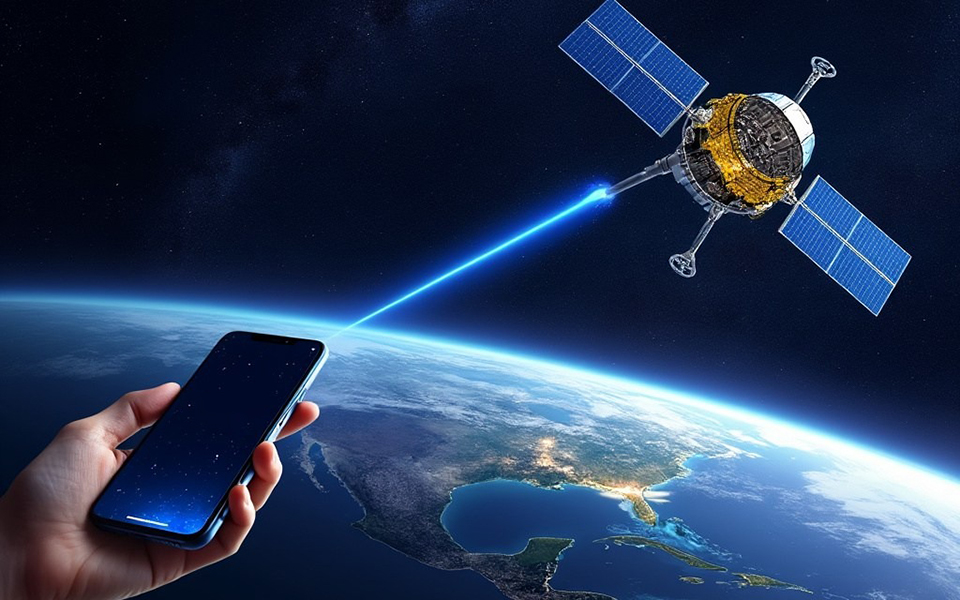
Sequoia’s projection centers on 2028 as the year when technical optimization and satellite density reach a “critical mass.” By this time, SpaceX is expected to have a sufficient number of Starlink V3 satellites in orbit, featuring the massive 2,400-square-foot arrays necessary to act as orbiting cell towers. These advanced satellites will allow standard smartphones to connect directly to the network without additional hardware, effectively providing “intermittent-to-continuous” coverage across the globe. Maguire estimates that this D2C capability will rewrite the telecommunications landscape, transforming SpaceX from a niche internet provider into a dominant global mobile operator.
Strategic Spectrum Acquisitions and Regulatory Momentum
A key pillar of this 2028 timeline is SpaceX’s aggressive acquisition of spectrum resources. In late 2025, the company secured a $17 billion agreement to acquire the 1.9GHz and 2GHz bands from EchoStar, a move that signals its intent to bypass traditional terrestrial limitations. While the full deal is scheduled to close in late 2027, SpaceX is already using this runway to work with mobile manufacturers to integrate compatible chips into the next generation of handsets. This spectrum, combined with the launch of a new 15,000-satellite constellation currently awaiting final FCC approval, is designed to support a system with over 100 times the capacity of its first-generation cellular network.
The “Four Waves” of SpaceX Wealth Creation
Sequoia views Direct-to-Cell as the “fourth wave” of a massive wealth creation event that includes residential broadband, enterprise maritime/aviation services, and the Starshield government defense line. According to Maguire, SpaceX’s valuation—which hit $800 billion in early 2026 tender offers—is still “severely undervalued” when considering the untapped potential of the mobile market. Market forecasts suggest that integrated satellite-mobile services could generate $17.8 billion in annual revenue by 2028, with SpaceX positioned to capture more than 50% of the emerging direct-to-phone connectivity market.
Economic Superiority and the Space Data Center Pivot
The 2028 milestone also coincides with what Maguire calls a “supply-demand mismatch.” As Starship reaches a high-cadence operational status in 2026 and 2027, SpaceX will face excess launch capacity. This surplus will enable the deployment of Orbital Data Centers— Musk’s next major initiative—which Maguire believes will become economically superior to terrestrial centers by 2028. By linking xAI’s compute needs with SpaceX’s orbital energy and launch capabilities, Sequoia argues that SpaceX will form a vertically integrated infrastructure “moat” that terrestrial competitors will find impossible to replicate.
| Key Metric | SpaceX Direct-to-Cell Projection (2028) |
| Pivotal Year | 2028 (Large-scale mobile adoption) |
| Network Capacity | >100x increase over Gen1 cellular Starlink |
| Spectrum Investment | $17 Billion (EchoStar 2GHz acquisition) |
| Primary Revenue Goal | Surpass residential broadband within 5 years |
| Estimated Market Opportunity | $17.8 Billion industry-wide revenue by 2028 |