
Kepler Communications has successfully launched the first operational tranche of its next-generation optical data relay constellation.
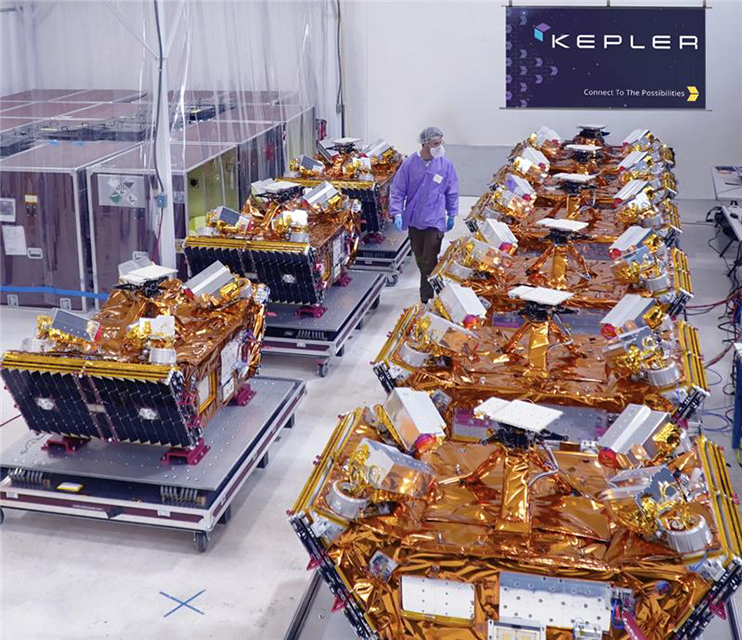
The mission, carried out aboard a SpaceX Falcon 9 rocket from Vandenberg Space Force Base, successfully deployed ten 300-kilogram-class satellites into a Sun-Synchronous Orbit (SSO). This launch marks a significant milestone in the establishment of the world’s first commercial optical network in Low Earth Orbit (LEO), designed to provide real-time, high-capacity connectivity for Earth observation, defense, and scientific missions.
Precision Deployment and Orbital Insertion
The deployment phase was executed with high technical precision, utilizing the Falcon 9’s upper stage to jettison the spacecraft during SpaceX’s first “Twilight” rideshare mission. Beginning roughly two hours after liftoff, the ten satellites—designated as the Aether series—were released in a carefully timed sequence to ensure controlled separation velocity and prevent potential orbital collisions. This controlled dispersal is critical for establishing the initial “ring” of the constellation, allowing the satellites to begin their commissioning phase as they drift into their final operational positions.
Optical Connectivity and On-Orbit Edge Computing
Each satellite in this tranche is equipped with high-capacity, SDA-compatible optical terminals, enabling secure, low-latency laser links between space, air, and ground assets. Beyond simple data relay, these spacecraft serve as “cloud nodes” in orbit, featuring advanced multi-GPU compute modules and terabytes of onboard storage. This infrastructure allows for edge processing directly in space, enabling mission operators to run AI/ML models and process high-resolution sensor data without the traditional bottleneck of waiting for a ground-station pass.
Strategic Collaboration and Mission Continuity
The launch serves as a foundational step for future commercial and sovereign space applications, including a partnership with Axiom Space to enable on-orbit data center nodes. By adhering to the U.S. Space Development Agency’s (SDA) standards, Kepler’s network ensures interoperability across diverse government and commercial architectures. This first tranche is part of a broader deployment strategy, with Kepler planning to launch additional batches every two years to expand network capacity and introduce 100-gigabit optical technology, ensuring the constellation remains the “invisible backbone” of the evolving space economy.
| Mission Milestone | Kepler Optical Tranche 1 Details (Jan 2026) |
| Launch Vehicle | SpaceX Falcon 9 (Twilight-1 Rideshare) |
| Launch Site | SLC-4E, Vandenberg Space Force Base |
| Spacecraft Quantity | 10 Satellites (Aether series) |
| Unit Mass | ~300 kg per satellite |
| Core Technology | SDA-Compatible Laser Terminals & Multi-GPU Compute |
| Operational Goal | Real-time, low-latency “Space Internet” and Relay |