
The Yogi maxim “No one goes there anymore, it’s too crowded,” matches a massive strategic shift in the space industry. The “crowded restaurant” of Low Earth Orbit (LEO) is driving a significant expansion into what experts call the “Expanded Neighborhood”.
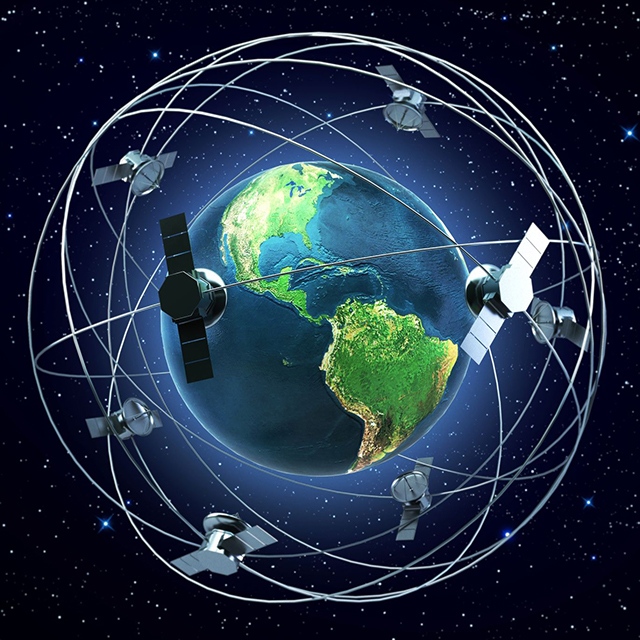
We are extending our operational reach beyond the traffic jams of LEO and into the vast, strategically vital territories of Medium Earth Orbit (MEO), Geosynchronous Orbit (GEO), and the Cislunar domain.
Here is how technology and policy are expanding our orbital neighborhood in 2026:
The Move to “Maneuverable GEO”
For decades, Geostationary Orbit (GEO) was a neighborhood of “stagnant” giants—massive, expensive satellites that stayed in one fixed slot for 15 years.
Maneuverable Fleets: In January 2026, the U.S. Space Force launched its Maneuverable GEO competition. The goal is to move away from sitting ducks and toward a fleet of small, agile commercial satellites that can “drift” between orbital slots to provide surge coverage during regional conflicts or to dodge debris.
Life Extension: Companies like Starfish Space and Northrop Grumman are now actively “servicing” this neighborhood. Instead of letting a billion-dollar satellite die when it runs out of fuel, “jetpack” satellites are docking with them to provide new propulsion, effectively turning GEO into a recyclable, long-term neighborhood.
Cislunar Space: The New “High Ground”
The region between Earth’s orbit and the Moon (Cislunar space) is the fastest-growing sector of the “neighborhood” in 2026.
The “First Island Chain”: Military strategists now view Cislunar space as the ultimate high ground. In January 2026, the Space Force Vice Chief of Operations challenged the industry to extend Space Domain Awareness (SDA) and navigation technologies all the way to the lunar surface to ensure the U.S. doesn’t go “blind” in this 238,000-mile gap.
Lunar GPS: Since traditional GPS doesn’t reach the Moon, NASA and DARPA are currently prototyping a lunar positioning, navigation, and timing (PNT) system. This “Moon-GPS” is essential for the dozens of commercial landers from companies like Intuitive Machines and Astrobotic scheduled for launch later this year.
Multi-Orbit “Mesh” Networks
Technology is doing better by teaching different neighborhoods to talk to each other.
- Hybrid Relay Services: In early 2026, NASA successfully demonstrated commercial satellite relay services that allow a satellite in LEO to “talk” to a hub in GEO, which then beams data to Earth. This creates a resilient, multi-layered “mesh” that ensures data isn’t lost if one orbital layer is congested or attacked.
- Optical Inter-Satellite Links (OISL): New “Space Cloud” networks from ReOrbit and Google Cloud use laser links to move data across different orbits (LEO to MEO). This reduces the need for ground stations in every country, effectively making the entire orbital volume a single, high-speed data network.
The “Sovereign” Expansion
Nations are no longer content with just a “slice” of LEO.
IRIS² and pLEO: Europe’s IRIS² constellation is currently being deployed as a multi-orbit system (LEO and MEO) to ensure sovereign secure communications.
The “Others” Category: Market data from early 2026 shows that while LEO still holds the majority of satellites, the “Others” category—which includes deep-space probes, cislunar modules, and highly elliptical orbits—is the fastest-growing segment of the market, expanding at over 10% annually.
| Neighborhood | 2026 Status | Why Expand There? |
| LEO (Low Earth) | Hyper-Congested | Low latency, mass production. |
| MEO (Medium Earth) | Resilience Hub | GPS/Galileo home; great for regional “mesh” backhaul. |
| GEO (Geosynchronous) | Maneuverable | Global persistent coverage; now becoming “agile.” |
| Cislunar (Moon) | Strategic Frontier | Gateway to Mars; resource exploration; national security. |