
In a move that fundamentally reimagines the relationship between orbital infrastructure and artificial intelligence, SpaceX submitted a staggering application to the Federal Communications Commission (FCC) late Friday, January 30, 2026.
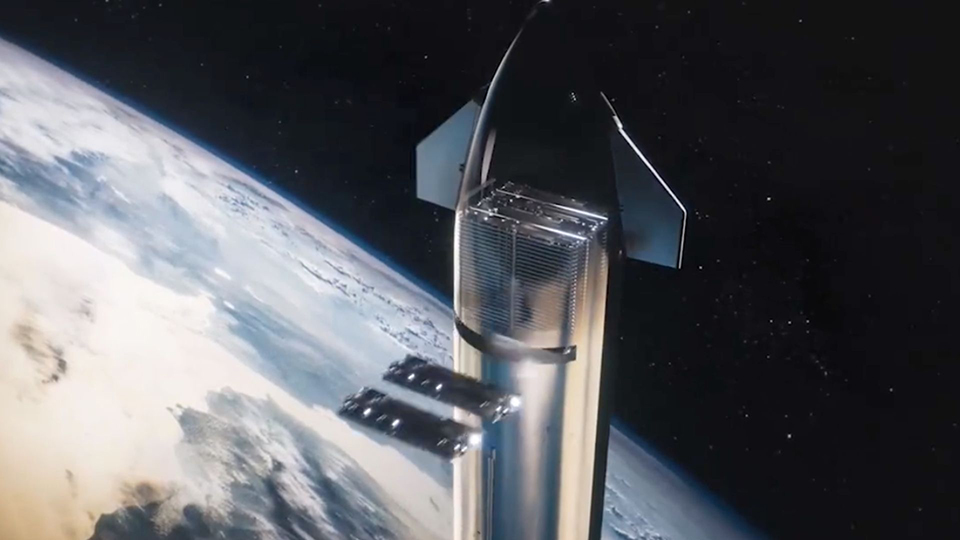
The filing seeks authority to launch and operate up to one million satellites designed to function as the world’s first large-scale Orbital Data Center network.
Escalating Terrestrial Energy and Cooling Crisis
The proposal is a direct response to the “energy wall” facing terrestrial AI development. On Earth, high-performance data centers consume unsustainable volumes of electricity and water for cooling; by 2027, global AI is projected to consume as much electricity as the nation of Argentina. SpaceX argues that moving computation to space provides an “unlimited” solar energy source and effortless radiative cooling in the vacuum of space, eliminating the environmental footprint and grid bottlenecks of ground-based server farms.
Rationale: Toward a Kardashev Type II Civilization
SpaceX’s filing describes the initiative as a “first step toward becoming a Kardashev II-level civilization”—one capable of harnessing the full power of its star. Beyond civilizational ambitions, the move serves as a strategic geopolitical counter to China, which recently filed paperwork with the ITU for two constellations totaling approximately 200,000 satellites for its own “gigawatt-class space digital infrastructure”.
“The satellites will be so far apart that it will be hard to see one from another,” Musk posted on X on January 31, 2026, attempting to address concerns over Kessler Syndrome and orbital congestion. “Space is so vast as to be beyond comprehension“.
Technical Specifications: The “Space Brain”
The system is designed to handle the heaviest AI inference and training workloads in layered orbits between 500 km and 2,000 km. Key technical goals include:
- Power Density: Achieving roughly 100 kilowatts of compute power per tonne of satellite mass.
- Energy Scale: Aiming for 100 gigawatts of solar-powered AI satellites produced annually, a feat Musk notes will require an equal 100 GW of AI compute production on Earth first.
- Connectivity: Utilization of high-speed optical laser links to transfer petabytes of data between orbital nodes and the existing Starlink mesh network.
Strategic Integration and Funding Outlook
Analysts note the filing appears to justify a rumored merger between SpaceX and Musk’s AI firm, xAI, ahead of a potential Initial Public Offering (IPO) later this year. The IPO could seek to raise in excess of $30 billion to fund the “proliferation at scale” required for the one-million-satellite fleet, potentially valuing SpaceX at $1.5 trillion.
The FCC, which has historically been conservative regarding large constellation sizes—granting only 7,500 of a previous 22,488 Starlink satellite request—is expected to subject this unprecedented filing to extreme scrutiny regarding collision risks and night sky interference.