
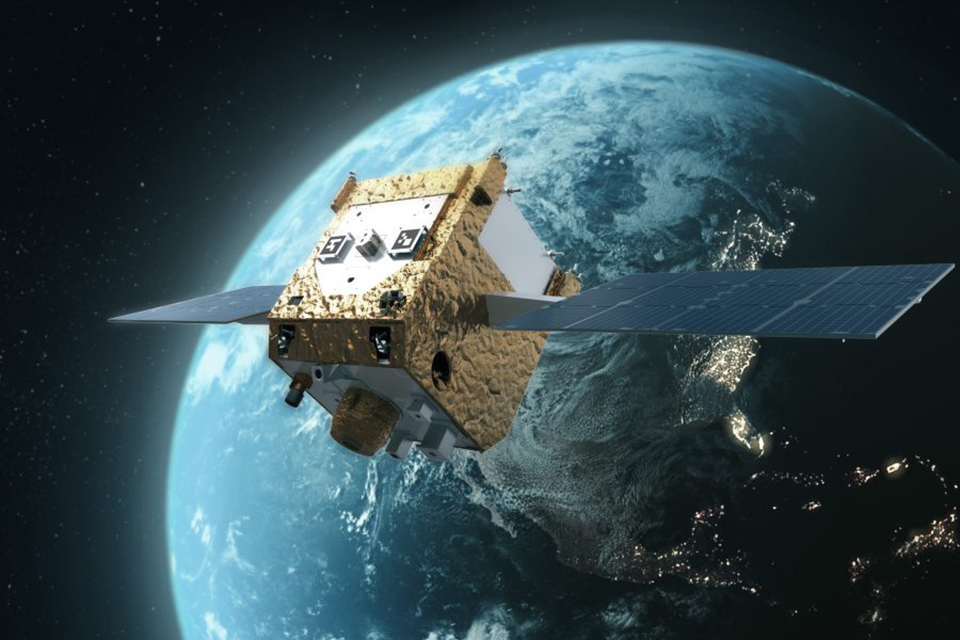
On January 28, 2026, Gen. Stephen Whiting, Commander of U.S. Space Command (SPACECOM), delivered a keynote address at the Space Mobility Conference in Orlando, Florida, calling for a foundational shift in military space strategy.
Whiting argued that the Department of Defense must move beyond a “launch-centric” model toward an architecture defined by Dynamic Space Operations (DSO)—encompassing on-orbit refueling, logistics, and sustained maneuverability.
Moving Beyond “Positional” Space Warfare
Historically, satellite operations have been “positional,” where spacecraft minimize movement to conserve limited fuel supplies. Gen. Whiting stressed that this legacy approach creates predictable targets for adversaries like China and Russia, who are rapidly fielding maneuverable counterspace capabilities.
To counter this, Whiting introduced the “Apollo Maneuvers” exercise concept. This new training framework will simulate complex satellite movements, responsive launch surges, and spectrum maneuvering to “shatter enemy cohesion,” a concept Whiting borrowed directly from U.S. Marine Corps warfighting doctrine (MCDP 1).
The Logistics Backbone: Refueling and Servicing
A critical component of this pivot is the development of on-orbit infrastructure. Whiting emphasized that “sustained space maneuver” is only possible if the Pentagon invests heavily in logistics-enabling technologies:
- In-Orbit Refueling: Establishing “orbital gas stations” to allow satellites to “maneuver without regret”—performing mission-critical shifts without permanently shortening their operational lifespan.
- Space Access, Mobility and Logistics (SAML): A formalized mission area focusing on satellite repair, life extension, and debris mitigation.
- Standardized Interfaces: Industry-wide adoption of refueling ports, such as those developed by Orbit Fab or Northrop Grumman, to ensure interoperability across the fleet.
“We want capabilities that allow us to operate our systems until the mission is complete—not until the fuel they are launched with runs out,” Whiting stated, underscoring the shift from treating propellant as a scarce commodity to an accessible resource.
Operational Milestones for 2026
The Space Force is currently preparing for a series of high-profile logistics demonstrations throughout 2026 to prove the feasibility of these concepts. Key upcoming missions include:
- Tetra-5 and Tetra-6: Testing on-orbit docking and hydrazine refueling hardware in Geosynchronous Orbit (GEO).
- Starfish Space “Otter”: A 2026 mission funded by Space Systems Command (SSC) to demonstrate autonomous rendezvous, proximity operations, and docking (RPOD) with existing military satellites.
Timeline to 2028 Superiority
While the fiscal year 2026 defense budget allocated $14.5 million for SAML activities—a figure Whiting has urged to grow—the command aims to have sustained maneuver capabilities fully operational by 2028. This roadmap aligns with the Space Force’s “Race to Resilience,” targeting 2026 as the pivotal year for transitioning to a full-spectrum warfighting architecture.