
In a significant expansion of its maritime launch capabilities, China has completed construction of its first offshore platform specifically engineered for the launch and recovery of reusable liquid-propellant rockets.
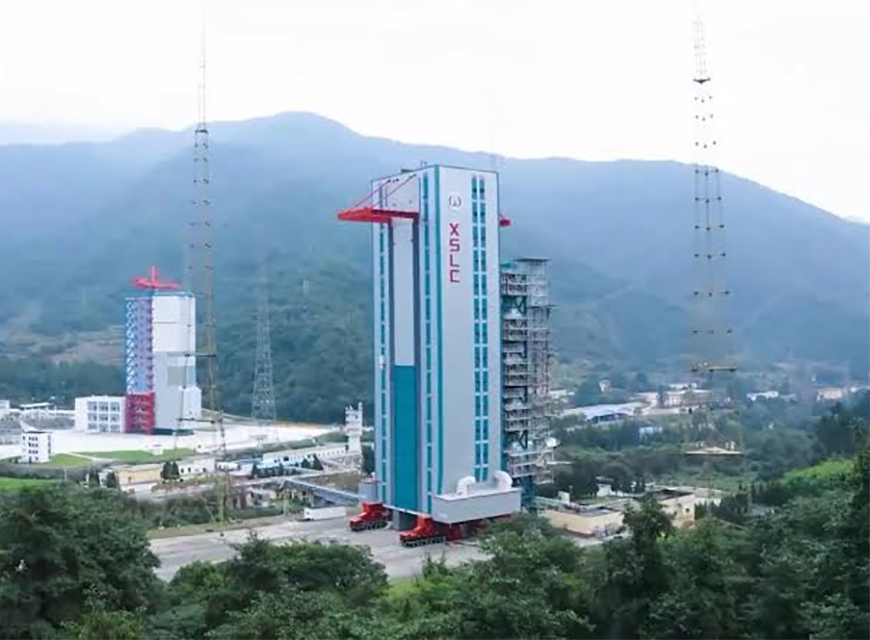
According to a statement released on Friday, January 23, 2026, the facility is located at the Oriental Aerospace Port in Haiyang, Shandong province. The platform is scheduled to enter trial operations on February 5, 2026, marking a pivot from the region’s established history of solid-fuel maritime missions toward the high-capacity, reusable liquid-fuel systems required for megaconstellation deployment.
Transitioning from Solid to Liquid Sea Launches
The new facility at the Oriental Aerospace Port represents a shift in China’s commercial launch strategy. To date, the port has supported 22 successful sea launches utilizing solid-fuel vehicles like the Jielong-3 (Smart Dragon-3). While solid-fuel rockets offer rapid mobility, they lack the payload capacity and reusability necessary for the “Sovereign-Commercial Nexus” of 2026. The new liquid-fuel platform allows for larger, more efficient engines that can be recovered and refurbished, directly supporting China’s plans for independent orbital infrastructure.
Technical Infrastructure and Recovery Systems
The centerpiece of the man-made island facility, situated approximately 3 kilometers off the coast, is a specialized launch stand integrated with a high-capacity hydraulic erector system.
- Erection System: Four large hydraulic cylinders installed in a deep pit are designed to transition rockets weighing hundreds of metric tonnes from horizontal transport to a vertical launch position.
- Thermal Management: A 17-meter-deep flame trench is designed to channel exhaust plumes exceeding 3,000 degrees Celsius.
- Acoustic Suppression: A surrounding water deluge system will provide both thermal cooling and acoustic energy suppression to protect the launch infrastructure during ignition and vertical landing attempts.
Rationale: Securing the Statist Megaconstellation Pipeline
The development of this offshore recovery infrastructure is driven by the economic imperative of the 2025-2027 “High-Quality Commercial Space Action Plan.” As China aims to integrate commercial launch providers into its national space strategy, reducing the cost per kilogram to orbit is essential. In 2025, commercial vehicles accounted for 54% of China’s total space missions. By enabling the recovery of liquid-propellant boosters at sea, China can increase its flight cadence while avoiding the geographic and safety constraints associated with inland, land-based recovery zones.
Timeline for Initial Sea Recovery Trials
Following the start of trial operations on February 5, 2026, the platform is expected to host its first maritime launch and recovery attempt for a commercial liquid rocket around the Chinese New Year holiday. This mission will likely involve testing the vertical takeoff and vertical landing (VTVL) capabilities of next-generation boosters. The site will eventually include a comprehensive support zone for liquid oxygen (LOX), liquid nitrogen, kerosene, and methane, serving as a key node in the Shandong aerospace ecosystem that spans manufacturing hubs in Yantai, Jinan, and Qingdao.