
WASHINGTON, D.C. — As of January 18, 2026, the Artemis program stands as the most complex multi-national space exploration initiative in human history. Formally established in 2017 via Space Policy Directive 1, Artemis was designed not merely to replicate the Apollo landings, but to establish a foothold in cislunar space.
By leveraging legacy hardware and a new generation of private lunar logistics, the campaign has transitioned from a series of technical demonstrations to a burgeoning orbital economy.
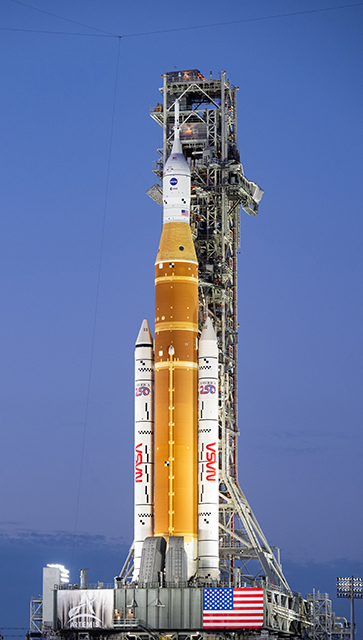
As reported, the Artemis II moved to its launch site at Kennedy Space Center’s Launch Pad 39B in Florida on Saturday, Jan. 17 with a launch window no earlier than Thursday, Feb. 5, 2026.
From Constellation to Artemis: The Foundation
The architectural roots of Artemis draw heavily from the now-cancelled Constellation program, specifically the Orion crew capsule and the Space Launch System (SLS). Following the retirement of the Space Shuttle in 2011, the NASA Authorization Act of 2010 mandated the development of a heavy-lift rocket capable of carrying humans beyond Low Earth Orbit (LEO).
The first significant milestone occurred on November 16, 2022, when Artemis I successfully launched from Space Launch Complex 39B. This uncrewed flight test sent the Orion spacecraft into a distant retrograde lunar orbit, testing the capsule’s heat shield during a high-velocity re-entry that reached temperatures of 5,000 degrees Fahrenheit. The mission’s success provided the baseline data required to certify the SLS and Orion for human occupancy.
The Rise of Commercial Lunar Payload Services (CLPS)
A defining shift in the Artemis strategy was the introduction of the Commercial Lunar Payload Services (CLPS) initiative. Unlike the government-owned models of the 20th century, CLPS designated NASA as one of many customers for private lunar landers. This “utility validation” phase saw its first major successes in early 2025. On March 2, 2025, Firefly Aerospace’s Blue Ghost Mission 1 achieved a fully successful soft landing, followed days later by Intuitive Machines’ Nova-C.
These missions proved that commercial providers could handle the “heavy lifting” of lunar logistics. In December 2025, NASA further solidified this strategy by awarding Blue Origin a delivery task order for the Volatiles Investigating Polar Exploration Rover (VIPER). By shifting flagship payloads to heavy-lift commercial landers like the Blue Moon Mark 1, the agency transitioned from high-risk exploration to operational infrastructure.
Artemis II: Validating Life Support in Deep Space
Unlike the uncrewed predecessor, Artemis II will carry four astronauts: Commander Reid Wiseman, Pilot Victor Glover, and Mission Specialists Christina Koch and Jeremy Hansen. The mission is a 10-day flight test designed to confirm that Orion’s life-support and communication systems can sustain human life in the high-radiation environment of deep space.
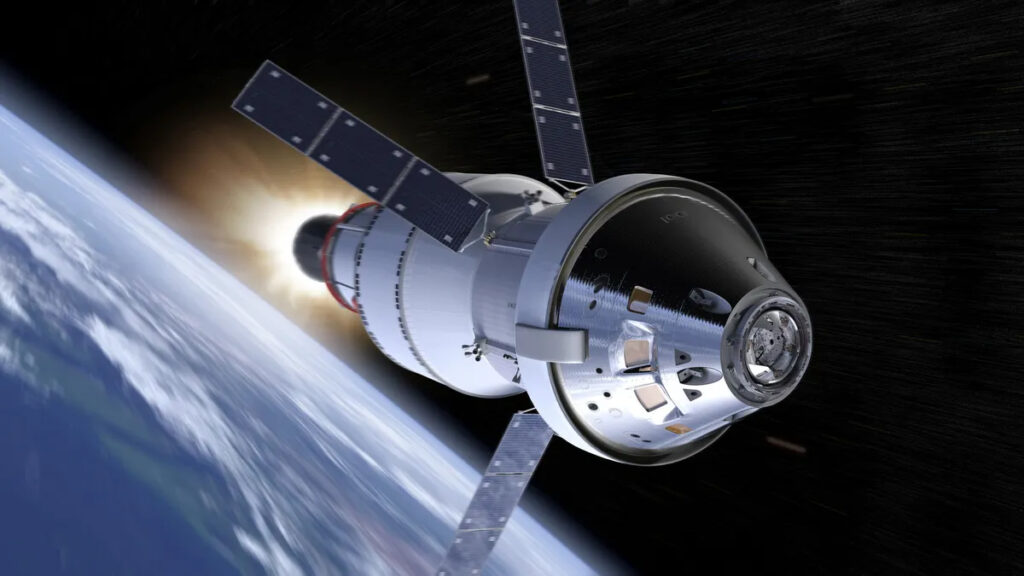
The mission profile involves a multi-trans-lunar injection (MTLI) burn, which will send the crew on a free-return trajectory extending more than 230,000 miles from Earth. At their maximum distance, the crew will fly approximately 6,400 miles beyond the Moon’s far side, becoming the first humans to venture beyond LEO since the Apollo 17 mission in 1972. The four astronauts won’t land on the moon, but during their 10-day journey beyond the moon and back, they’ll get farther from Earth than any humans have ever been.
Technical Parameters of the SLS “Mega Rocket”
The hardware standing at Pad 39B represents the pinnacle of current heavy-lift capability:
- Total Height: 322 feet (98 meters).
- Thrust: 8.8 million pounds at liftoff, 15% more than the Saturn V.
- Core Stage: Powered by four RS-25 engines and two five-segment Solid Rocket Boosters.
- Payload: Orion spacecraft equipped with the European Service Module (ESM).
Rationale: The Geopolitical and Economic High Ground
The strategic impetus for Artemis extends beyond scientific discovery. The program is the primary vehicle for the United States to maintain “Space Superiority” amidst a bifurcating global market. As China expands its own lunar capabilities through the International Lunar Research Station (ILRS) and a worldwide ground tracking network, the U.S. has utilized the Artemis Accords to build a coalition of over 40 signatory nations.
Economically, the campaign serves as a catalyst for a projected trillion-dollar space economy. Current NASA Administrator Jared Isaacman has emphasized that the goal is to create a “railroad to the Moon,” enabling startups and established aerospace firms to operate profitably in cislunar space. This vision was reinforced in early 2026 when the U.S. Congress rejected plans to slash NASA’s science budget, instead restoring funding to ensure the Artemis roadmap remains on schedule despite the cancellation of high-cost outliers like Mars Sample Return.
Current Manifest and the Road to Artemis III
The current program timeline reflects the “Hard Reality” of deep space integration.
- Artemis II (April 2026): The first crewed mission will send Commander Reid Wiseman, Pilot Victor Glover, and Mission Specialists Christina Koch and Jeremy Hansen on a free-return trajectory around the far side of the Moon. This 10-day flight test will validate Orion’s environmental control and life support systems.
- Artemis III (Mid-2027): This mission is slated to land the first woman and person of color at the lunar South Pole. It requires the successful rendezvous between an Orion spacecraft and a SpaceX Starship Human Landing System (HLS) in a near-rectilinear halo orbit (NRHO).
- Gateway and Beyond (2028-2030): Subsequent missions will focus on the assembly of the Lunar Gateway, an international space station that will serve as a staging point for surface sorties and future missions to Mars.
Long-term Vision: The Gateway to Mars
The ultimate objective of Artemis is to transform the Moon from a destination into an operational hub. By utilizing in-situ resource utilization (ISRU)—the process of extracting water ice from polar craters to create oxygen and propellant—NASA intends to prove that human life can be sustained indefinitely away from Earth. As the industry moves toward 2030, the success of the Artemis campaign will be measured not by footprints, but by the reliability of the infrastructure that now bridges the Earth and its nearest neighbor.