
MOUNTAIN VIEW, Calif. — On Monday, January 19, 2026, industry analysis of Google’s Project Suncatcher underscored the critical challenge of space debris management for the company’s planned orbital AI data center.
First announced in November 2025, the research moonshot aims to deploy a constellation of solar-powered satellites equipped with Tensor Processing Units (TPUs) to perform high-scale machine learning compute in Low Earth Orbit (LEO).
Orbital Congestion and Collision Avoidance
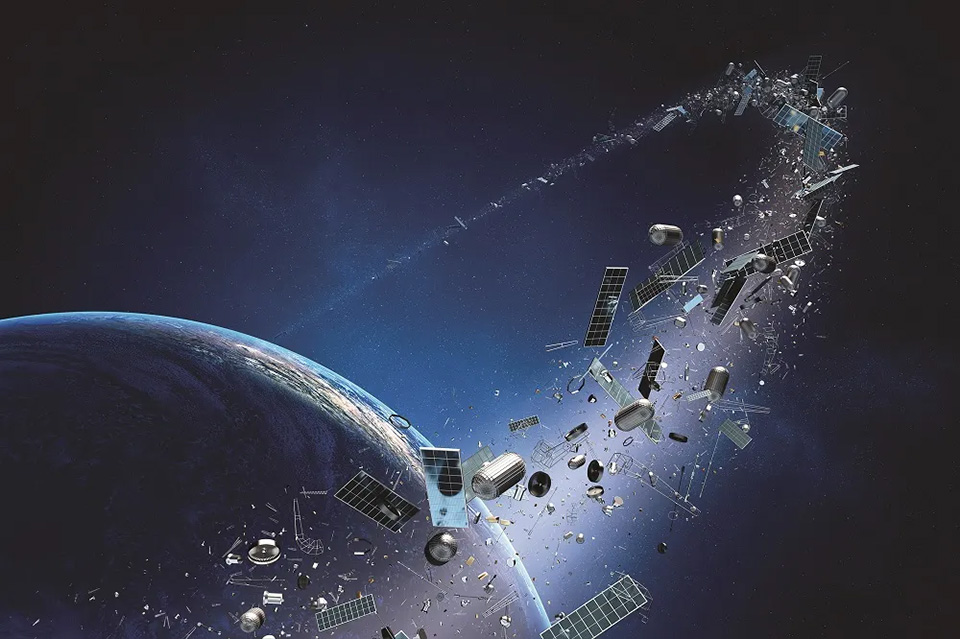
Google’s proposed architecture targets a sun-synchronous orbit (SSO) at an altitude of approximately 650 kilometers. This specific orbital shell is prized for its constant solar exposure, which Google estimates can make solar panels up to eight times more productive than on Earth. However, SSO is also one of the most congested regions of LEO, containing high concentrations of defunct satellites and rocket stages.
The density of debris in this region raises concerns regarding Kessler Syndrome, a runaway chain reaction of collisions.
Google’s research indicates that the 81-satellite cluster will require advanced autonomous flight control to maintain tight formations—separated by as little as a few hundred meters—while avoiding millions of fragments traveling at speeds of 17,500 miles per hour.
Space-Based Hardware Specifications
Project Suncatcher utilizes a modular design to maximize mass efficiency and compute power per kilogram. Key technical components include:
- Processors: Google Trillium TPU v6e accelerators, which have undergone radiation testing to survive a five-year mission life.
- Connectivity: Free-space optical (FSO) inter-satellite links supporting data transfer rates of tens of terabits per second.
- Power: Continuous solar energy collection enabled by the dawn-dusk orbital path.
- Cooling: A thermal management system utilizing heat pipes and radiators to dissipate heat in the vacuum of space.
Prototype Testing with Planet
Google has partnered with Planet Labs PBC to launch two prototype satellites by early 2027. These testbeds will assess TPU performance under real orbital conditions, including radiation exposure and thermal cycling.
“We’re taking our first step in ’27,” said Sundar Pichai, CEO of Alphabet and Google, in a statement regarding the upcoming mission. “We’ll send tiny, tiny racks of machines, and have them in satellites, test them out, and then start scaling from there.” The success of these prototypes will determine the feasibility of scaling the constellation to meet the surging global demand for AI training and inference.