
WASHINGTON, D.C. — In a statement released Thursday, January 15, 2026, the Center for Strategic and International Studies (CSIS) detailed the rapid expansion of China’s overseas satellite ground station network, warning of significant implications for U.S. military space superiority.
The report, titled “China’s Orbit: Beijing’s Space Diplomacy and the Global South,” highlights how the China National Space Administration (CNSA) is leveraging civil infrastructure to bridge critical gaps in its military tracking and telemetry capabilities.
Civil Infrastructure and the Belt and Road Nexus
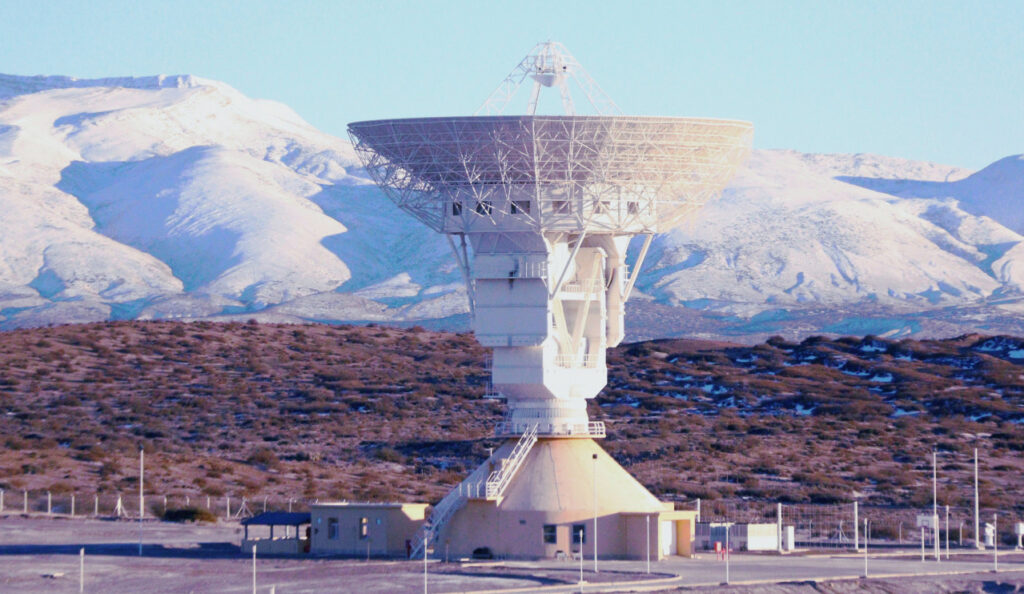
For over a decade, China has integrated space cooperation into its broader Belt and Road Initiative (BRI), establishing ground stations in South America, Africa, and the Arctic. A key component of this strategy was the 2016 launch of China’s first fully owned overseas ground station in Kiruna, Sweden, which allowed the Chinese Academy of Sciences to collect satellite data at twice the speed of domestic facilities. Similarly, the presence of a deep-space station in Neuquén, Argentina, has long drawn scrutiny for its restricted access and potential to support lunar and interplanetary military coordination.
Rationale: Eliminating Orbital Blind Spots
The primary strategic driver for this expansion is the elimination of geographic “blind spots” that have historically hindered China’s ability to track satellites and intercontinental ballistic missiles (ICBMs) in real-time. By placing antennas in the Southern Hemisphere and polar regions, Beijing gains near-continuous command and control over its growing surveillance constellations. Furthermore, these stations provide China with the ability to monitor U.S. and allied satellite maneuvers, potentially serving as a foundational layer for future counterspace operations.
Leadership Assessment of Space Diplomacy
“Space is no longer just a scientific frontier; it is the ultimate high ground for diplomatic and military leverage,” said Kari A. Bingen, Director of the CSIS Aerospace Security Project. “Beijing is offering a ‘turnkey’ space solution to the Global South—providing satellites, launch services, and ground infrastructure. In doing so, they are not just exporting technology; they are exporting a dependency that grants China access to sensitive geographic locations that could be operationalized during a conflict.”
Outlook on Strategic Competition
As the U.S. Department of Defense (DoD) transitions toward its own proliferated Low Earth Orbit (pLEO) architectures, the competition for ground segment influence is expected to intensify. U.S. officials are reportedly reviewing international space agreements to ensure that commercial ground station partnerships—such as the 2021 agreement between Azercosmos and China’s Satelliteherd—do not inadvertently compromise regional security. The CSIS report recommends that the U.S. increase its “Space Diplomacy” efforts by offering competitive ground-station-as-a-service (GSaaS) alternatives to developing nations to counter Beijing’s statist model.