
BEIJING – China successfully executed its first two orbital launches of 2026 on Tuesday, January 13, delivering a classified Yaogan reconnaissance satellite and a batch of Guowang (SatNet) broadband satellites into low Earth orbit.
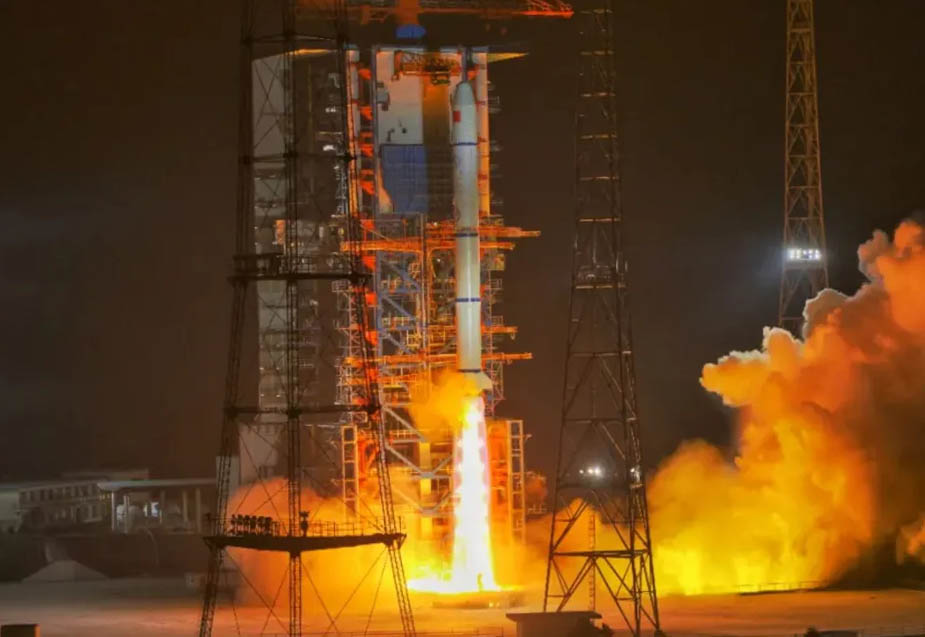
The dual missions, launched from separate spaceports, underscore the nation’s intent to sustain a high-cadence manifest following a record-breaking 2025.
The first mission utilized a Long March 2C carrier rocket from the Xichang Satellite Launch Center, placing a Yaogan-series spacecraft into a rare highly retrograde orbit. This specialized orbital plane, which moves in the opposite direction of the Earth’s rotation, is typically reserved for advanced signals intelligence (SIGINT) or specialized maritime monitoring missions that require specific sun-illumination and revisit cycles.
Acceleration of the Guowang Megaconstellation
Hours later, the second mission of the day lifted off from the newly operational Hainan Commercial Space Launch Site on the island of Hainan. A Long March 8A rocket deployed a batch of nine satellites for the Guowang project, the state-backed broadband network intended to rival SpaceX’s Starlink.

The deployment follows a significant December 2025 surge in launch activity and marks a critical step toward Beijing’s goal of fielding 13,000 satellites for global internet coverage. The utilization of the Hainan commercial pad is part of a strategic shift to decouple megaconstellation deployment from legacy military spaceports, allowing for the higher turnover rates required for the G60 and Guowang programs.
Launch Vehicle Capabilities and Commercial Infrastructure
The Long March 8A (LM-8A) utilized for the Guowang mission is a medium-lift vehicle specifically optimized for high-density satellite aggregation. With 3.35-meter and 2.25-meter diameter tanks, the LM-8A is capable of lifting approximately 7,000 kg to sun-synchronous orbit, providing the necessary “bus” capacity for launching up to 10 satellites per mission.
Unlike the mainland Jiuquan or Xichang bases, the Hainan site utilizes coastal geography to allow for larger payload fairings and safer drop zones for booster stages over the South China Sea. This infrastructure is essential for China’s upcoming transition to reusable rockets, such as the Long March 12, which completed its maiden flight on December 12, 2025.
Strategic Manifest for the Year Ahead
The January 13 launches are the opening sequence in a manifest that China Aerospace Science and Technology Corporation (CASC) predicts will exceed 70 missions in 2026. Key milestones for the remainder of the year include the launch of the Chang’e-7 lunar south pole mission and the first orbital tests of commercial reusable rockets designed to match the economic efficiency of Western hyperscalers.
As the Guowang network nears its initial operational status, international regulatory bodies including the International Telecommunication Union (ITU) are monitoring the deployment closely. China recently filed for an expanded architecture totaling approximately 200,000 satellites, signaling a long-term commitment to orbital sovereignty and digital infrastructure dominance.