
HOUGHTON, Michigan – On Tuesday, January 13, 2026, Orbion Space Technology announced the delivery of 33 Aurora Hall-effect propulsion modules to York Space Systems. The flight-ready hardware is designated for use on spacecraft within an upcoming military constellation, a delivery that underscores the accelerating production cadence required for national security space architectures.
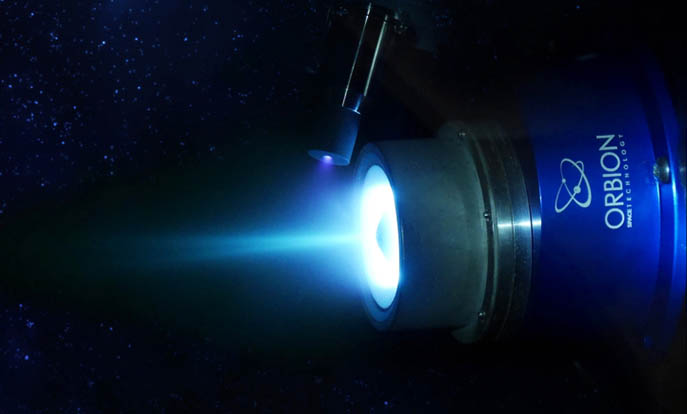
Propulsion units from earlier manufacturing runs are already operational on York satellites currently in orbit, demonstrating the established technical partnership between the two firms.
The delivery signifies a move toward high-volume, standardized production for critical satellite components. Orbion manufactures these electric propulsion systems through a vertically integrated process at its facility in Michigan, allowing for the steady output of systems that have moved through design, qualification, and acceptance testing under a single roof. This industrial approach is designed to meet the rigorous demands of military constellations that require both high reliability and rapid deployment timelines.
Operational Roles in Proliferated Warfighter Space Architectures
The 33 modules will provide maneuvering and long-duration propulsion for spacecraft designed for national security missions. While the specific program was not named, York Space Systems is a primary contractor for the Space Development Agency (SDA) and its Proliferated Warfighter Space Architecture (PWSA). York is currently building dozens of satellites for the Tranche 1 and Tranche 2 Transport Layers, which serve as a secure mesh network for military communications and missile tracking.
The propulsion systems allow these small satellites to maintain precise orbits, perform collision avoidance maneuvers, and de-orbit at the end of their mission life. By utilizing electric propulsion rather than chemical alternatives, satellite operators can significantly reduce propellant mass, allowing for larger sensor payloads or extended mission durations. This capability is essential for sustaining the large-scale “proliferated” constellations that the Department of Defense is currently fielding to ensure resilient space infrastructure.
Technical Specifications of the Aurora Hall-Effect Thruster
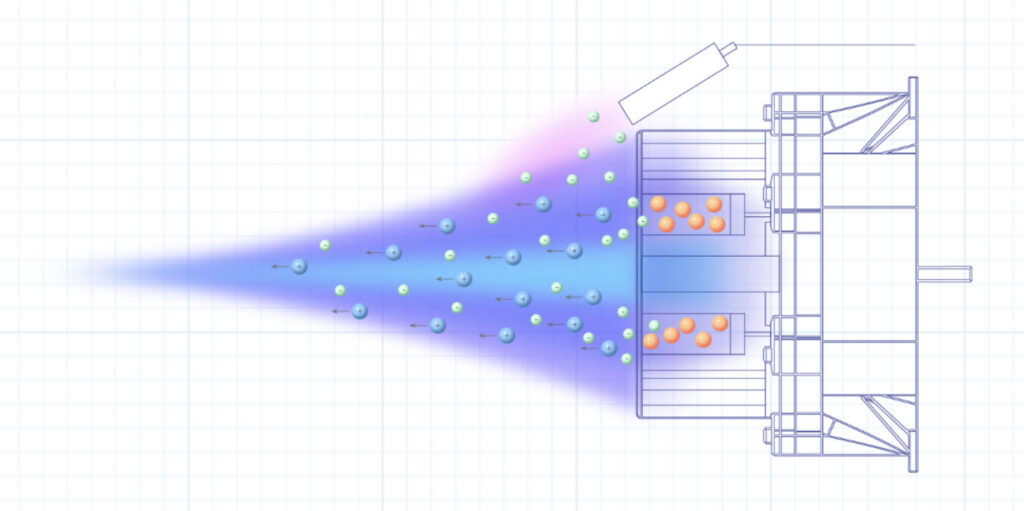
The Aurora system is a fully integrated Hall-effect propulsion module that includes the magnetically shielded thruster, a power processing unit (PPU), a propellant management assembly, and all necessary electrical harnessing. The thruster is continuously throttleable from 100 to 300 watts and is designed to operate on either xenon or krypton gas. With a dry mass of approximately 8.3 kilograms, the Aurora system can produce an exit velocity of up to 15,000 meters per second, providing the thrust required to maneuver spacecraft weighing 70 kilograms or more.
A notable feature of the Aurora system is its “dual-mode” operational capability, which allows the system to increase thrust on demand for agile collision avoidance. This software-controlled flexibility enables satellites to maintain fuel efficiency during routine station-keeping while possessing the necessary burst of power to avoid orbital debris or other threats. The system is also designed with a “ZeroTorque” configuration to eliminate perturbing magnetic moments that could interfere with other spacecraft sensors.
Executive Perspectives on Mission Reliability and Production
Brad King, the co-founder and CEO of Orbion, emphasized that the company views the delivery of flight hardware as a standard operational outcome rather than a singular milestone. He noted that customers rely on the firm to provide propulsion systems that perform as expected on orbit, citing consistency as the primary driver of industry confidence. King, who transitioned from academia to industrial manufacturing, has positioned Orbion as an AS9100D certified company capable of shipping hundreds of high-performance systems annually.
Michael Lajczok, the Chief Technology Officer of York Space Systems, stated that building and sustaining national security constellations requires partners who are both proven in the space environment and reliable in their production schedules. He highlighted that Orbion has demonstrated the consistency and execution that complex military missions demand, reinforcing York’s ability to field resilient defense architectures for the warfighter.