
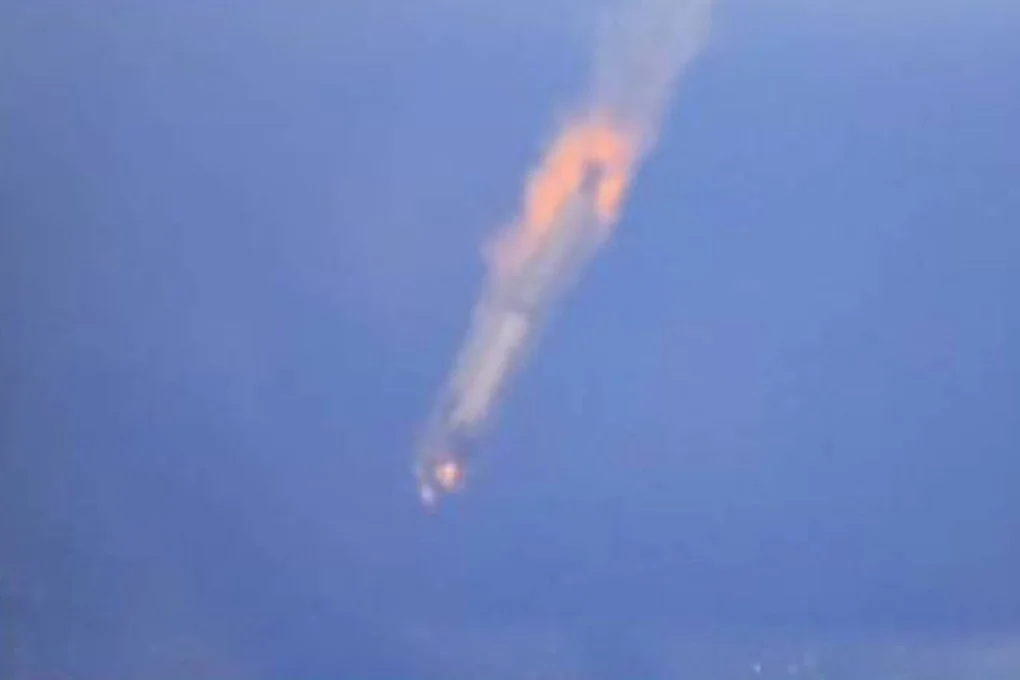
BEIJING — China’s ambition to operationalize reusable launch vehicles encountered another setback on Tuesday, Dec. 23, as the state-owned Long March 12A successfully delivered its payload to orbit but failed to recover its first-stage booster. The incident marks the nation’s second failed recovery attempt in less than 30 days, underscoring the persistent technological gap between China’s aerospace sector and established U.S. heavyweights like SpaceX and Blue Origin.
The Shanghai Academy of Spaceflight Technology (SAST), a subsidiary of the state-run China Aerospace Science and Technology Corp. (CASC), confirmed that the rocket lifted off from the Jiuquan Satellite Launch Center at 10:00 a.m. local time. While the second stage functioned nominally, placing test satellites into their designated orbits, the reusable first stage crashed during its return attempt.
Methalox Configuration
The Long March 12A (CZ-12A) represents a significant evolution in CASC’s medium-lift portfolio. Standing 62 meters tall, the vehicle is capable of lifting 12 metric tons to Low Earth Orbit (LEO). Unlike its predecessor, the standard Long March 12, which utilizes kerosene, the 12A variant has been upgraded to run on methane and liquid oxygen (methalox)—a fuel combination favored for reusability due to its cleaner burn and lower coking properties.
The vehicle features a 3.8-meter diameter core, optimized for transport via China’s rail network, and is designed to bridge the capacity gap for high-density constellation deployments.
A Difficult December
The crash follows a similar failure earlier this month by commercial provider LandSpace. On Dec. 3, that company’s Zhuque-3 rocket also failed to stick its landing after a successful orbital insertion, highlighting the difficulty of the “last mile” in vertical recovery.
These back-to-back failures place China approximately a decade behind the United States in reusable rocketry. SpaceX first recovered a Falcon 9 booster in December 2015. More recently, Blue Origin successfully landed its heavy-lift New Glenn booster on its second attempt in November 2025, further cementing the U.S. advantage.
Critical Path for Constellations
Despite the setbacks, the development of the Long March 12A remains a national priority. Beijing views reusable launch vehicles as the only viable economic path to deploying the Guowang and Qianfan megaconstellations, which aim to field nearly 26,000 satellites combined. Without the rapid turnaround and cost reductions promised by reusability, these state-backed networks may struggle to compete with the deployment cadence of Starlink.
CASC engineers are currently analyzing telemetry data to determine the cause of the landing anomaly, with no date set for the next test flight.