
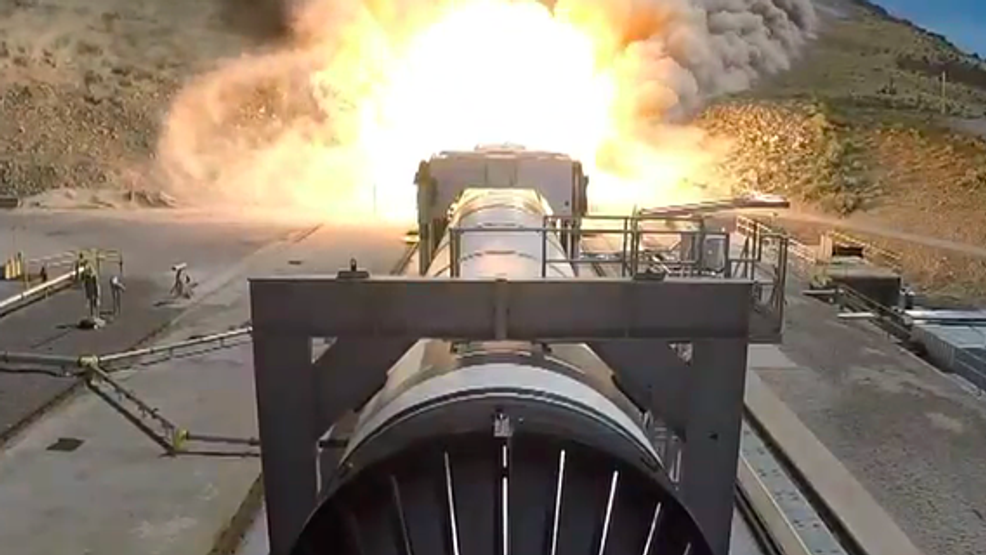
PROMONTORY, Utah — Targeting the critical supply chain bottlenecks that have plagued the defense industrial base, Northrop Grumman has successfully static fired a new solid rocket motor (SRM) developed in less than one year. The test of the SMASH!22 motor, conducted on December 4, validates the company’s shift toward automated manufacturing and digital engineering to drastically reduce lead times for tactical and strategic propulsion systems.
The “SMART” Strategy
The test was executed under Northrop Grumman’s Solid Motor Annual Rocket Technology (SMART) demonstrator program, a self-funded initiative designed to break the traditional, multi-year development cycles for rocket motors. By leveraging internal R&D, the program focuses on maturing specific technologies—such as additive manufacturing and robotic assembly—that can be rapidly inserted into existing missile defense and space launch programs.
The SMART program’s primary objective is to move from a “clean sheet” design to Critical Design Review (CDR) in months rather than years. For the SMASH!22 project, the team achieved a design-to-test timeline of under 12 months, effectively cutting standard industry development cycles by more than half.
SMASH!22 Specifications & Innovations
The SMASH!22 (Solid Motor Adaptable, Scalable, Half Time/Cost) is a 22-inch diameter motor designed to prove that speed does not require a sacrifice in performance. Key technical achievements validated during the static fire include:
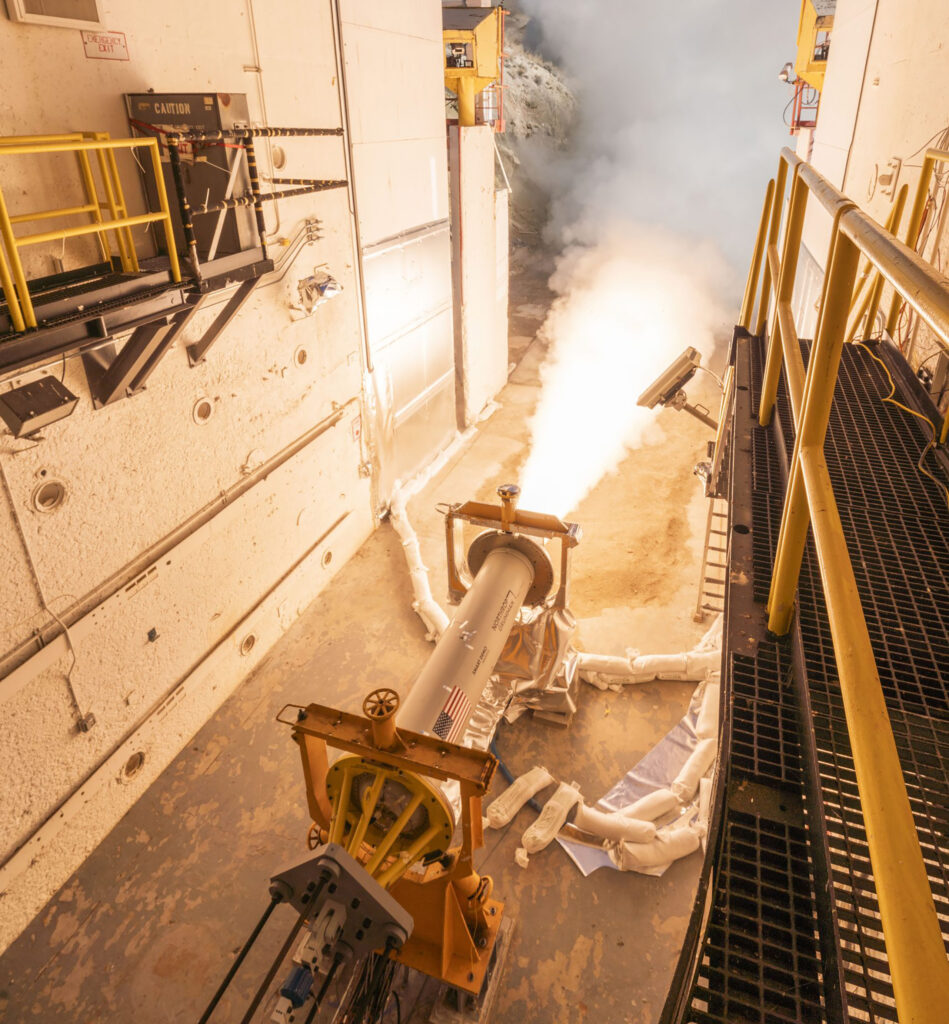
- Robotic Liner Application: The motor utilized a fully automated process to spray the internal liner, replacing a labor-intensive manual “touch labor” process that typically slows production.
- Additive Manufacturing: Critical tooling and the nozzle structure were produced using 3D printing techniques to bypass long-lead supply chain hurdles.
- Low-Cost Propellant: The motor fired a cost-optimized propellant formulation initially validated in previous demos, now ready for insertion into tactical programs.
- Digital Engineering: The entire engine lifecycle was managed in a digital environment, allowing for rapid iteration before physical metal was cut.
Executive Perspective
The successful firing provides Northrop Grumman with verified data to pitch these manufacturing techniques to government customers like the U.S. Air Force and the Missile Defense Agency, who are seeking to replenish munition stockpiles rapidly.
“What we have done with SMART is challenge our way of thinking about the design process and how we iterate through that design process,” said Jim Kalberer, vice president of propulsion systems at Northrop Grumman. “It allows us to bring those technologies, informed by our customers, up the technology readiness level… so they can be inserted into existing products, improving our speed of manufacture and addressing affordability.”
Outlook: The “BAMM” Motor
Following the SMASH!22 success, Northrop Grumman is preparing for the next phase of the SMART campaign. The company is currently assembling the BAMM!29 2.0 (Bombardment Attack Missile Motor), a larger 29-inch diameter variant. Static testing for the BAMM motor is scheduled for early 2026.
This development follows the [link: successful static fire of a digitally designed second-stage motor] reported by SatNews in 2024, reinforcing the company’s long-term commitment to model-based systems engineering.