
OBERSULM, Germany — Targeting the extreme sensitivity and high frame-rate requirements of high-resolution astrophotography, IDS Imaging Development Systems has validated its uEye XCP camera series for planetary imaging applications. By integrating Sony Starvis 2 sensors, the industrial camera manufacturer is addressing specific technical challenges inherent to ground-based space observation, particularly atmospheric turbulence and low-light signal-to-noise ratios.
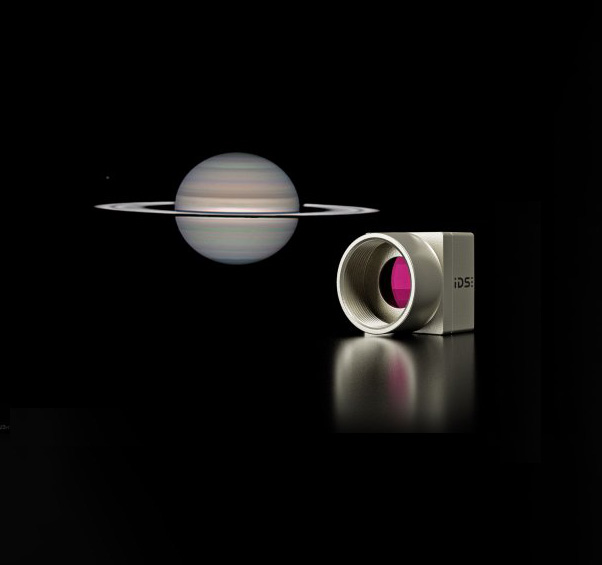
Capturing detailed images of planets such as Jupiter, Saturn, and Mars requires overcoming significant environmental obstacles. Earth’s atmosphere is in constant motion, creating turbulence that distorts light and obscures surface details. To mitigate this, astronomers utilize “lucky imaging”—a technique involving high-speed video recording to capture fleeting moments of atmospheric stability. This method demands cameras capable of exceptionally high frame rates and superior low-light sensitivity to minimize exposure times and “freeze” the seeing conditions.
Sensor Specifications and Performance
The uEye XCP models, specifically the U3-38C0XCP-M-NO, utilize the Sony IMX662 sensor (Starvis 2 technology). This Back-Illuminated (BSI) pixel architecture moves the photodiodes above the wiring layer, significantly increasing light collection efficiency compared to traditional front-illuminated sensors.
- Sensor Type: Sony Starvis 2 (CMOS)
- Key Model: U3-38C0XCP-M-NO (Monochrome IMX662)
- Frame Rate: Up to 88 frames per second (fps)
- NIR Sensitivity: Enhanced response in the Near-Infrared (700nm – 1000nm)
- Interface: USB3
- Pixel Technology: High dynamic range with reduced noise artifacts
The high near-infrared (NIR) sensitivity is critical for planetary observation. Infrared light is less susceptible to atmospheric scattering and artificial light pollution than the visible spectrum, allowing for sharper data collection in sub-optimal viewing conditions.
Operational Application
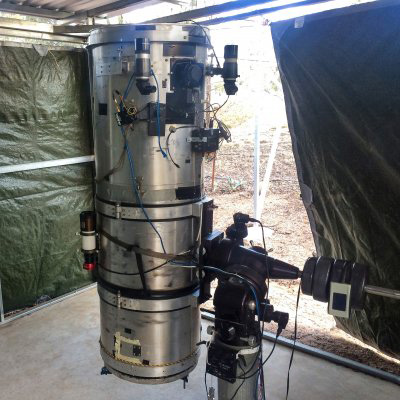
Australian astronomer Anthony Wesley, known for his work in planetary science, has integrated the uEye XCP into his observation workflow. Wesley records one- to two-minute video segments at approximately 60 fps using interchangeable filters. The data is then processed using FireCapture, a specialized astrophotography software suite that now supports IDS cameras via the IDS peak software development kit (SDK).
“Light sensitivity that goes far beyond the human eye—that’s what sensors with Starvis 2 technology from Sony stand for,” said Jürgen Hejna, Product Manager for uEye cameras at IDS. “The latest sensor technology in these cameras ensures high frame rates and remarkably high image quality, and impresses with its high sensitivity in the infrared range, even when used in low-light situations such as planetary photography.”
Software Integration
The integration relies on the IDS peak SDK, which allows the camera to interface directly with third-party astronomical software. This compatibility enables users to leverage advanced stacking algorithms that average thousands of individual frames to eliminate noise and correct atmospheric blurring.
“The software combines and averages the individual images and corrects blurring and distortion caused by the Earth’s atmosphere,” Wesley said. “The technology of the uEye XCP in combination with the Sony Starvis 2 sensors is undoubtedly one of the best currently available.”
Future Outlook
The deployment of industrial-grade sensors for scientific imaging suggests a growing overlap between machine vision hardware and astronomical research. IDS anticipates that the improved NIR performance of the Starvis 2 sensors will facilitate new research into planetary surface details that were previously difficult to resolve with amateur-class equipment.
“Cameras based on the Sony Starvis 2 sensors will be popular with amateur astronomers in the planetary imaging community due to their high sensitivity, great depth of field, and low noise,” Wesley said. “Especially in the NIR range between 700 nm and 1000 nm, where very interesting work can be achieved that will advance our understanding of other planets in our solar system.”