
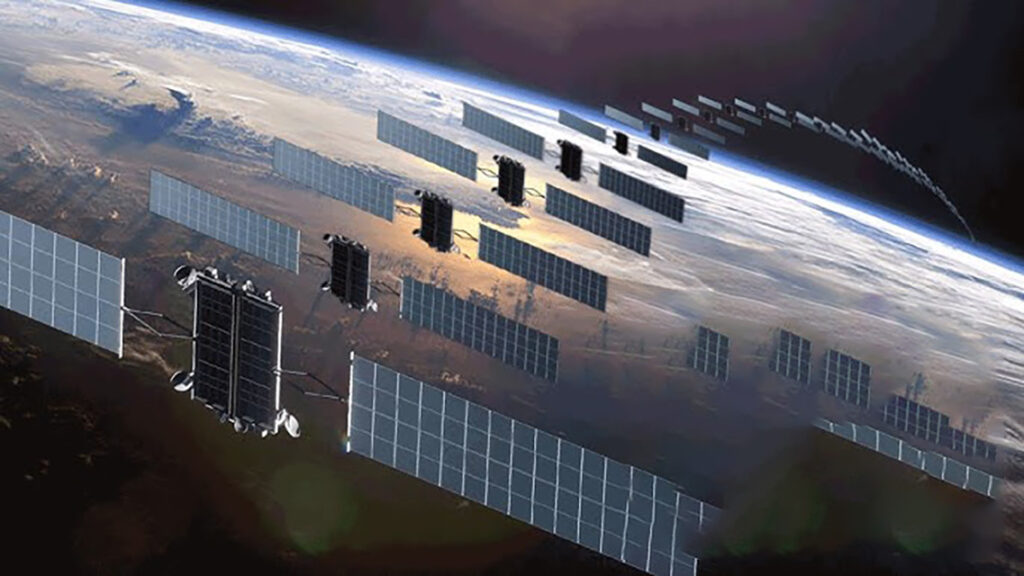
WASHINGTON — The Federal Communications Commission (FCC) Space Bureau has designated SpaceX’s modification application for a new 15,000-satellite Very Low Earth Orbit (VLEO) shell as “acceptable for filing,” initiating the formal regulatory review period for the expanded network.
According to Public Notice DA 25-1018, released December 5, 2025, the Bureau confirmed the application meets the baseline technical requirements for consideration. This procedural milestone triggers a 30-day window for interested parties to file petitions to deny or comments on the proposal. The designation moves the filing from a provisional status to an active regulatory proceeding but does not constitute final approval.
VLEO Architecture Shift
The filing outlines a distinct architectural shift for the Starlink constellation. While the network’s initial generations operate primarily in the 550-kilometer regime, the proposed “Gen3/MSS” layer targets the 300-kilometer VLEO domain. This altitude reduction is designed to minimize free-space path loss, a physical constraint critical to closing link budgets for unmodified consumer smartphones utilizing Direct-to-Cell (D2D) connectivity.

By lowering the orbital altitude, SpaceX intends to decrease signal latency and increase frequency reuse density. These technical adjustments are necessary to support the throughput required for mass-market voice and data services. The VLEO environment, however, subjects spacecraft to significantly higher atmospheric drag, requiring the continuous propulsion capabilities integrated into the Gen3 bus design to maintain orbit.
Operational Rationale
Operating at ~330 km offers two decisive advantages for a cellular-focused network. First, it reduces the free-space path loss enough to close links with standard smartphones using smaller onboard antennas than would be required at 550 km. Second, the low altitude naturally limits the satellite’s field of view, allowing for denser frequency reuse patterns without inter-cell interference.
However, this architecture requires a “replenishment engine.” Analysts estimate that maintaining a 15,000-satellite VLEO fleet will require launching thousands of replacement units annually as orbits decay.
Orbit and Spectrum Details
The accepted filing details specific parameters for the proposed expansion, which augments SpaceX’s existing Gen2 authorization. Key technical specifications include:
- Orbit Altitude: Operations between 326 kilometers and 335 kilometers.
- Constellation Size: Approximately 15,000 additional satellites.
- Payload: Dedicated Mobile Satellite Services (MSS) hardware utilizing T-Mobile’s 1.9 GHz PCS spectrum and potentially other partner bands.
- Platform: Starlink Gen3 bus optimized for high-drag operations.
Regulatory Scrutiny
The opening of the pleading cycle is expected to draw opposition from competing operators. Rival entities, including Amazon’s Project Kuiper and AST SpaceMobile, have previously registered concerns regarding orbital congestion and potential signal interference in the VLEO bands.
Regulatory Next Steps
With the application now accepted for filing, the 30-day window for petitions to deny is open. Competitors, particularly those in the VLEO and MSS sectors like AST SpaceMobile and Project Kuiper, are expected to challenge the modification on grounds of aggregate interference and collision risk in the crowded lower LEO bands.
Space Bureau Chief Jay Schwarz and commission staff will review the filings to weigh interference risks against the public interest benefits of expanded mobile coverage. If granted, the license would allow SpaceX to deploy a dedicated layer of infrastructure for the nascent satellite-to-cellular market.