
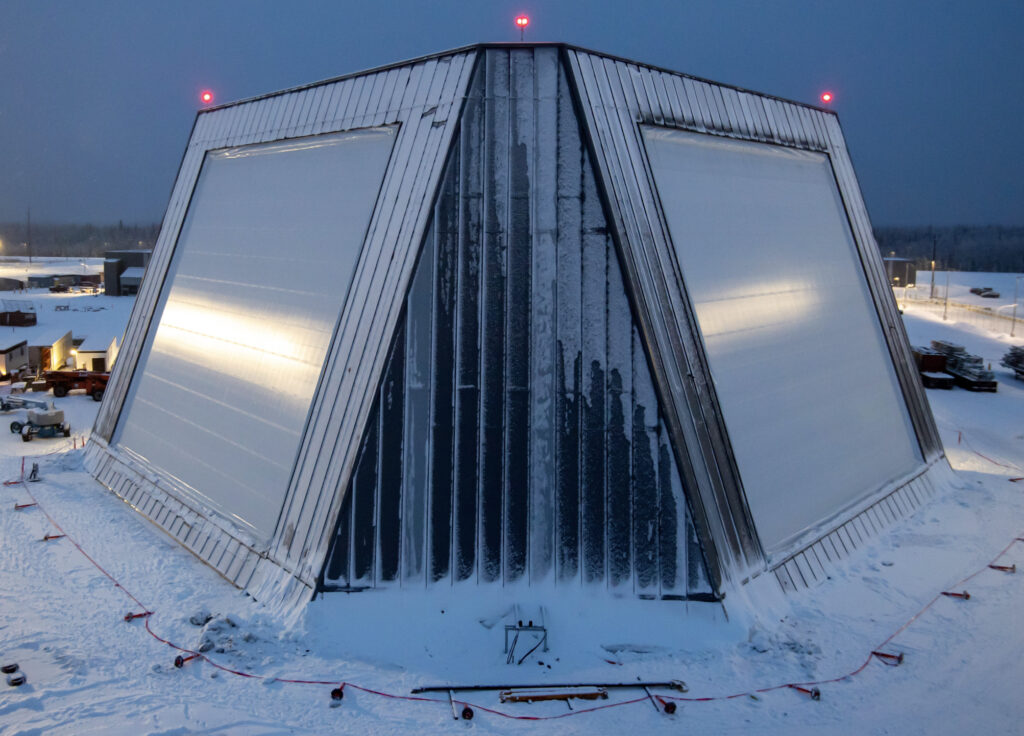
COLORADO SPRINGS, Colo. — The U.S. Space Force’s Combat Forces Command (CFC) formally took operational acceptance of the solid-state Long Range Discrimination Radar (LRDR) system on December 4, 2025.
This acceptance marks a pivotal advancement for the Space Force’s Missile Warning, Tracking, and Targeting (MWT&T) mission area. The system is poised to optimize interceptor precision, significantly shorten reaction times, and reinforce deterrence strategies against evolving ballistic missile threats.
On December 4, the Missile Defense Agency (MDA) finalized the LRDR’s operational trial period for the CFC. Situated at Clear Space Force Station (SFS) in Alaska, the radar integrates proven solid-state radar technologies with advanced ballistic missile defense algorithms. This combination provides the warfighter with superior ground sensor capabilities that support both MWT&T and Space Domain Awareness (SDA).
While the CFC has accepted the MWT&T aspect for operational readiness, the SDA functionality is currently slated for operational acceptance following a future trial period involving Command and Control, Battle Management and Communications (C2BMC) and the National Space Defense Center.
Precision and Performance
The LRDR is engineered specifically for precision discrimination, capable of distinguishing between lethal ballistic missile objects and non-lethal decoys within a highly congested operating space. The system enhances mission success probabilities by:
- Searching, tracking, and discriminating multiple long-range threats simultaneously.
- Providing precision track, discrimination, and hit assessment data to the Ground-Based Midcourse Defense Fire Control System (GFC).
Designed with a broad field of view and adaptable architecture, the LRDR allows for future upgrades to address emerging threats without requiring significant system modifications. Its design ensures continuous threat monitoring, maintaining operational readiness even during maintenance cycles to minimize potential downtime.
“LRDR’s precision reliability enhances the efficiency of U.S. missile intercept capabilities by quickly and accurately detecting missile threats at extended ranges,” said Col. Jared Hoffman, assistant deputy commander for CFC’s Operations, Plans, Training and Force Development. “This operational acceptance signifies a critical milestone in bolstering U.S. national security and missile warning, tracking and targeting capabilities, and I am incredibly honored to be working alongside the talented men and women who will be maintaining and operating this critical radar.”
Sustainment and Operations
Under the current framework, the MDA will continue to fund and execute LRDR weapon system Research, Development, Test and Evaluation (RDT&E), system upgrades, and depot-level maintenance.
The CFC assumes responsibility for funding and executing weapon system operations and organizational-level maintenance. The operational breakdown includes:
- Maintenance: Performed by CFC’s Mission Delta 4’s (MD4) 13th Space Warning Squadron at Clear SFS.
- Daily Operations: Managed by MD4’s 7th Space Warning Squadron (7 SWS).
- Execution: Performed by contract missile defense radar operators located remotely at Space Operations Centers at Beale AFB and Cheyenne Mountain SFS via the C2BMC sensor manager.
The 7 SWS will operate the system in conjunction with U.S. Space Command to support U.S. Northern Command’s homeland defense mission.
About Mission Delta 4
Headquartered at Buckley Space Force Base, Colorado, Mission Delta 4 provides strategic and theater missile warning to the United States and International Partners. By operating three constellations of Overhead Persistent Infrared (OPIR) satellites and two types of Ground-Based Radars (GBRs), MD4 provides tipping and cueing to missile defense forces and critical battlespace awareness to Combatant Commanders.