
By Chris Forrester — The past few days have seen the business pages full of reports that Elon Musk’s SpaceX could have a value of some $800 billion. The reports had plenty of credibility and built on the truly fabulous success of SpaceX’s Falcon 9 reliability and the similar success of its Starlink broadband system. A second rumour talked of an IPO (an Initial Public Offering) being mounted towards the end of 2026.
Musk promptly scotched the $800 billion reports, saying they were not accurate, and adding: “SpaceX has been cash flow positive for many years and does periodic stock buybacks twice a year to provide liquidity for employees and investors.”
Bloomberg, in its report on the rumours, explained that SpaceX was preparing to sell insider shares in a transaction. Those share sales could indeed value the firm as much as $800 billion. “Such a sale would allow some investors and employees to cash in on some of their holdings,” said Bloomberg.
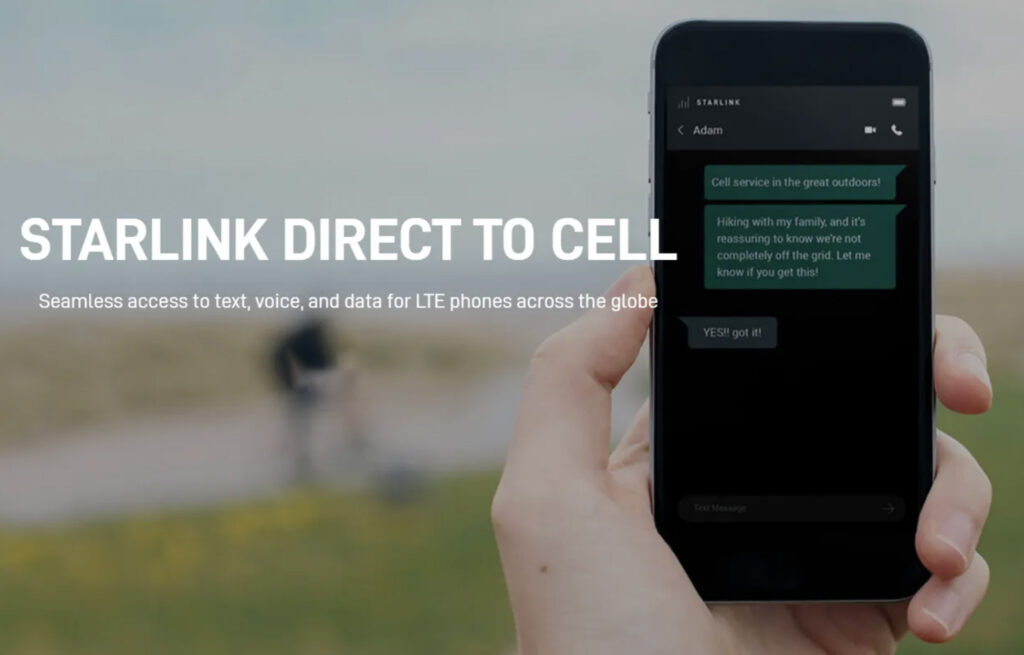
He also said (on ‘X’) that “valuation increments are a function of progress with Starship and Starlink and securing global direct-to-cell spectrum that greatly increases our addressable market.”
Musk also updated the market that SpaceX is no longer dependent on NASA for a revenue stream.” While I have great fondness for NASA, they will constitute less than 5% of our revenue next year. Commercial Starlink is by far our largest contributor to revenue. Some people have claimed that SpaceX gets ‘subsidized’ by NASA. This is absolutely false.”
But an $800 billion valuation (itself having doubled over the past year) could just be a precursor to future growth and potential greater valuation. And an increase in overall valuation rathe depends on Musk’s next steps.
Step 1 is already well in hand, and that is the development of SpaceX’s giant – and ruinously expensive – Starship rocket. Gaining success for Starship would reduce the cost per kilogram of launching into orbit, and would cement Musk’s ambition for humankind to be “interplanetary”.
Step 2 is also well in hand, and is represented by Musk’s ‘direct-to-consumer’ schemes. Note we say ‘schemes. First move is to boost the current 8 million broadband customers (up from 7 million in August 2025, and 6 million in June 2025). The potential for 9 million by Spring 2026, and perhaps 10 million by the end of next year is clear.
Step 3 would follow Step 2, and see Musk extend his current Direct-to-Cell (D2D) connectivity. D2D was the hottest of hot topics at the Paris World Satellite Business Week, and again at SatNews’ Silicon Valley Space Week in October. Tarun Gupta (Chief Product Officer and Co-founder of Skylo Technologies) told delegates that Today’s messaging-based services for Internet of Things, or Automotive as well as consumers and emergency SOS or on wearables. How people use these is up to their imaginations. We are seeing dramatic increases in messaging services, and there are plenty of new applications being built on top of these services.”
The larger question is not just whether Musk will extend his existing D2D service (answer: He will), but whether his already connected users will adopt a Starlink Mobile service, and at what cost? Tarun Gupta addressed the challenges, saying: “Everyone seemed to be talking about connectivity when in the middle of a hike in the Yosemite. The reality is that a study we carried out last winter showed that 60% of the users in a trial suffered signal loss when on their way to work! There must be an overlay, and it must work.”
He said that Skylo’s exiting SMS satellite service was seeing plenty of traction from users in New York, New Jersey and other regions which would normally be considered to be well-served by telco. MSS, he said, would make a real difference to the business models. He added that we were not years away from guaranteeing very real connectivity and seamless switching from terrestrial to satellite.