
MOUNTAIN VIEW, Calif. — The forthcoming Berkeley Space Center, a massive public-private innovation hub slated for NASA’s Ames Research Center, has secured a strategic leader capable of bridging the divide between Pentagon requirements and Silicon Valley agility. Victoria Coleman, the project’s associate provost and former chief scientist of the U.S. Air Force, will headline a key session at the SmallSat Symposium to outline how the 36-acre campus will accelerate the commercialization of defense and space technologies.
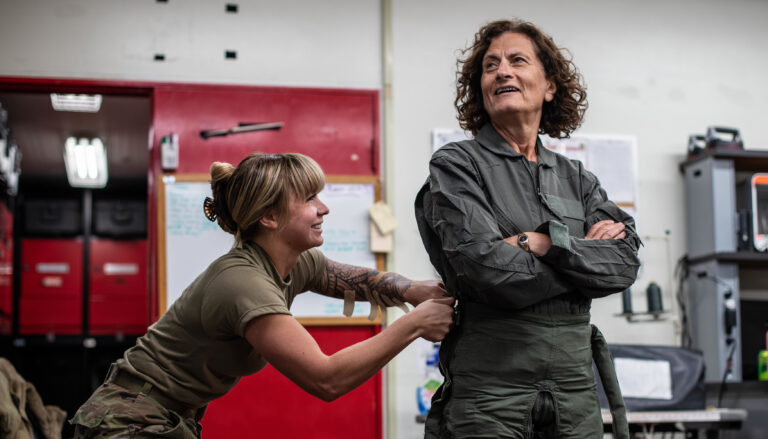
Fireside Chat: Defining the Future of Space Innovation
At the upcoming SmallSat Symposium, Coleman will leverage a career that spans the highest levels of military strategy and commercial innovation during a featured fireside chat with Dara Panahy, a partner at Milbank LLP. As the former Director of DARPA and the 37th Chief Scientist of the U.S. Air Force, Coleman possesses a distinct vantage point on the technical gaps currently facing national security architectures.
Her background, which also includes leading Airbus’s Silicon Valley innovation center, Acubed, positions her to address how the Berkeley Space Center will function not merely as a real estate development, but as a critical incubator for the supply chain. By applying this cross-sector fluency, Coleman is expected to outline how the project will bridge the cultural and technical divide between “New Space” startups and federal programs of record, securing the Bay Area’s status as a global command post for the next generation of space exploration.
A Nexus for Public-Private Innovation
The Berkeley Space Center represents one of the most ambitious physical expansions of the space industrial base in the Bay Area. Located within the NASA Research Park at Moffett Field, the planned facility aims to create approximately 1.4 million square feet of research and R&D space designed to physically co-locate university researchers, private capital, and government scientists.
Unlike traditional aerospace clusters, which often separate classified research from commercial startup activity, the center is designed to function as a “regenerative laboratory” where technology readiness levels (TRL) can be advanced rapidly. The site is expected to target critical dual-use sectors, including:
- Autonomous Systems: Leveraging the site for testing UAVs and unpiloted aerial vehicles.
- Deep Tech & Computing: Utilizing proximity to NASA Ames’ supercomputing capabilities to advance AI and data science.
- Space Exploration: Developing new materials and manufacturing processes for extreme environments.

Leadership at the Intersection of Defense and Tech
Coleman’s appointment as the architectural lead for the center’s intellectual footprint signals a deliberate focus on high-stakes national security and deep-tech challenges. Her biography reflects a career spent alternating between the highest levels of government strategy and commercial disruption.
In addition to her role at DARPA, where she oversaw the Pentagon’s most advanced high-risk research portfolios, she previously served as CEO of Atlas AI, a startup using satellite imagery for economic analytics. This dual fluency allows her to translate the rigid requirements of military procurement into the agile development cycles of the private sector—a primary friction point the Berkeley Space Center aims to eliminate.