
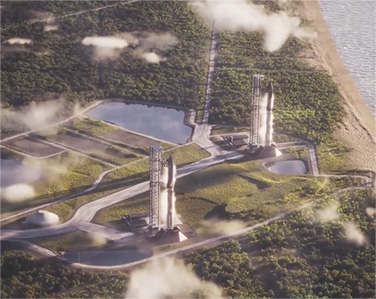
The Department of the Air Force (DAF) has officially issued a Record of Decision (RoD) authorizing the conversion of Space Launch Complex 37 (SLC-37) at Cape Canaveral Space Force Station into a launch and landing site for SpaceX’s Starship-Super Heavy vehicle.
This regulatory milestone concludes the comprehensive Environmental Impact Statement (EIS) process and clears the path for SpaceX to establish a permanent, high-cadence East Coast foothold for the world’s largest rocket. The decision follows the retirement of the United Launch Alliance (ULA) Delta IV Heavy, which previously occupied the pad.
The authorization is a critical strategic development for both SpaceX and the U.S. Space Force (USSF). While SpaceX’s Starbase facility in Boca Chica, Texas, has served as the primary testbed for Starship development, an operational pad at the Cape offers unique advantages. SLC-37 allows for distinct orbital inclinations difficult to achieve from Texas without overflying populated areas, and provides the requisite infrastructure to support rapid launch cadences demanded by the National Security Space Launch (NSSL) program.
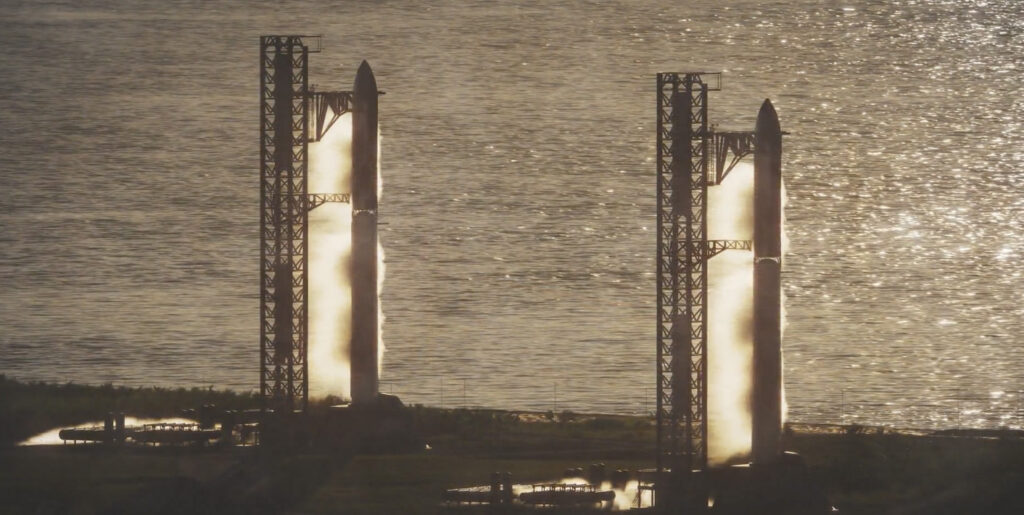
In the Record of Decision, the Air Force selected “Alternative A,” which allows for the construction of a launch mount, landing catch tower (the “Mechazilla”), and propellant farms at SLC-37.
Strategic Impact For the Department of Defense, this authorization secures redundant access to super-heavy lift capabilities essential for next-generation architectures, including the rapid deployment of large-scale constellations and heavy cargo transport. For SpaceX, the “Cape Capability” de-risks the Starship program by alleviating the single-site bottleneck at Starbase and integrating the vehicle into the established logistics chain of Florida’s Space Coast.
Modification of the site is expected to begin immediately following the final decommissioning activities of the legacy Delta IV infrastructure.
The retirement of the Delta IV Heavy was not merely an operational sunset; it was a defining pivot point for the U.S. National Security Space Launch (NSSL) architecture. The vehicle’s departure from Space Launch Complex 37 (SLC-37) concluded a 60-year lineage of the Delta family and cleared the physical and regulatory deck for the “Super Heavy” era.
The pad was last active on April 9, 2024, when the final Delta IV Heavy (Mission NROL-70) lifted off carrying a classified signals intelligence payload for the National Reconnaissance Office (NRO).