
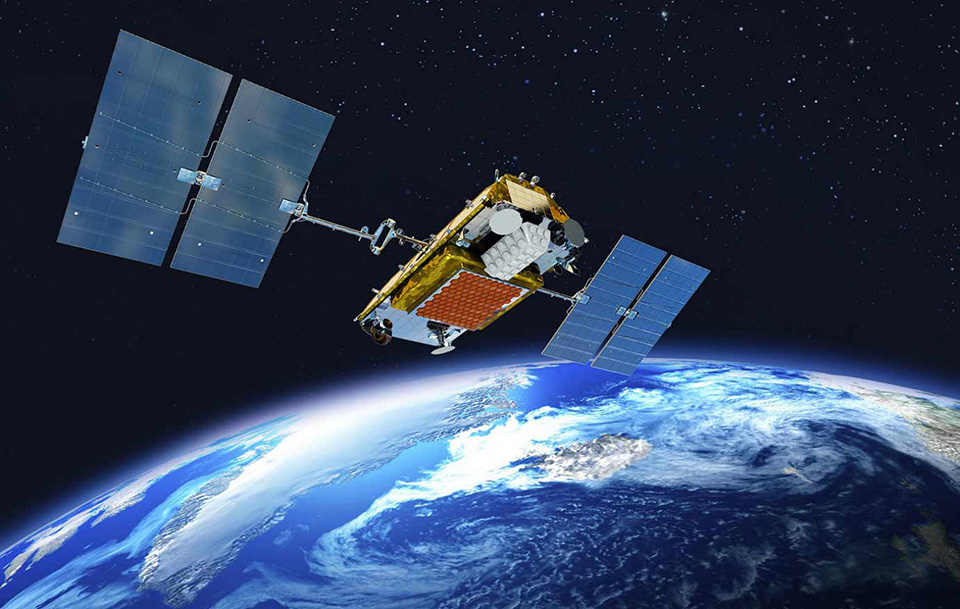
Iridium Communications holds a long-standing and strategic partnership with the U.S. Space Force (USSF), primarily centered around the Enhanced Mobile Satellite Services (EMSS) program.
Most recently, on December 2, 2025, Iridium was awarded a new infrastructure contract (SITH), further solidifying this relationship.
The newest contract award is the System Infrastructure Transformation and Hybridization (SITH) contract, announced on December 2, 2025. This is a 5-year Indefinite Delivery/Indefinite Quantity (IDIQ) agreement with a maximum value of $85.8 million.
The SITH contract is a dedicated infrastructure contract specifically purposed to fund the technological refresh and security upgrades for three key facilities: the EMSS Service Center, the Technical Support Center, and the Defense Ground Station.
The primary strategic goal of the SITH contract is to modernize the physical and digital ground infrastructure that processes secure military communications. This is a critical step to ensure the systems are ready to handle future hybrid network architectures.
The “ECS3” Contract, fully named Enhanced Mobile Satellite Services Capabilities and Security Sustainment Services, was awarded in April 2024 with an approximate value of $94 million (up to $103 million). This contract has a five-year duration, remaining valid through 2029. Its primary purpose is to sustain the USSF’s Iridium infrastructure, focusing on the daily operations, maintenance, and security sustainment of the dedicated gateway that routes Iridium traffic, which complements the infrastructure upgrade focus of the SITH program.
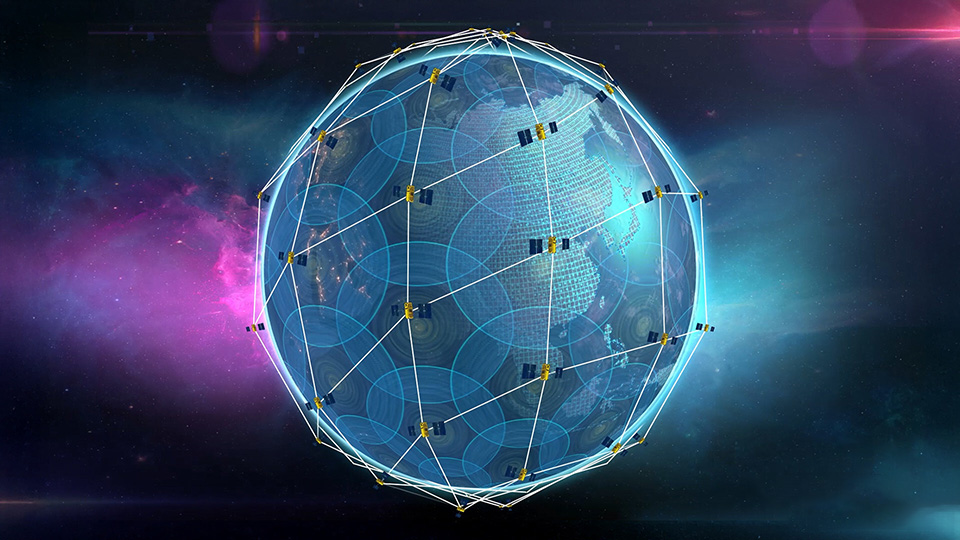
Unlike GEO satellites, which are fixed over the equator and have difficulty providing coverage at the extreme northern and southern latitudes, Iridium’s pole-to-pole orbit ensures 100% Earth coverage.
Polar Access
This is perhaps the most crucial capability. The USSF and other Department of Defense (DoD) users frequently require communications in the Arctic and Antarctic regions for missions, research, and logistics. Iridium is one of the few systems that can reliably deliver this service.
Low Latency Communications
Since the Iridium satellites are in LEO (about 780 km up), the time it takes for a signal to travel from a ground terminal to the satellite and back down is significantly shorter than with GEO satellites (which orbit at about 35,786 km).
Resiliency and Redundancy via Cross-Links
The Iridium satellites are unique because they use inter-satellite cross-links, meaning they can route traffic between satellites in space before sending it down to a ground station (gateway).
The U.S. Space Force relies on Iridium for specific capabilities that other providers (like GEO satellites or terrestrial networks) cannot easily match.