
• Skip to primary navigation
  • Skip to main content
  • Skip to primary sidebar
  • Skip to secondary sidebar
  • NEWS:
  • SatNews
  • SatMagazine
  • MilSatMagazine
  • SmallSat News
  • |     EVENTS:
  • SmallSat Symposium
  • Satellite Innovation
  • MilSat Symposium
  • SmallSat Europe

SatNews

  • LATEST
  • EXPLORE ⌄
    • Missions & Constellations
    • Business & Finance
    • Military & Defense
    • Launch
    • Software Automation & Ground Systems
    • Government & Regulation
    • Services & Applications
  • Magazines
  • Events
  • Calendar ⌄
    • IN PERSON
    • VIRTUAL
  • Subscribe

Twin satellites launch to scout for water

November 28, 2025

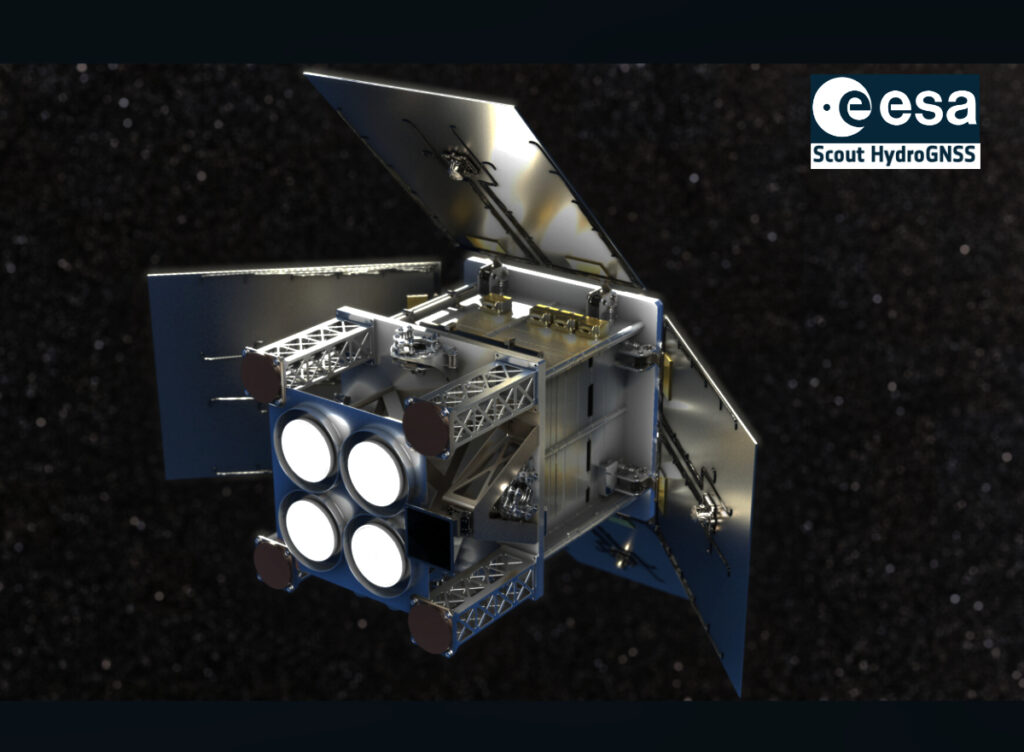
Climate change effects on the Earth’s water cycle and the availability of water on our planet are the missions of the first European Space Agency Scout mission.
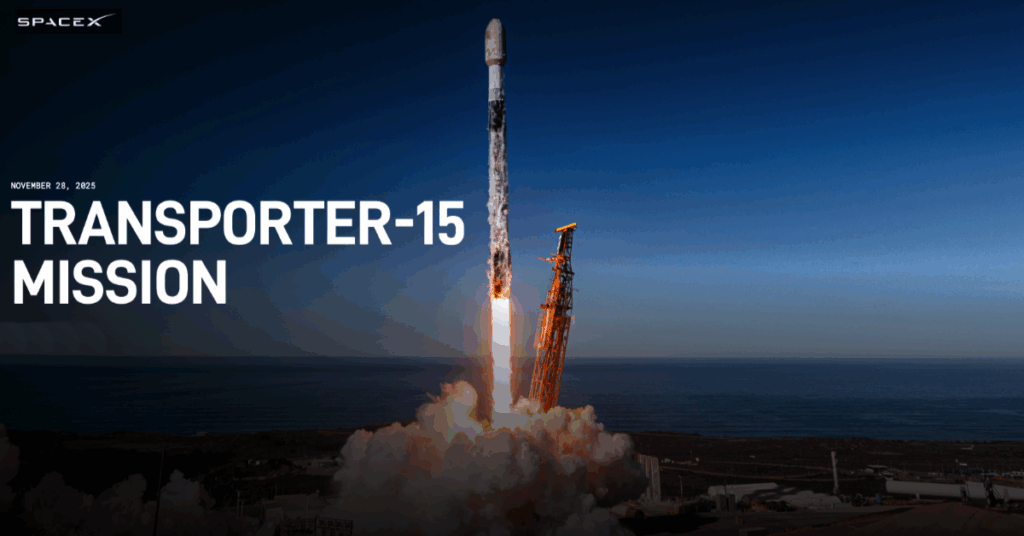
Launched from Vandenberg SFB, the twin HydroGNSS smallsats were launched on November 28, 2025, as a payload within a SpaceX Falcon 9 rocket as a member of the Transporter-15 rideshare flight.

Surrey Satellite Technology Ltd. (SSTL), this missions prime, has received signals from the satellites, indicating that both of them are safely in their assigned orbits.around Earth.

A technique—GNSS reflectometry—finds these satellites, which orbit the Earth with 180 degrees of separation, capturing L-band signals from navigation systems, such as GPS and Galileo, and then transmit L-band microwave signals that change when reflected off the Earth’s surface. These signals are then compared with the signals received from the navigation satellite and uncover the valuable information about water cycle properties and more. These systems gather high-quality data and capture more detailed and definitive data from ground-based GPS-reflection sites, more accurately than has previously been available.

In order to accomplish these tasks, each of the HydroGNSS smallsats carry a zenith and nadir antenna that comprise a delay doppler mapping receiver. The received signals are processed into delay Doppler maps.

Simonetta Cheli, the ESA’s Director of Earth Observation Programs, said, “HydroGNSS marks an important milestone for this new family of rapid, low-cost, Earth observation missions, and we extend our thanks to the missions prime, SSTL. We look forward to seeing how HydroGNSS will employ reflectometry to deliver valuable insights into key, hydrological variables that shape Earth’s water cycle.”

Filed Under: Earth Observation & Imaging, International Space Agreements

Primary Sidebar

Coverage

  • Missions & Constellations
  • Business & Finance
  • Military & Defense
  • Launch
  • Software Automation & Ground Systems
  • Government & Regulation
  • Services & Applications

Most Read Stories

  • Brian Cox Addresses Interstellar Comet Signal Claims Amid MAVEN Silence
  • U.S. Space Force and SpaceX Partner to Develop 480-Satellite MILNET Constellation
  • MDA Taps Sidus, Ursa Space for $151 Billion ‘Golden Dome’ SHIELD Contract
  • When AWS Grew Wings: The "Boring" Genius of Amazon Leo
  • AST SpaceMobile Deploys BlueBird 6, Largest Commercial Array in LEO

About Satnews

  • Contacts
  • History

Archives

Secondary Sidebar

We use cookies to ensure that we give you the best experience on our website. If you continue to use this site we will assume that you are happy with it.
x
Sign up Now (For Free)
Access daily or weekly satellite news updates covering all aspects of the commercial and military satellite industry.
Invalid email address
Notify Me Regarding ( At least one ):
We value your privacy and will not sell or share your email or other information with any other company. You may also unsubscribe at anytime.

Click Here to see our full privacy policy.
Thanks for subscribing!