
A British-built twin-satellite mission, designed to monitor key climate variables linked to water, has been prepared
for its journey into Earth orbit.
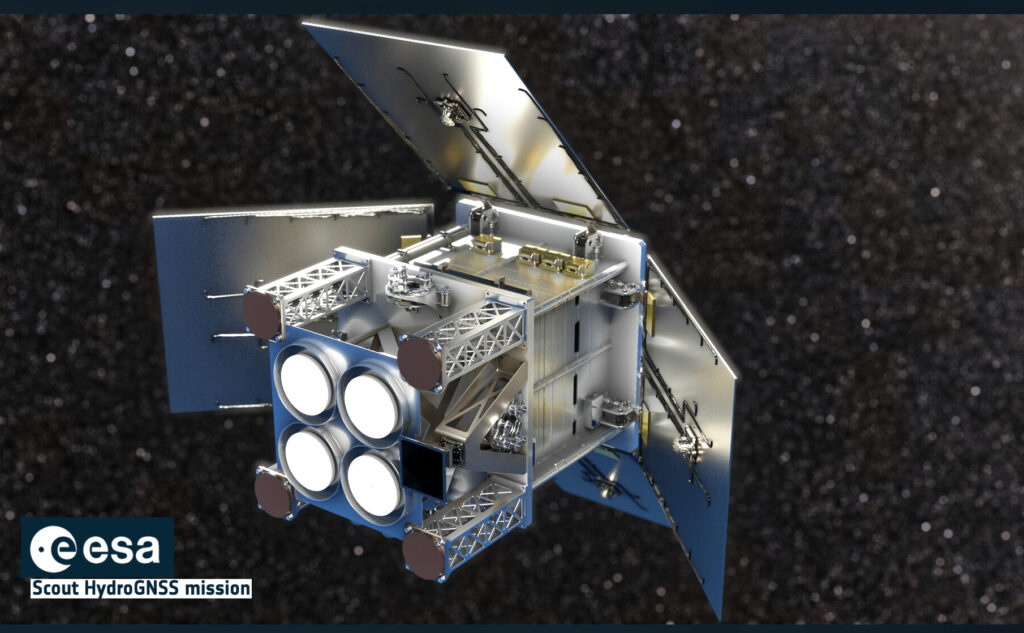
HydroGNSS is scheduled to launch this month aboard a SpaceX Falcon 9 rocket from Vandenberg Space Force Base, California, and this mission is backed by the UK Space Agency and forms part of the European Space Agency’s Scout framework.
Once it enters operations, the two-satellite system will monitor changes in satellite navigation signals caused by the physical properties of terrain, ice, oceans or vegetation to provide scientific data on the water cycle.
Once on-orbit, the two satellites will travel 180 degrees apart around Earth to maximize coverage. They will use an innovative technique called Global Navigation Satellite System (GNSS) reflectometry to quite literally ‘scout for water’.

Navigation satellites such as GPS and Galileo transmit L-band microwave signals that change when reflected off Earth’s surface. HydroGNSS will compare these reflected signals with the direct GNSS signals to extract valuable information about geophysical parameters related to the water cycle.
The mission focuses on four crucial variables, all recognised as Essential Climate Variables or closely related to them: soil moisture, freeze–thaw state over permafrost, inundation, and above-ground biomass.
These data are vital for improving our understanding of Earth’s water cycle, agricultural planning, flood prediction, and our understanding of wetlands, permafrost dynamics and forest carbon storage.As ESA’s first Scout mission, HydroGNSS is part of the agency’s Earth Observation FutureEO program. Scout missions are designed to deliver cutting-edge science quickly and affordably, complementing ESA’s larger Earth Explorer missions.


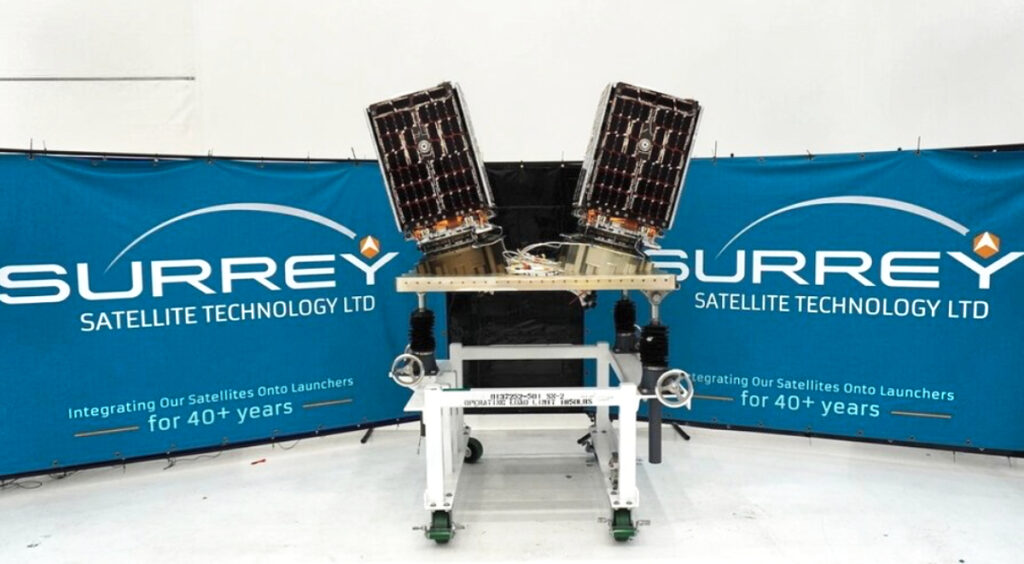
HydroGNSS was manufactured by Surrey Satellite Technology Ltd. (SSTL) in Guildford, UK, before being transported to California in early September. Since then, the satellites have undergone a series of final checks to prepare them for launch and are now ready to be enclosed in the rocket fairing.

Read the full story on ESA’s HydroGNSS Scout satellites getting ready for launch at this direct link…
