
• Skip to primary navigation
  • Skip to main content
  • Skip to primary sidebar
  • Skip to secondary sidebar
  • NEWS:
  • SatNews
  • SatMagazine
  • MilSatMagazine
  • SmallSat News
  • |     EVENTS:
  • SmallSat Symposium
  • Satellite Innovation
  • MilSat Symposium
  • SmallSat Europe

SatNews

  • LATEST
  • EXPLORE ⌄
    • Missions & Constellations
    • Business & Finance
    • Military & Defense
    • Launch
    • Software Automation & Ground Systems
    • Government & Regulation
    • Services & Applications
  • Magazines
  • Events
  • Calendar ⌄
    • IN PERSON
    • VIRTUAL
  • Subscribe

Silicon Sensing test program proves IMU performance in space conditions

November 4, 2025

The research with Institute of Science, Tokyo, reveals DMU41 is well suited to LEO missions
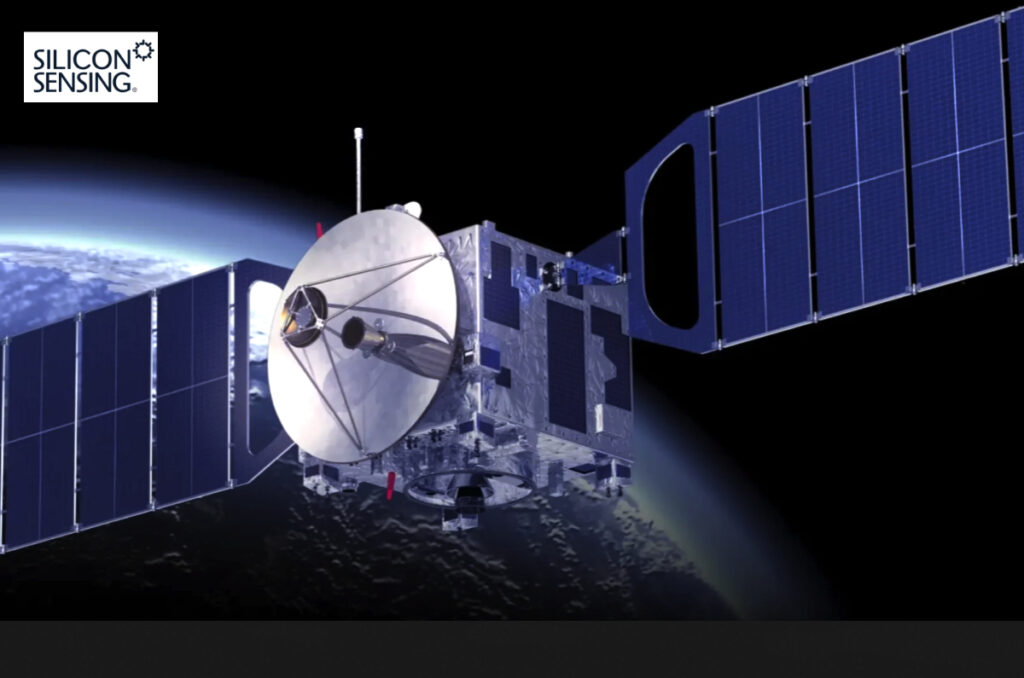
After announcing a research partnership in April of 2024, Silicon Sensing and the Institute of Science, Tokyo, have now completed a test program evaluating the performance and durability of the DMU41 tactical-grade inertial measurement unit (IMU) in radiation environments similar to those found in space.

The results show that the DMU41 continues to perform well even when exposed to cumulative radiation doses as high as 10 kRad, which exceeds the usual radiation levels encountered during small satellite missions in Low Earth Orbit (LEO).

Testing of a large sample of DMU41 IMUs took place at the Institute of Science Tokyo’s Wakasa Wan Energy Research Centre in Fukui City. The program evaluated Single Event Effect (SEE) and Total Ionizing Dose (TID) on DMU41 units. SEE verified resilience to ionizing particles, while TID assessed long-term reliability under radiation.

All testing used dose and exposure levels at or above key industry standard thresholds—much harsher than normal operational conditions at LEO.

The DMU41 is a robust, 9 degrees of freedom, high performance IMU. It operates in temperatures ranging from -40oC to +85oC, delivering outstanding low noise performance, bias instability and angle random walk.
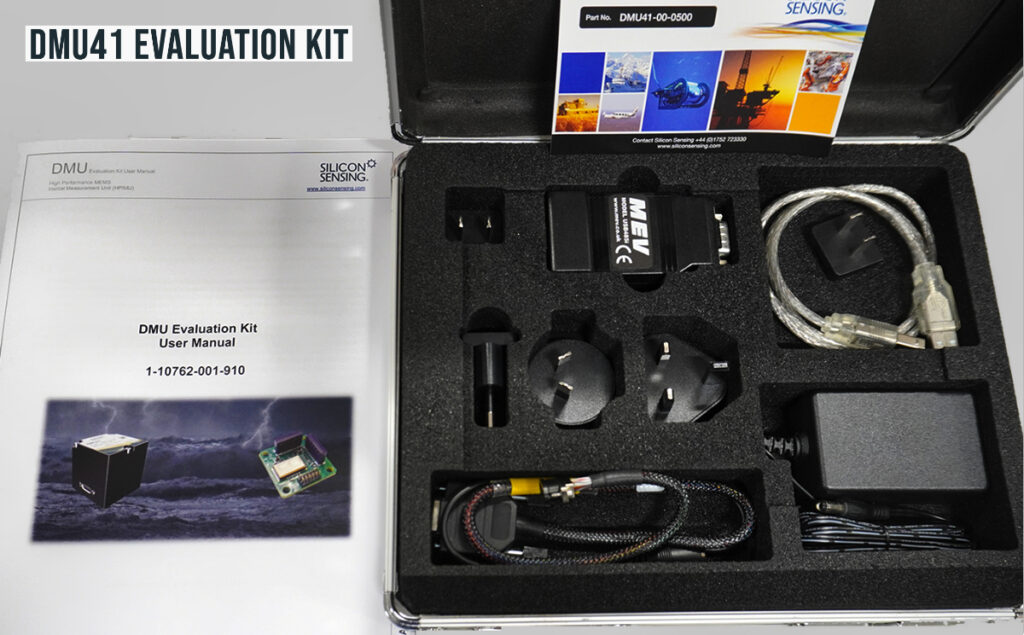
Evaluation Kit info via this direct link…

Offering performance comparable to typical fiber-optic gyro IMUs, it comes in a far more compact package—measuring just 50.5×50.5x51mm, weighing under 180g and consuming less than 1.8W. The DMU41 is designed to streamline system integration and help satellite developers shorten their certification process.

David Somerville, General Manager, Silicon Sensing, said, “This is an important partnership for us, and these are strong results for our IMU. In this fast-evolving sector performance, size, endurance, power consumption – and cost – are all crucial and these results validate the choice of DMU41 by a growing number of satellite manufacturers. We are confident our technology will significantly improve LEO operations.”

Link to the Silicon Sensing and Science Tokyo case study…

Filed Under: LEO Constellations, SmallSat

Primary Sidebar

Coverage

  • Missions & Constellations
  • Business & Finance
  • Military & Defense
  • Launch
  • Software Automation & Ground Systems
  • Government & Regulation
  • Services & Applications

Most Read Stories

  • FCC Opens Review for SpaceX’s 15,000-Satellite VLEO Constellation
  • Lawmakers Restore Funding for SDA Tranche 3, Add $1.2 Billion to Space Force R&D
  • Strategic Exit: Tower Corp Divests AST SpaceMobile Stake Ahead of Key Launch
  • SpaceX Targets $800 Billion Valuation in Secondary Sale, Eyes 2026 IPO
  • NASA Loses Contact with MAVEN Mars Orbiter

About Satnews

  • Contacts
  • History

Archives

Secondary Sidebar

We use cookies to ensure that we give you the best experience on our website. If you continue to use this site we will assume that you are happy with it.
x
Sign up Now (For Free)
Access daily or weekly satellite news updates covering all aspects of the commercial and military satellite industry.
Invalid email address
Notify Me Regarding ( At least one ):
We value your privacy and will not sell or share your email or other information with any other company. You may also unsubscribe at anytime.

Click Here to see our full privacy policy.
Thanks for subscribing!