

Impulse Space has unveiled a proposed mission architecture for delivering multiple tons of cargo to the Moon in the near term—the plan combines Impulse’s existing Helios kick stage and a new lunar lander, to be developed in-house.
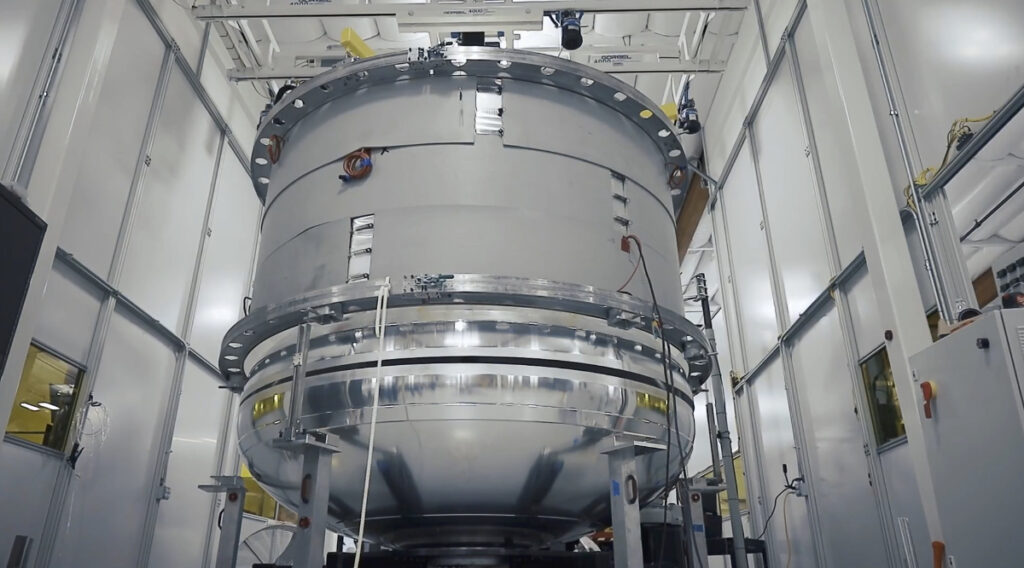
Launched on a medium- or heavy-lift rocket, this combination could take approximately 3 tons of cargo to the Moon.
The proposal is a response to an existing gap in lunar cargo delivery capabilities, specifically for payloads ranging from 0.5 to 13 tons. NASA’s Commercial Lunar Payload Services (CLPS) program is limited to small-scale deliveries on the order of hundreds of kilograms, and the Human Landing System (HLS) vehicles (which target large payloads required for human flight) are still in development. In the near term, a landing system capable of delivering midsize payloads could be used for equipment like lunar terrain vehicles or power generators, supporting the build out of a sustainable lunar presence.
Under the plan, Helios would launch on a standard medium- or heavy-lift rocket. Impulse’s lunar lander would ride as a payload on Helios. Once Helios and the lander are deployed in Low Earth Orbit (LEO), Helios serves as a cruise stage, transporting the lander to low lunar orbit within one week. The lunar lander then separates from Helios and descends to the surface of the Moon. By taking advantage of Helios’s high delta-v capabilities, this proposed mission architecture doesn’t require in-space refueling.
With this Helios and in-house lander combination, Impulse estimates delivering up to 6 tons of payload mass to the Moon (across two missions) per year starting in 2028 at a cost-effective price point. The plan leverages existing and flight-proven technologies, accelerating time to execution and reducing risk. Examples include: Use of existing, commercially available launch vehicles Use of subsystems and components that already have flight heritage or are in advanced development stages. By 2028, Helios will have flown multiple missions.
The team has already begun work on the engine for a lunar lander, which will use a nitrous and ethane bipropellant—the same combination already used successfully in space on Impulse’s Mira vehicle. The engine is designed to be highly throttleable, restartable, and have a high specific impulse (Isp).
Traveling to and landing on the Moon requires spacecraft with tightly integrated, reliable systems—from avionics to propulsion to communications,” said Tom Mueller, founder and CEO of Impulse Space. “We’ve already demonstrated that our technologies are up to the task, and this architecture represents the next logical step for advancing in-space mobility beyond near-Earth orbit. We’re confident in our ability to execute on this plan based on our track record of rapidly and successfully developing new spacecraft, such as taking Mira from clean-sheet design to orbit in less than 15 months. With Mira’s Saiph thrusters, we’ve already demonstrated the capability to operate highly efficient, rapidly restartable engines in space.”