
Utah State University’s Space Dynamics Laboratory has released open-source software to detect potentially harmful shooting stars, called bolides—bright meteors that explode as they enter Earth’s atmosphere. The software, StarFall, can be downloaded at this direct link…
Scientists have long known that shooting stars are meteors traveling through Earth’s atmosphere. Meteors that reach a minimum apparent magnitude of -4, at least as bright as Venus, the brightest planet in the night sky, and explode in the atmosphere are known as bolides. Bolide explosions have caused terrestrial damage.
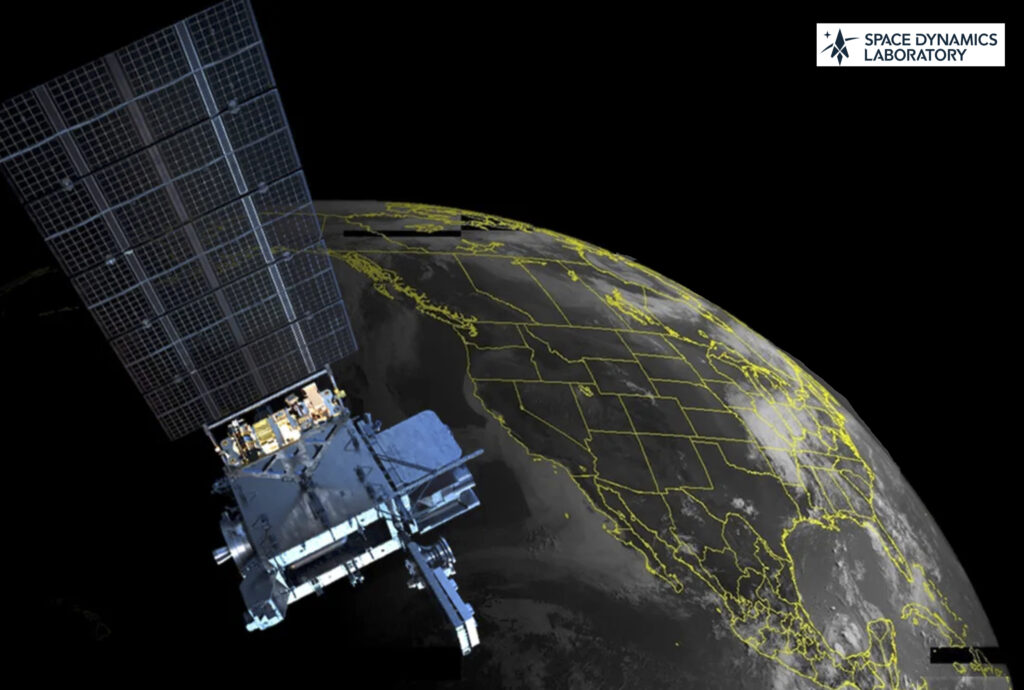
In 2019, scientists discovered that data captured by the National Oceanic and Atmospheric Administration’s Geostationary Lightning Mapper (GLM) instrument onboard the Geostationary Operational Environmental Satellites (GOES) could be processed to detect bolides.
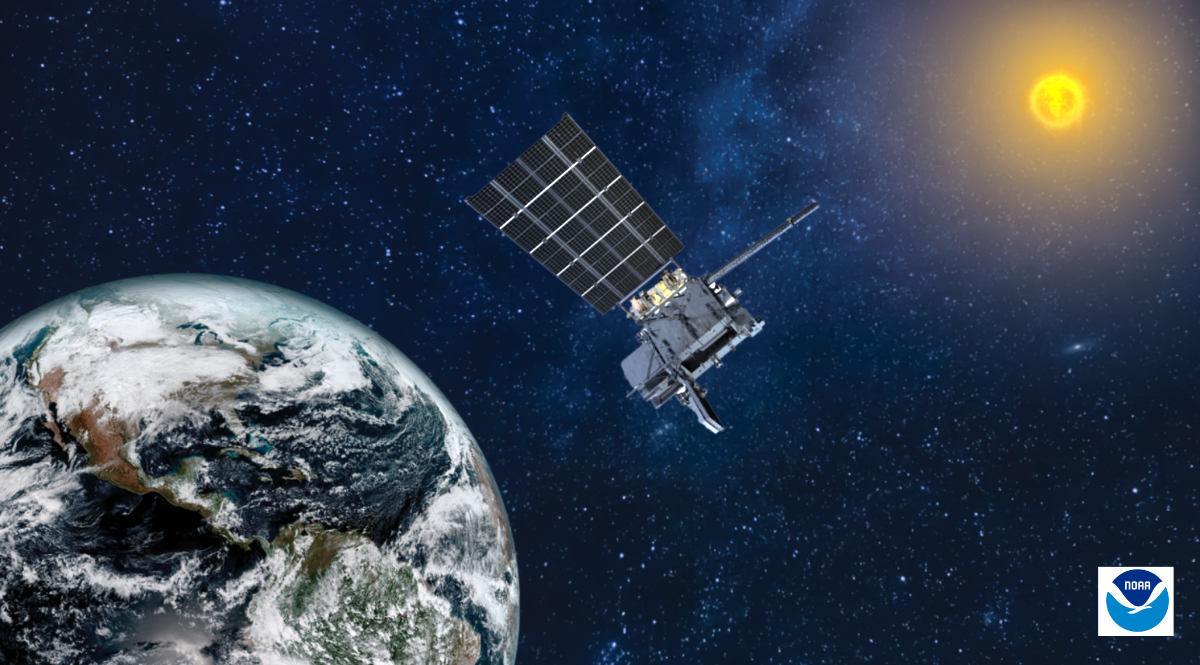
SDL, with support from NASA’s Planetary Defense Coordination Office, has created StarFall, a near real-time bolide detection software suite. SDL’s software ingests GLM data and applies anomaly detection algorithms to distinguish between bolide events and the many lightning detections GLM was originally designed to characterize. The GLM sensor takes 500 images of Earth every second, and StarFall analyzes the meteors’ light curves, or changes in brightness over time, as they pass through the atmosphere.
StarFall software is now available as open source. Scientists and the public can deploy StarFall to receive alerts and view estimated times, approximate locations, and total energy releases for bolide entries. Fellow researchers may also contribute to the source code to extend StarFall’s current capabilities and derive additional functionality.
Headquartered on Utah State University’s Innovation Campus in North Logan, Utah, SDL is an independent nonprofit corporation owned by USU. It employs 1,400 engineers, scientists, technicians, and business professionals who solve technical challenges faced by the military, science community, and industry and support NASA’s vision to explore the secrets of the universe for the benefit of all. SDL has field offices in Albuquerque, NM; Chantilly, VA; Huntsville, AL; Ogden, UT; and Stafford, VA.
As one of 15 Department of War‘s (DoW) University Affiliated Research Centers, SDL is both a trusted advisor to the U.S. government and a specialist in its areas of expertise, rapidly developing government-owned solutions to nationally significant challenges.
In February of 2013, a bolide over Chelyabinsk, Russia, released an estimated blast yield of 400 to 500 kilotons of TNT, damaged buildings, and injured approximately 1,500 people. In terms of raw energy release, the atomic bombs dropped during World War II had yields between 13 and 21 kilotons of TNT,” said Tyson Johnson, SDL’s StarFall program manager. “Rapid detection, characterization, and notification of these natural Earth impactors is therefore vitally important.”
Shooting stars, or meteors, have always fascinated people. Cultures across the world have assigned significance to shooting stars as they tried to explain the phenomenology,” said Eric McKinney, an SDL algorithm engineer and a StarFall developer. “Some explanations border on supernatural and have entered folklore as carriers of traveling souls, omens of good or bad fortune, portents of change, or even tears from the gods, but there can be real and significant implications on Earth from some of these impactors.”