

The Flight Ticket Initiative is a collaboration between the European Space Agency (ESA) and the European Commission for European companies and institutions to test and prove new products and applications in space. It encourages the use of new European launchers.
Testing prototypes in space provides valuable insight for research projects and unlocks the market potential of commercial applications. These types of missions are also called in-orbit demonstration or validation (IOD/IOV) as they are meant to demonstrate or validate hardware, services and satellite payloads in space.
Flying with Avio
Signatures between ESA and Avio have secured three missions to fly on the Vega-C rocket as auxiliary passengers from the European Spaceport in French Guiana.


Spanish company Persei will get to operate its E.T. Pack mission to demonstrate a solution to deorbit satellites using a kilometer-long aluminum tape that will be extended from the satellite. The tape, also called a tether, will generate an electric current as it passes through the plasma and geomagnetic field that surrounds our planet. This will create a force known as Lorentz drag which will slow down and deorbit a satellite. This fuel-free system offers a promising solution to reduce space debris, while keeping the satellite stable and avoiding collisions during deorbiting.

German Aerospace Center, DLR, will fly its Pluto+ cubesat to demonstrate a high-performance-yet-compact avionic system. Developed at DLR’s Institute of Space Systems in Bremen, Germany, Pluto+ will also test a flexible solar array capable of delivering 100 Watts of power. With this mission, DLR aims to show that advanced components typically used on larger satellites can also thrive on smaller satellites.
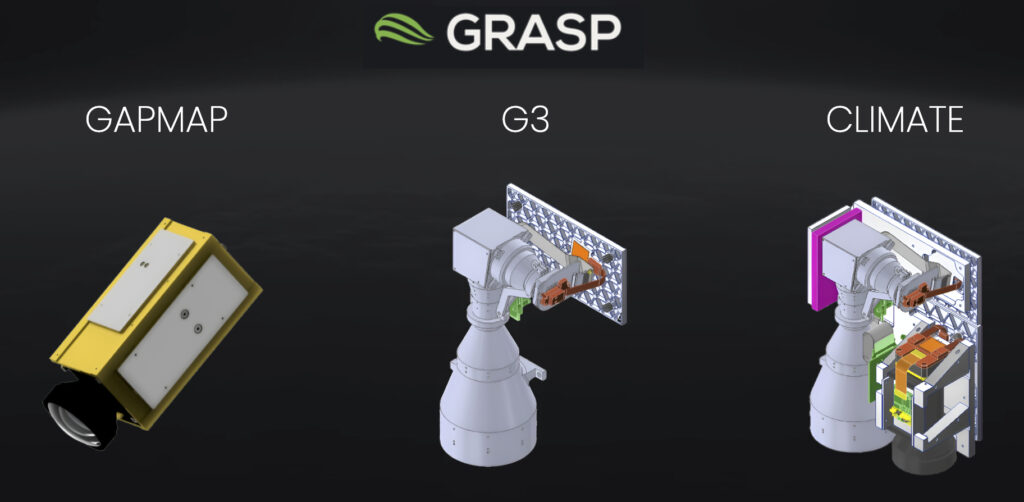
French company Grasp is developing an EO constellation. Under the contract signed, their second satellite in the constellation, GapMap-1, will launch on Vega-C. It will carry a new type of instrument, a short-wave infrared spectrometer, designed to detect greenhouse gases in the atmosphere. This satellite follows an earlier demonstrator already in orbit. The constellation takes detailed measurements by scanning the atmosphere with 60 measurements on each pass overhead, providing more accurate data on air pollution and climate change.
Flying with Isar Aerospace

Signatures between ESA and Isar Aerospace have secured two missions on the Spectrum launch vehicle from the Andøya Spaceport in Norway.

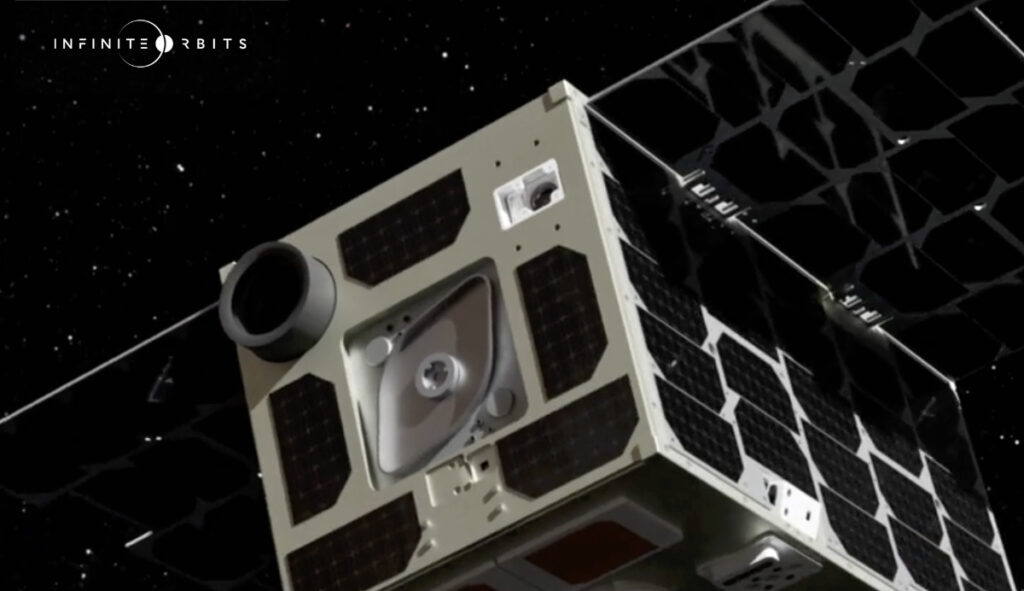
Infinite Orbits will launch two satellites to demonstrate a space debris cleanup mission. The infinite orbit mission will reenact the approach between a servicing satellite and a piece of space debris in low Earth orbit. The mission being launched on Spectrum consists of two satellites: one will “pretend” to be an inactive piece of space debris, and the other will approach independently and hold at a few meters. The demonstration would allow for future missions to target no longer operational satellites and remove them from orbit, or even service them for reuse.
Dutch company Isispace will manage the integration and in-orbit operation of three cubesats flying on Spectrum allowing a multitude of experiment providers to test and validate their technologies in space.

The Flight Ticket Initiative fosters competition in the European space industry and provides regular opportunities for launch services on the IOD/IOV missions and more.
The Flight Ticket Initiative is part of ESA’s ‘Boost!’ program that secures the flights for the European Commission’s IOD/IOV program.
Regular opportunities are announced, the next cut-off for application is 1 October. More details and how to apply to fly your technology in space are available at this direct link...