

Australia is budgeting a spend of A$664 million (€373.4m) on its own low Earth orbiting systems, according to forecasts from analysts at Gartner.
LEO satellites orbit closer to Earth than conventional satellites, resulting in faster data transfers and reduced latency. This advancement provides high-speed broadband that can supplement or, in some instances, serve as a substitute for traditional terrestrial networks. Currently, the market is experiencing global growth, with over 20 active service providers and the deployment of more than 40,000 satellites expected in the coming years.
The breakdown of Australian end-user spending for 2026 is led by consumer use where no connectivity alternatives exist (A$247 million), IoT connectivity (A$65 million), and resilience improvement (A$126 million). Other categories include network support for maritime and aviation, and services for emergency response and temporary locations.
Khurram Shahzad, Senior Director Analyst at Gartner, said, “LEO satellites have primarily delivered broadband connectivity to remote locations where traditional networks don’t reach. However, new consumer and business use cases are emerging, driving telecommunication providers to expand the market. This is enabling LEO satellites to become a mainstream enterprise broadband technology.”
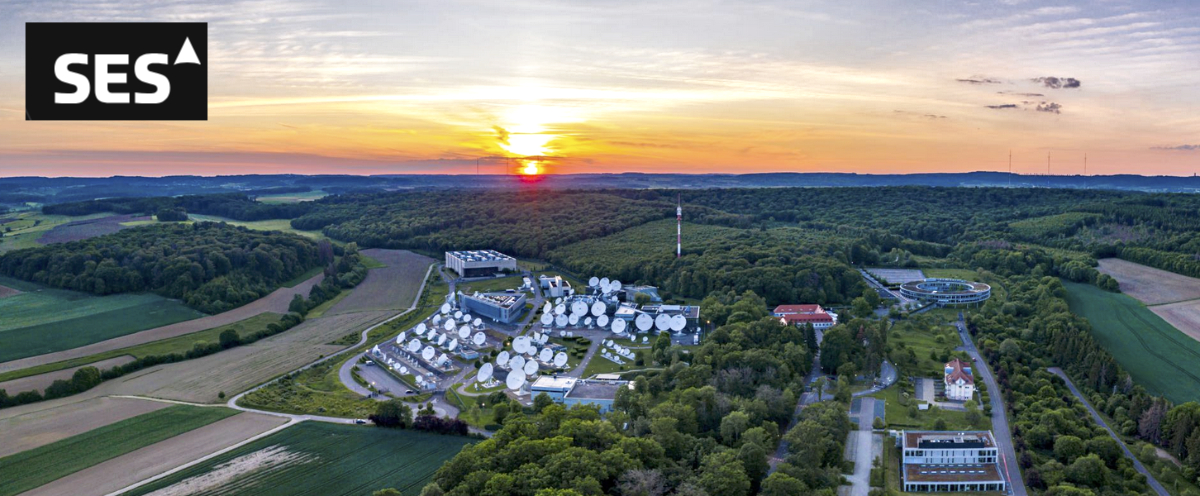
SES has unveiled its half-year results and has made the most of the company’s new mantra: “Two companies: one mission,” now that it counts Intelsat as part of its portfolio.
The results were joined by news from the USSF that it is awarding contracts worth $4 billion to five companies: Astranis, Boeing, Northrop Grumman, Intelsat, and Viasat. The contract is to focus on anti-jam satellite communications. It is not known yet how much this contract will be worth to Intelsat/SES, but every dollar helps.
As to the actual H1 results, its overall Revenue was €978 million (-0.2 per cent yoy). Its growing Networks division grew +10.3 per cent yoy supported by +17.1 per cent yoy growth in Government and +9.5 per cent yoy growth in Mobility. Media continued to decline, and fell -12.1 per cent yoy.
SES reported €690 million of new business and contract renewals signed in H1 2025—with a total gross contract backlog of €4.2 billion. FY 2025 financial outlook is well on track, reiterating stable revenue and broadly stable Adjusted EBITDA yoy.
Adel Al-Saleh, CEO of SES, said, “H1 2025 delivered solid operational and financial performance. Through continued strategic execution and solid commercial momentum, we have stabilised Revenue and Adjusted EBITDA and are firmly on track to meet our reiterated FY25 financial outlook.”
“Our solid H1 2025 performance is underpinned by the strong growth in the Networks business, now c.60 per cent of revenues. We continue to see commercial traction across Government and Mobility. This underscores our strong positioning in high-value segments, driven by our differentiated and scalable multi-orbit offering. In the first half, we secured €690 million in new business and renewals, reinforcing our future growth trajectory. We have a robust pipeline of Government opportunities supported by increased defence spending in Europe, including the development of a second satellite for GovSat jointly with the Luxembourg government, as well as strong momentum with the US government, including the selection of SES Space & Defense to provide a hybrid space-based architecture to the US Department of Defense through a secure integrated multi-orbit network (SIMON). In aero we are seeing increased traction with Open Orbits— including partners’ wins with Thai Airways, Turkish Airline, and Uzbekistan Airways. Our Media business continues to deliver in-line with expectations, underpinning SES’s stable and cash-generative foundation,” SES added.
