
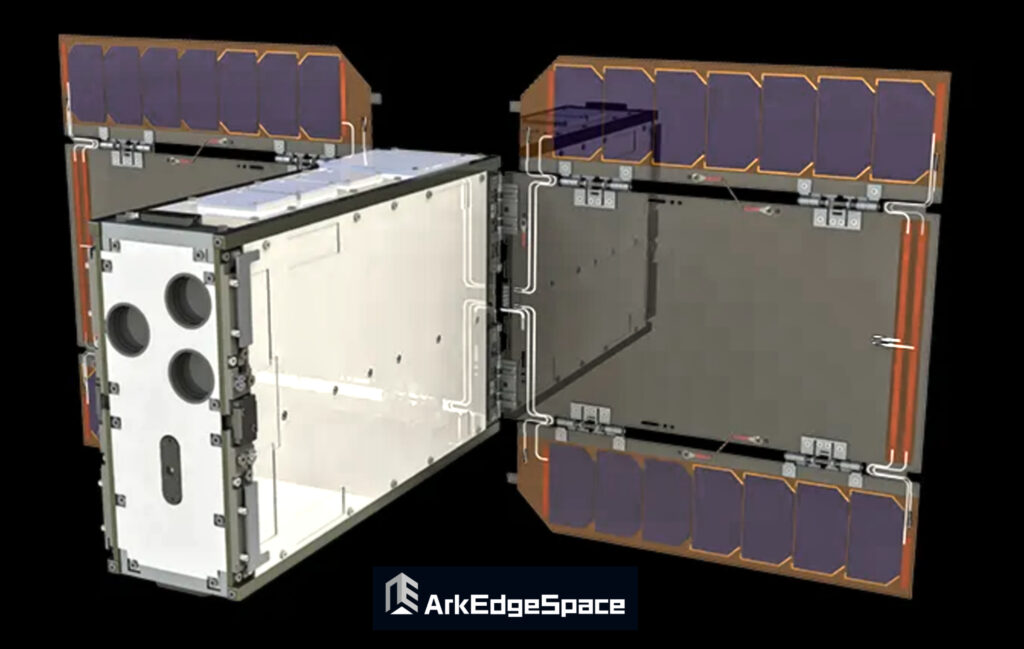
Compact, with dimensions of 10cm x 20cm x 30cm, these microsatellites are making strong strides in a variety of mission portfolios, ranging from Earth-based constellations, covering observation, navigation, and communication for both Earth and lunar missions, and even beyond toward exploration in deep space.
ArkEdge Space Inc. has been selected by the Japan Aerospace Exploration Agency (JAXA) under its Space Strategy Fund to lead the development of advanced lunar navigation technology.
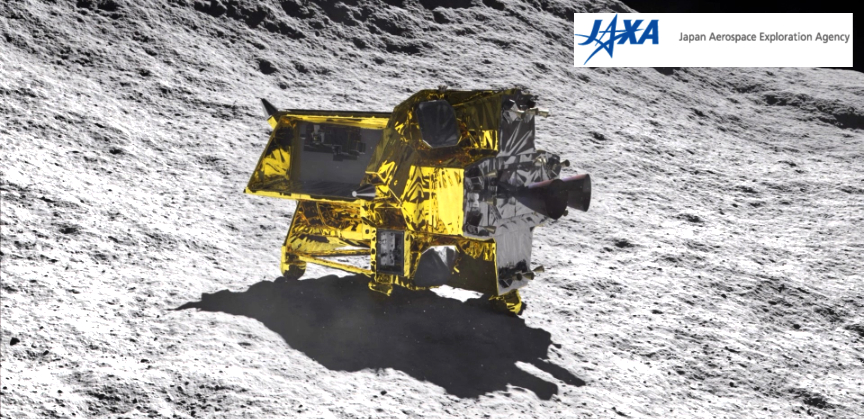
The company will use its expertise in the planning and design to mass production and operation of smallsat constellations to lead the development of a next-generation Lunar Navigation Satellite System (LNSS), a vital component to the International LunaNet initiative, driven by NASA , ESA and JAXA.
LunaNet seeks to establish essential infrastructure to support sustainable lunar exploration and foster growth of the lunar economy.

NASA / Reese Patillo
This program, supported by up to 5 billion yen ($32.5 million) over four years, tasks ArkEdge Space with developing a 100 kg class microsatellite, developing crucial technology including the:
- Lunar navigation payload
- Demonstration satellite platform, along with a system operations plan
- Establishment of an approach to mission evaluationy
These efforts will help reduce development costs and timeframes while advancing core LNSS technologies and enabling the development of future lunar navigation system demonstration satellite.
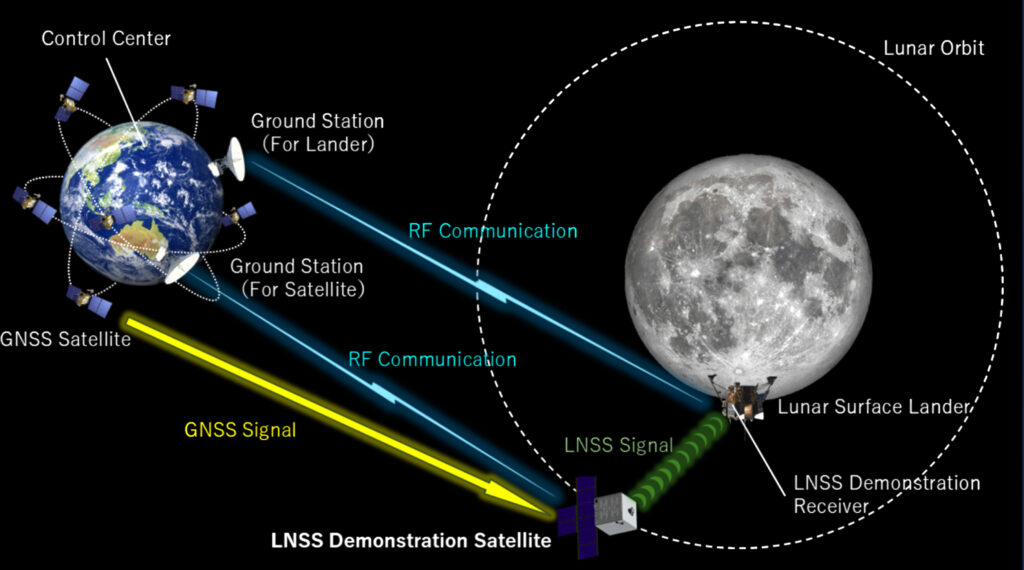
ArkEdge Space’s work on LNSS leverages its expertise in satellite technology and builds on its ongoing collaboration with JAXA. A key innovation of the project involves the use of faint GNSS (Global Navigation Satellite Systems) signals, originally designed for Earth, to determine satellite position and time in lunar orbit—approximately 380,000 kilometers from Earth.
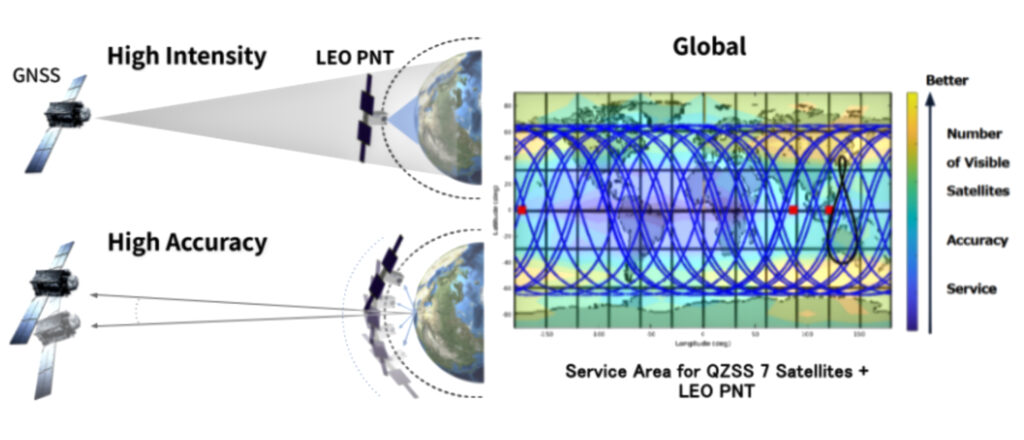
Additionally, LNSS complements advancements in Low Earth Orbit Positioning Navigation and Timing (LEO-PNT) systems, which use small satellite constellations at LEO altitudes. These systems provide high-precision, robust navigation services globally, enhancing existing GNSS infrastructure.
To enable LNSS satellites to transmit accurate positioning signals to the Moon, it is critical to determine the position (orbit) and time of the LNSS satellite itself with high accuracy. ArkEdge Space, in collaboration with JAXA, has developed an innovative method to achieve this. The approach involves capturing weak GNSS (Global Navigation Satellite System) signals that travel an extraordinary distance of approximately 380,000 kilometers from Earth’s orbit to the lunar domain. These signals are then processed on-board to determine their orbital position and time.
As part of this development, the project focuses on the creation and integration of key subsystems, including an advanced navigation system and a highly stable timing system. These cutting-edge technologies will be validated by a dedicated lunar positioning system demonstration mission in lunar orbit, laying the foundation for a high-precision lunar navigation infrastructure.
As lunar exploration accelerates—driven by initiatives including Artemis and other international efforts—high-precision infrastructure has become indispensable for activities such as rover navigation, base construction, and in-situ resource use. LNSS supports lunar operations as well as serves as a stepping stone for future exploration of Mars and deep space.
The LNSS initiative comes at a pivotal time as nations worldwide consider developing regular lunar positioning services to support diverse lunar activities. To safely and efficiently enable these operations, the Moon requires real-time, high-accuracy positioning services like those of Earth-based GNSS.
ArkEdge Space has been developing essential communications and navigation infrastructure for lunar missions since 2021 under the Stardust Program (Strategic Program for Accelerating Research, Development, and Utilization of Space Technology). The company also intends to support Initial Operational Capability (IOC) for globally coordinated, high-precision navigation services. By leading LNSS development, ArkEdge Space will advance Japan’s space technology and strengthen its international competitiveness. We remain committed to supporting lunar and deep space exploration, helping establish a foundation for the new economic frontier.
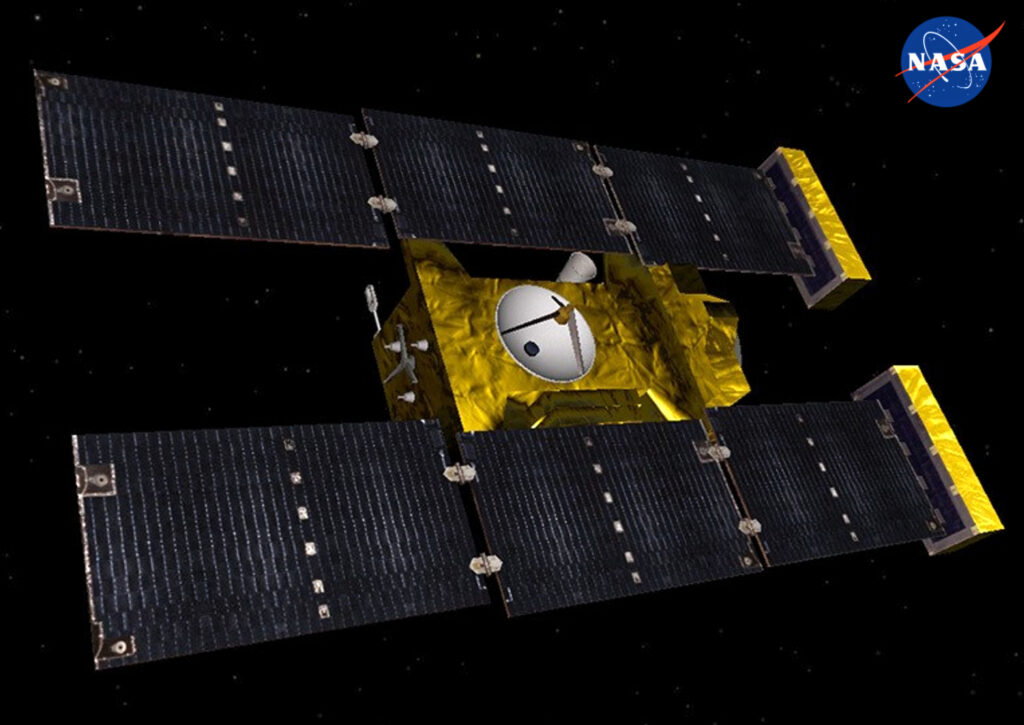
Credit: NASA/JPL-Caltech
In October 2024, ArkEdge Space initiated a joint study with JAXA to explore the development of a LEO-PNT system. LEO-PNT is envisioned as a revolutionary satellite constellation of LEO satellites designed to provide higher-intensity, and higher-precision positioning data globally, surpassing the capabilities of traditional GNSS. The system works by receiving GNSS signals, processing the observational data on-board the satellite, and generating precise positioning signals for distribution.
This innovative approach builds on the advanced technologies and expertise developed during the development of key LNSS subsystems. By leveraging these technological advances, ArkEdge Space aims to continually improve its satellite navigation capabilities and apply the results to broader Earth orbit-based business ventures.