
By Chris Forrester
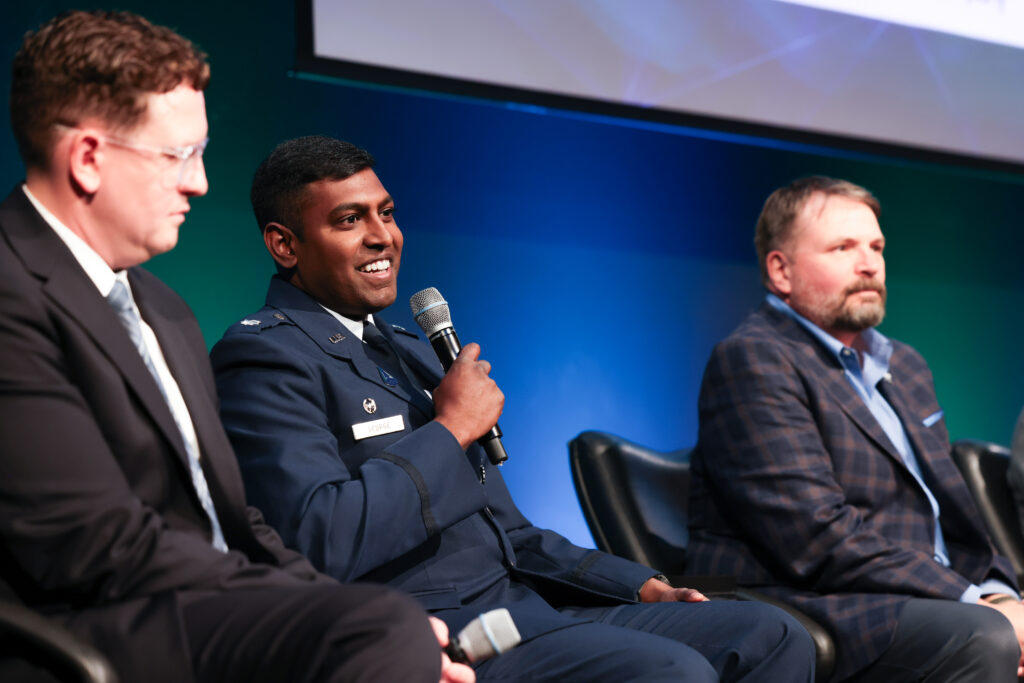
Prof. Andy Kwas, NG Fellow at Northrop Grumman, lead and moderated a distinguished – and sparkling – and most distinguished panel (he described them as the ‘Dream Team’ of experts) which examined the future of sustained space resilience at the MilSat Symposium, part of the Silicon Valley Space Week.
Dr Andrew ‘Andy’ Williams, deputy Technology Executive Office (TEO) for Space S&T at the US Air Force Research Lab (AFRL) admitted that it was sometimes difficult to accurately describe ‘resilience’. “It comes down to one thing: How do I make sure the service that the warfighter depends upon is there when it is needed. It is a resilient architecture and capability. Protect & Defend is part of the solution but is not the entire solution. Once, it was all about orbital diversity, and then platform diversity, now it is bringing in LEO and international, and creating a situation where [we have the advantage].”
Lt Gen (Rtd) Thomas J Sharpy, VP/Customer Development, Portal Space Systems and very much a former military official (his career culminated as the lead Allied Command Transformation senior exec, where he was responsible for developing strategic capabilities for NATO’s 30 member nations. He also championed NATO’s Command and Control, Cyber Security, and Joint Air Power Competence Centers of Excellence), but he admitted to delegates that which he said everyone understood that all too often the budgets would not allow all project requests to be granted.
“The demands are insatiable,” said Sharpy, “but the dilemma for us all is that everything on orbit is a threat today.”
Richard Palmer (Deputy Director (J8) US Space Command) wholly agreed, telling delegates that the harsh reality was that military assets needed to survive “the first punch” and said that the audience would not hear a 4-star general confirm that strategy, “but this is what the very first key to victory is in this domain – which supports and interacts with the other domains.”
Lt. Col. Moses George, 53rd Space Operations Squadron Commander in the US Space Force confirmed the strategy for when it came to the tactical level. “In the transition from rhetoric to reality there are certain gaps, and we are seeing these on the operator end of the house and the devil is in the detail. Absorbing the first punch means the entirety of the architecture and in my view that’s what resilience is. It isn’t just what’s on orbit but means the entire spectrum of that architecture must be robust enough and to be capable of absorbing that [punch] and whether it might be a cyber attack or anything.”
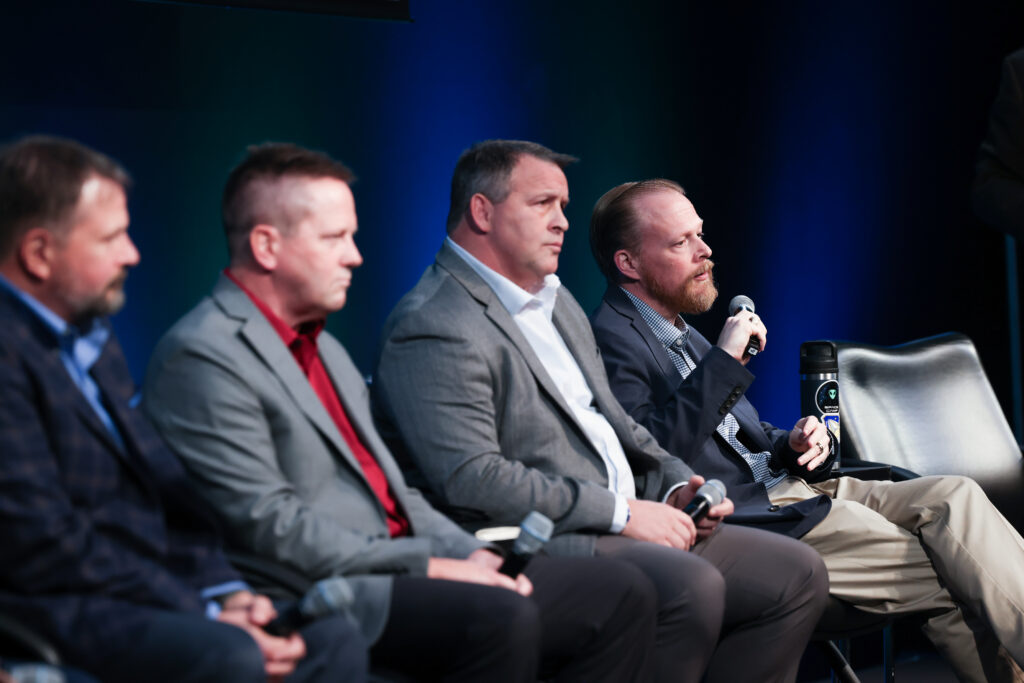
Dr Kelly Hammett, Director and Program Executive Officer, Space Rapid Capabilities Office, US Space Force expanded the position saying that everyone had to face the challenges and get things “just right”, adding that the “enemy of better, better, better is that it must be costed and this usually means mature technology which translates as being you have to be a smart buyer. The proposal has to be real and an executable program. We have to be shoulder to shoulder with industry all of the time. We don’t build anything, although we spend years in training in the full life-cycle of the program if you are going to get feedback and field an operational capability. Our job is to get kit to the field. Our job is also to move faster – although we probably aren’t because that requires us to punch through the bureaucracy.”
Lt. Col. George told delegates that there was one huge change over the past few months: “I am wearing the Space Force badge.” This meant a combined approach and the bringing together of so many different elements. “It is fair to say that anyone who has been out of this activity for much more than 4 months is having an antiquated view of our role. The best thing about the Space Force is that we are brand new. But the worst thing about the Space Force is that we are brand new! But it is an opportunity to have our fingerprints on it and the organisational make-up as to how we should fight and make ourselves more efficient and affective. We are also integrating at a much faster pace than before. The imperative of the threat is forcing us to integrate across space mission areas in a manner that we have not done in the past. We are also transforming our systems but the most important part of the architecture is our people. Are they ready to operate the systems in this contested environment and with the speed and level of knowledge and flexibility that they need?”
Todd Gossett, VP/Space & National Security Initiatives, SES Space & Defense was asked – with the knowledge of the Russian cyber attack at the start of the Ukraine war – how robust was the satellite industry in resisting these actions? What was new, he said, in the Ukraine action against the commercial sector was that the commercial sector was very aware of requirements for various layers of controls now in place including the National Security Crypto Policy and the encryption requirements. “Is all this necessary, absolutely. Is it sufficient, no. The challenge for us is that we have to be perfect ever single day. But [our adversary] needs only to be lucky once and they test us every single day, every day, every hour, every minute. The dilemma for us all is that it could be a State actor, but it could also be a kid holed up in a basement somewhere. We face these challenges day in and day out.”