

BAE Systems and strategic partners L3Harris Technologies and the Space Telescope Science Institute (STScI) have been selected as one of three teams to mature technologies in support of NASA’s Habitable Worlds Observatory (HWO) mission concept.
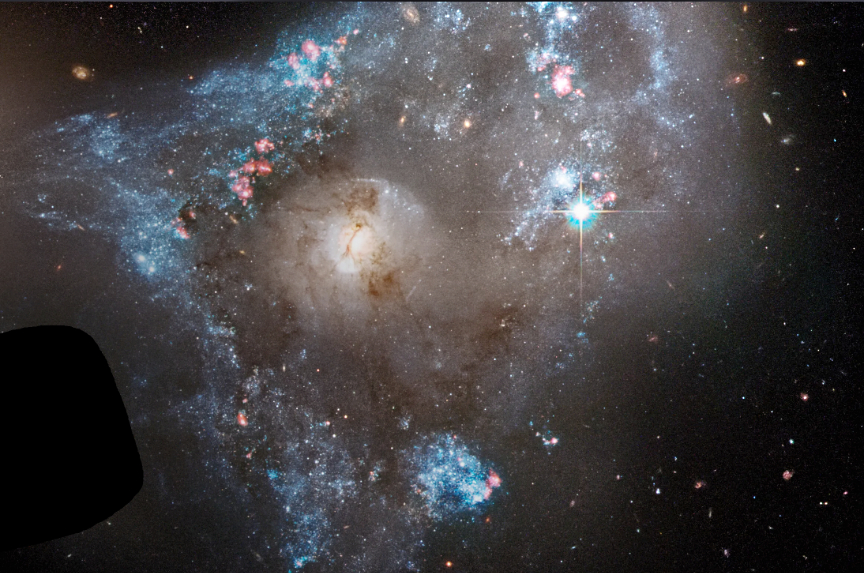
A first of its kind telescope, HWO will be designed to seek out signs of life beyond our solar system and conduct transformational observations of the universe. Its driving goal is to identify and examine a promising sample of Earth-like planets orbiting other stars to determine if they could show signs of hosting life. The observatory would also provide a powerful lens to explore the stars, the planets of our solar system, galaxies, and the evolution of the universe with unprecedented sensitivity and resolution.
Together, the team will conduct a two-year research effort called the Ultra-stable Large Telescope Research and Analysis Program – Critical Technologies (ULTRA-CT). The program is meant to close gaps in the performance of large space telescopes through the advancement of ultra-stable optical systems. BAE Systems’ Laura Coyle, principal optical engineer and astrophysics technology lead for the Space & Mission Systems sector, will serve as the principal investigator for the effort. ULTRA-CT continues the team’s work from two previous NASA awards, ULTRA, a one-year study that identified technology gaps for large, segmented systems, and ULTRA-TM, a four-year technology maturation effort for key component-level technologies.
Detailed observations of exoplanets can be extremely challenging, largely because the light they reflect is so much fainter than the star they orbit. For an Earth-like planet around a Sun-like star, this brightness ratio, or “contrast,” is about 10 billion to 1. While this unprecedented level of starlight suppression would be achieved with a coronagraph, an extremely stable, large telescope is necessary to collect enough well-controlled light to feed this instrument, as well as provide high-resolution imaging. In this case, the telescope stability required to support 10 billion to 1 contrast is on the order of picometers – or one trillionth of a meter — far beyond the capabilities of current state-of-the-art systems. To put this into perspective, the HWO telescope will need to be a thousand times more stable than the James Webb Space Telescope.
HWO is NASA’s next flagship astrophysics mission after the Nancy Grace Roman Space Telescope, which is currently scheduled to launch by 2027.
“Even slight thermal changes and minor vibrations will impact the telescope’s ability to maintain the contrast necessary to make these observations, so we need a system with both passive and active elements to minimize and compensate for disturbances,” said Coyle. “Bolstered by a legacy of supporting NASA’s most ambitious missions, our ULTRA team of engineers is excited to develop technologies that will address stability at the picometer level and continue to advance this groundbreaking project.”
BAE Systems Space & Mission Systems has a strong heritage of supporting all of NASA’s flagship astrophysics missions, including the Great Observatories — the Hubble Space Telescope, Spitzer Space Telescope, Chandra X-ray Observatory, and Compton Gamma-Ray Observatory — the James Webb Space Telescope, and the Roman Space Telescope.