
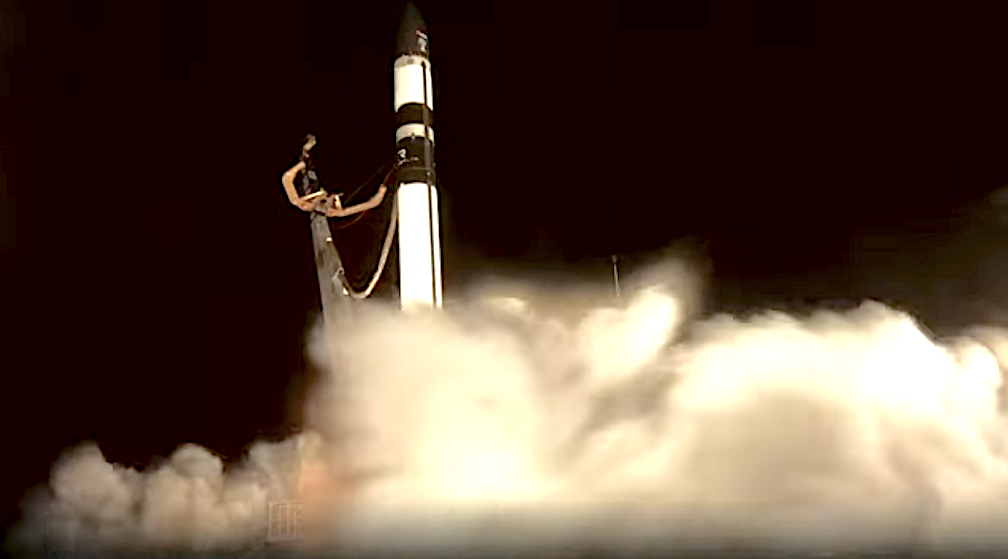
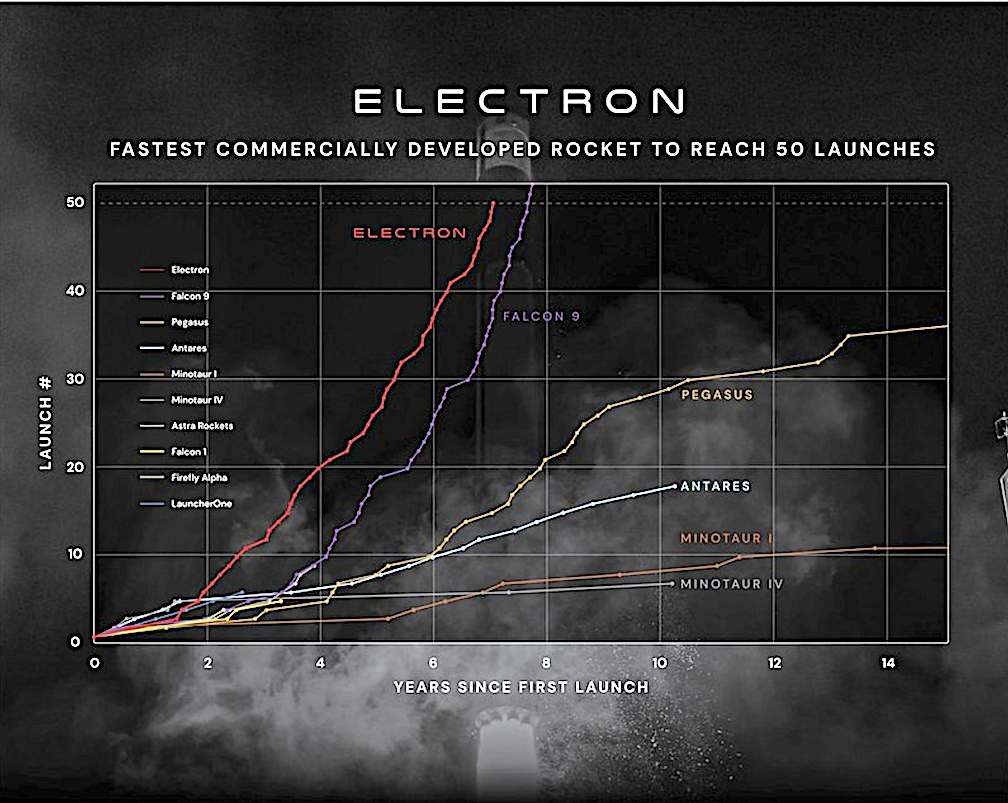
Rocket Lab successfully reached a milestone that few commercial rockets achieved and at a pace that outperformed its competition. The company launched its 50th Electron rocket to date just seven years after the vehicle’s debut in May 2017.
The instantaneous liftoff from Launch Complex 1 at New Zealand’s Mahia Peninsula happened at 6:13 a.m. NZST on Friday, June 21 (2:13 p.m. EDT, 1813 UTC on Thursday, June 20).
Onboard the rocket were five satellites on behalf of France-based Internet of Things company, Kinéis. This was the first of five dedicated flights for the company to deploy its full constellation, consisting of 25 satellites. All five on this flight were successfully deployed.
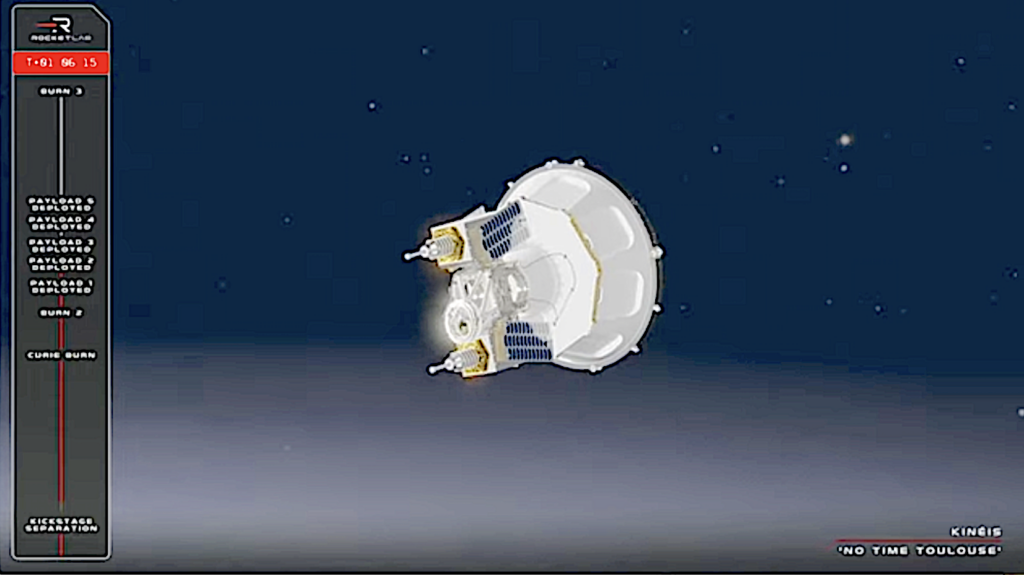
The satellites will orbit at an inclination of 98 degrees with the five satellites deploying “in a precise sequence in singles and as pairs to build out the constellation exactly as Kinéis needs it,” according to Rocket Lab.ch
The launch for Rocket Lab comes at a busy time for the business, which is pushing towards becoming an end-to-end space company. That includes multiple upcoming missions for U.S. agencies, like the National Reconnaissance Office and the U.S. Space Force as well as preparing for a planetary mission to Mars with Blue Origin’s New Glenn rocket as the ride to space.
Prior to Electron’s 50th launch, Sir Peter Beck, the founder and CEO of Rocket Lab, said he and his team are immensely proud of reaching this milestone in the time that they did.
“Out of all the commercially developed rockets in the world, Electron reaching 50, we did it in the fastest amount of time. So, we scaled faster to 50 than anybody else, faster than the Falcon 9, faster than Pegasus, faster than anything else commercially,” Beck said. “And that’s a really hard thing to do because whether it’s a giant rocket or a little rocket, the scaling element is the same and it’s super, super hard.”
Beck said much of the Electron rockets flying today are quite similar to the rockets that kicked off their orbital launch business. He said in addition to their successes, they’ve also taken away a great deal from their failures as well.
“I prefer not to think about it because they’re such devastating moments. They’re incredibly painful. And yes, it’s true that after those moments, you build a better vehicle,” Beck said. “But I always remind the team to never, never be happy, because if you’re happy, the rocket gods will come down with a baseball bat and let you know who’s in charge.
“So, we’re always striving to improve the vehicle. Every opportunity we can to improve it or make it more reliable, we take. And it’s just the harsh reality of spaceflight: it’s incredibly difficult.”
He noted that they are continuing to book more and more Electron flights each year as they progress with the program and prepare to bring the larger and reusable Neutron rocket to market by mid-2025. But he said their pace of launch will continue to be driven by customer demand.
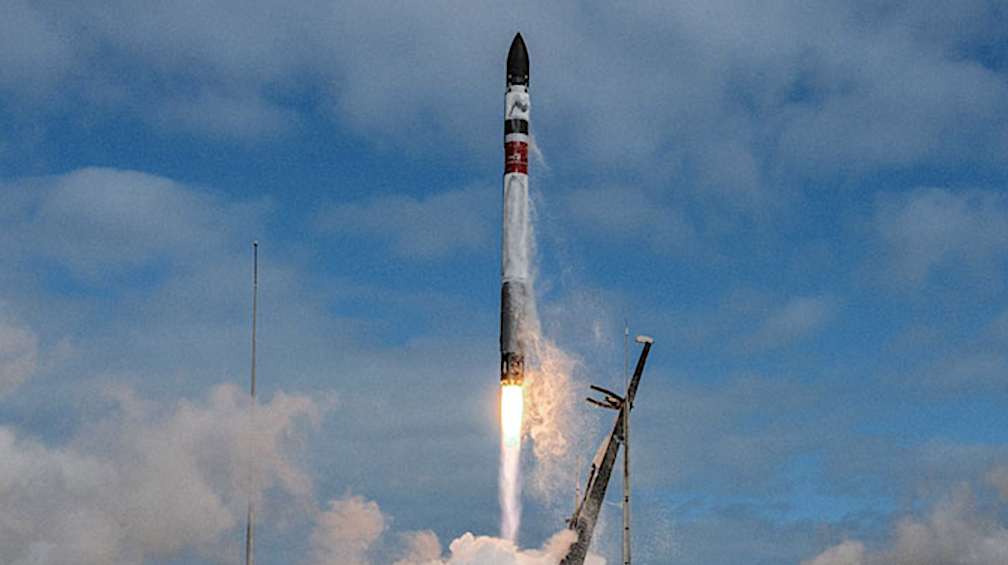
“Any CEO is going to say say that they want to see it scale vertically, right? The reality is, we scale with our customer demand. And the customer demand changes all the time, depending on geopolitical circumstances, where people are at in building their constellations and all the rest of it,” Beck said.
“What I will say is, this year, we sold more Electrons than we’ve ever sold before and next year is shaping up to be the same. So, we certainly hope that the scaling continues for the product, but it’s purely driven by market demand.”