

The United States Space Force’s Space Systems Command, through its Space Sensing Product Support Delta (SNP), has successfully completed the trial period of the Space-Based Infrared System (SBIRS) Baseline Release (SBR 23-1).
This resulted in its operational acceptance by the USSF Space Operations Command, Space Operations Center, Missile Warning Mission Area Team.
“The operational acceptance of SBR 23-1 ensures that the men and women of the 2nd Space Warning Squadron (2 SWS) can excel at their no-fail mission to deliver global Space-Based Missile Warning to U.S. and allied forces,” said U.S. Space Force Lt. Col. Robert Smith, director of operations, 2 SWS.
SBR 23-1, also known as Virtualized Processing Environment Release (ViPER), ensures uninterrupted, continuous, and secure operations of the SBIRS Mission Control Station (MCS) and MCS Backup Data Processing Subsystem System (DPSS) hardware. It is a modernization initiative intended to address critical sustainment concerns, obsolescence issues and cybersecurity needs within the SBIRS ground system.
“SNP is responsible for ensuring our critical mission systems are maintained in their optimal operational status,” said Anita McCorvey, director, SSC Space Sensing Product Support Delta. “ViPER’s modernization initiative is a great example of how we’re doing that.”
It replaces obsolete and vulnerable hardware, connects the legacy proprietary operating systems to a Linux-based operating system running on virtual machines (VM) and uses the VM environment for a consistent and repeatable cyber update capability without disrupting operations. Linux is an open-source operating system that allows a high level of customization and flexibility not possible with proprietary software. Virtual machines support legacy applications, reducing the cost of migrating to a new operating system.
“ViPER uses the latest industry hardware and infrastructure to modernize the SBIRS platform while increasing system resiliency and maintenance,” McCorvey said. She further explains it enables rapid capability insertion into the SBIRS’s architecture continuing its evolution, meeting emerging real-world needs. “SBIRS is the first line of defense for our nation, providing early warning, launch detection, and notification to defense officials and theater personnel. As the adversary is also improving their capabilities, we must also ensure we continue to modernize and improve our mission system, which guarantees that our Space Force remains a premier force.”
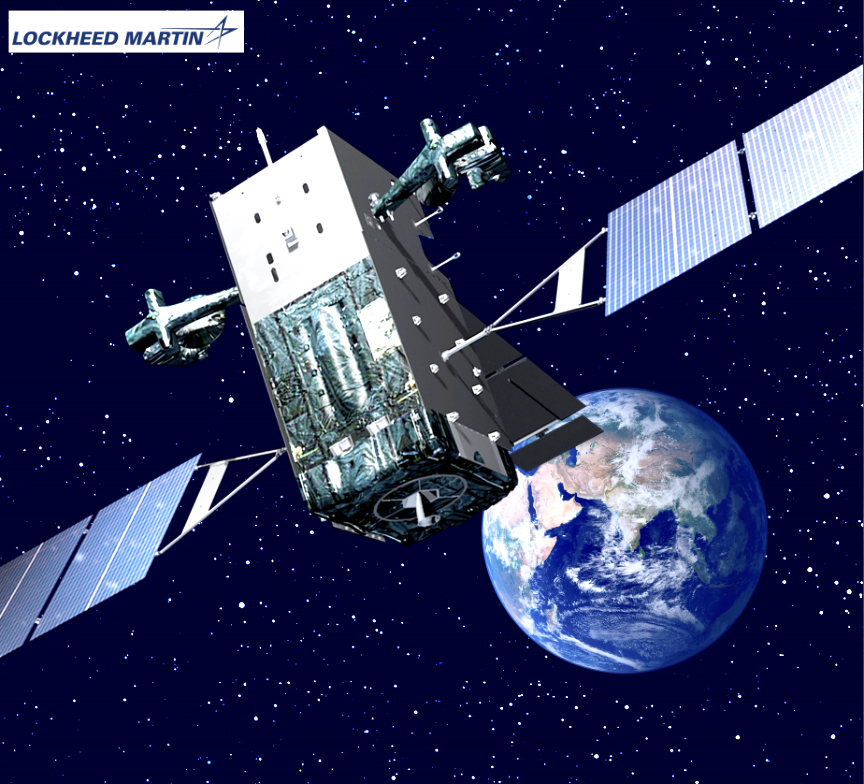
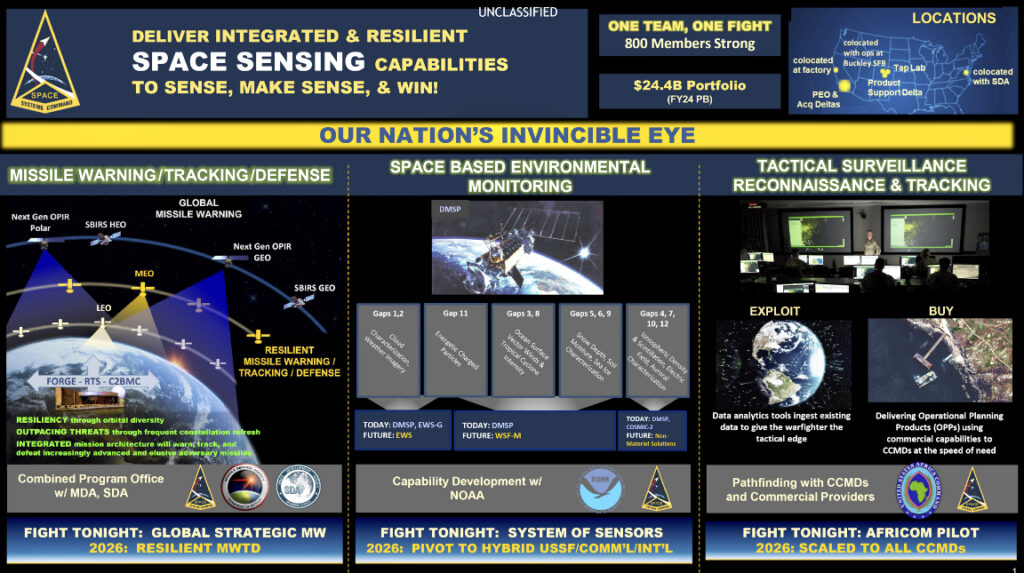
The SBIRS constellation provides critical capabilities to the warfighter by supplying near real-time, high-fidelity Overhead Persistent Infrared (OPIR) data around the world, enabling rapid response to threats. OPIR technology has played a critical role in the nation’s defense for over 60 years and remains essential to warfighting today and in the future.
“Strategic competitors and adversaries are rapidly developing and deploying more advanced and diverse missile capabilities around the world,” said Smith. “This includes detecting and reporting ballistic missiles, space launches, nuclear detonations, and infrared data with operational importance to the President, Secretary of Defense, combatant commanders, intelligence agencies, global warfighters, and allies. ViPER’s acceptance ensures the space-based missile warning community is postured and ready for Great Power Competition.”
SBIRS continues to enhance the Space Force’s ability to characterize the battlespace during conflict, provides reliable and timely warning for theater and strategic missile launches, and helps warfighters understand infrared heat signatures.