
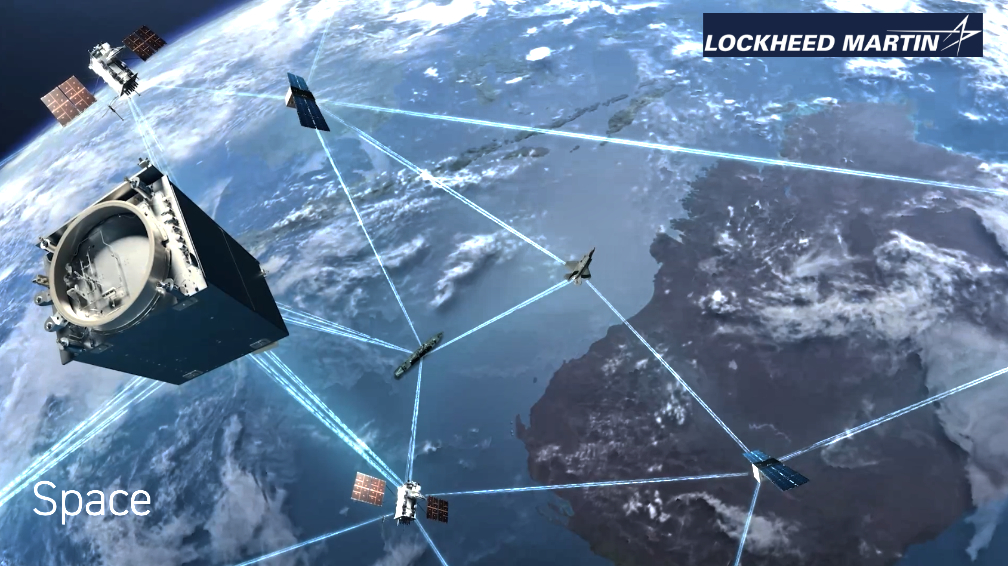
During the last six years, Lockheed Martin Space engineers have developed and established several technology demonstrations, including new mesh networking concepts with Pony Express 1 and rendezvous proximity operations with LM LINUSS.

In December of 2023, the company launched and showcased a new, wideband, Electronically Steerable Antenna (ESA) payload design.The goal of the ESA spacecraft, nicknamed “Tantrum,” was to test technology that will help Lockheed Martin customers operationalize their missions faster than ever through quicker calibration of on-orbit sensors.
The lessons learned…
- Align investments with responsive space customer needs: In conjunction with our launch partner Firefly Aerospace, the ESA spacecraft was delivered from our production facility in Colorado to Vandenberg Space Force Base. It was then integrated with the launch vehicle on an accelerated timeline in accordance with their established responsive space concept of operations. This was a new experience for Lockheed Martin, a valuable additional data point for Firefly Aerospace, and an opportunity for our customer to see Lockheed Martin in the responsive space arena.
- Agile response capability of the combined Lockheed Martin and Terran Orbital team: In response to a compressed mission, the team rapidly reassessed the planned timeline. Working in collaboration with our spacecraft bus provider, Terran Orbital, we accelerated our post-launch checkout and activation activities and conducted more than 100 on-orbit tests to evaluate our ESA payload’s performance and demonstrate mission capabilities.
- Rapid operationalization underscores mission flexibility and efficiency: The team operationalized the satellite bus and ESA payload in less than four days, allowing for completion of the mission’s objectives months ahead of schedule, as well as provided an example of the responsive space on-orbit timeline.
- Technology readiness is vital for diverse mission deployments: The spacecraft data confirmed that our scalable wideband ESA design operated on orbit as it had during ground testing, advancing the technology readiness level for numerous mission applications.
- Embrace the VLEO opportunity: While the ESA payload was not originally intended for operations in very low earth orbit (VLEO), the team successfully adapted to operating in this unique environment. This opportunity provided valuable experience and test data to inform our future spacecraft and mission designs.
- The impact and benefits of rapid development: We developed and delivered the ESA demonstration payload, from an early architecture to a flight-ready product, in 24 months. Executing on this accelerated schedule resulted in streamlining our technology development timelines, establishing new standards for speed in delivering new and proven products to customers.
- Leveraging industry partners help to “go fast”: The Lockheed Martin engineers, the Terran Orbital satellite bus team, and Firefly Aerospace’s Alpha rocket team collaboratively established a “go fast” approach in driving this demonstration forward. We will continue to use our resources and industry partners to reduce development timelines and ensure our customers are ahead of ready.
This just in: On March 4, 2024, Lockheed Martin launched their latest technology demonstration called Pony Express 2, which will flight test cloud networking concepts. For additional information about Pony Express 2, you can read more about it here.