

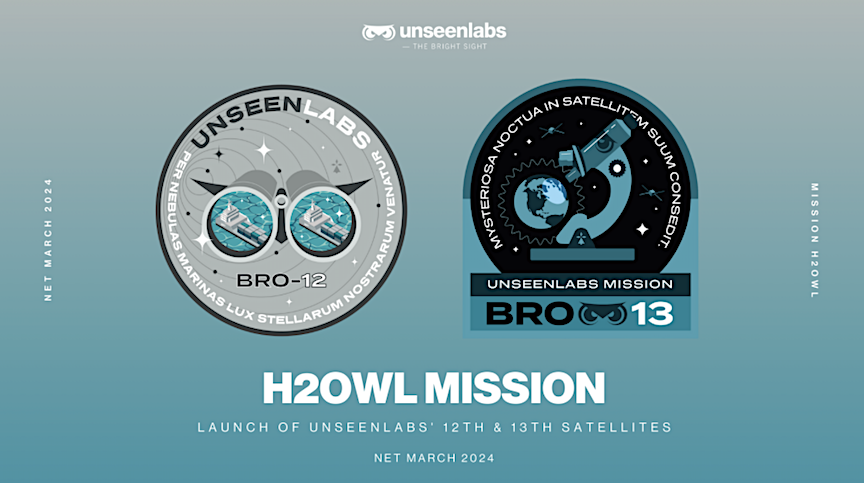
Unseenlabs is expanding via two new satellites — the BRO-12 and BRO-13 satellites that will launch NET March, as part of the Transporter-10 mission aboard SpaceX’s Falcon 9 rocket via Exolaunch from the Vandenberg Space Force Base in California.
The Unseenlabs satellite-based surveillance technology captures electromagnetic waves, specifically radio frequency signals, from space to detect passive emissions from ships’ electronic systems with technical and geographical precision.
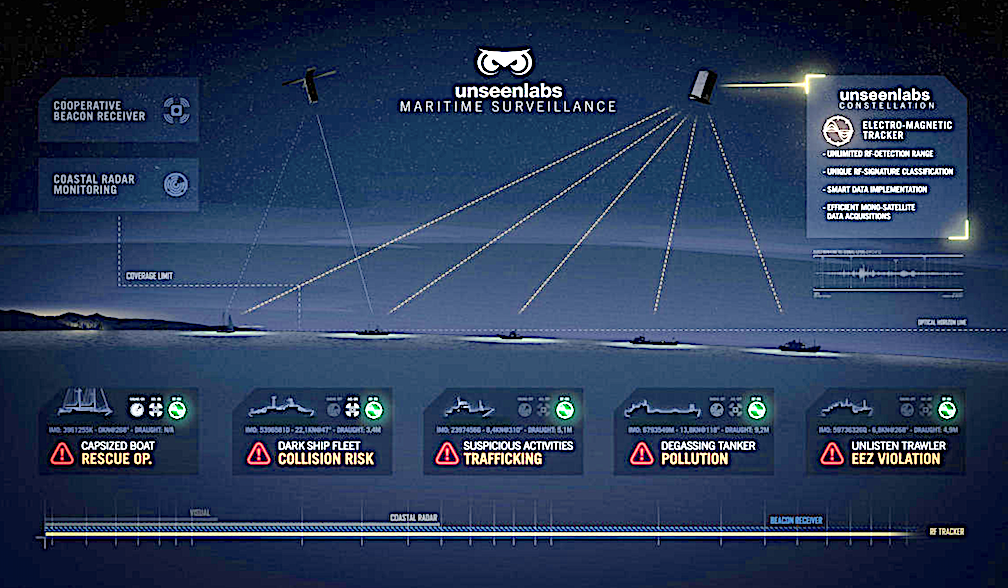
Vessels will deliberately turn off their transponder to evade surveillance and engage in illegal activities such IUU fishing, ocean dumping, overfishing, or other trafficking at sea. Using passive emissions from ships’ electronic systems to detect a vessel is a tamper-proof method of collecting data to locate them.
Prior to Unseenlabs, there was a significant gap in visibility within oceans to identify ships that disabled transponders. With the additional satellites, more governments, insurers, shipowners, and non-governmental organizations (NGO) now have access to radio frequency surveillance to identify ships seeking to evade detection, ensure maritime security, and protect the marine environment.
Unseenlabs can revisit each monitored area every four to six hours, and new satellites allow them to decrease the time between each visit to an area. They plan to launch more satellites in 2024, which will allow for real time monitoring of the seas. Unseenlabs plans to expand their constellation to 25 satellites by 2025.

“Unseenlabs is pleased to continue the expansion of its satellite constellation and capabilities. With these new satellites, we are providing increased intelligence and security solutions for both the government and commercial sectors,” said Clément Galic, co-founder and chief executive officer of Unseenlabs. “Unseenlabs is in a robust growth phase. In addition to the technical expansion brought by the additional satellites, our team is expanding, and our solutions are protecting in increasing numbers, the assets of commercial shipping companies, and protecting the environment.”