

UPDATE 3: SpaceX successfully launched Odysseus, a robotic lunar lander built by the Houston-based company Intuitive Machines, from the Falcon 9 rocket at NASA’s Kennedy Space Center (KSC) in Florida early this morning (February 15).

If Odysseus successfully touches down near the moon’s south pole on Feb. 22, it will be the first-ever private spacecraft to accomplish a lunar landing which hasn’t been since NASA’s Apollo 17 mission more than half a century ago.
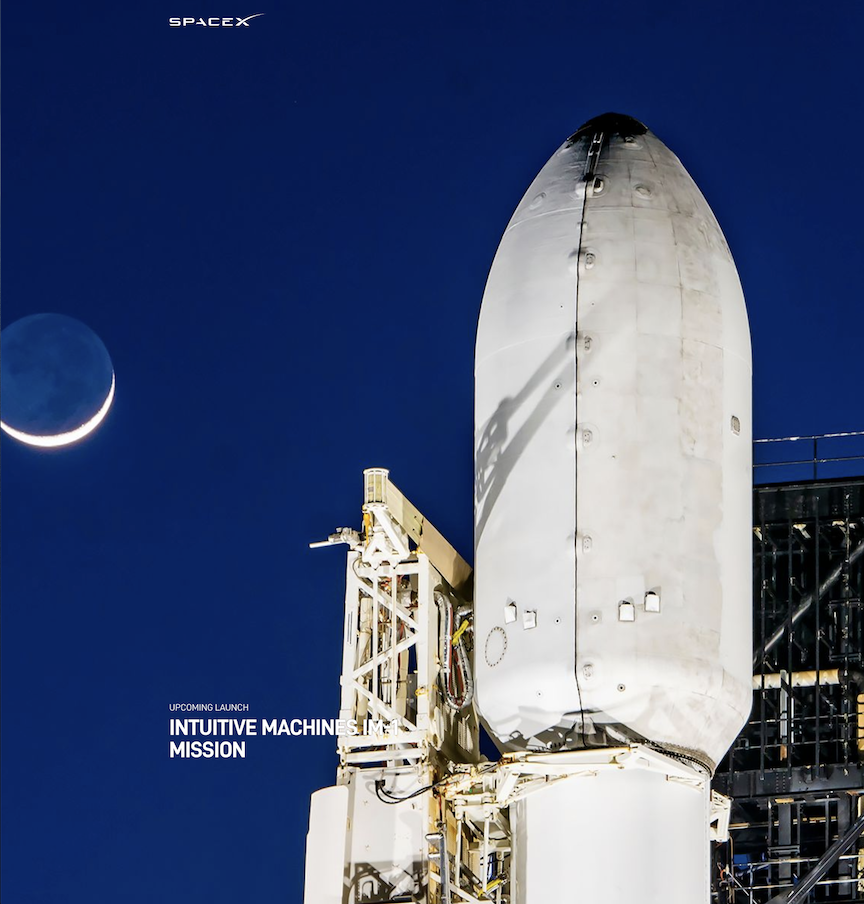
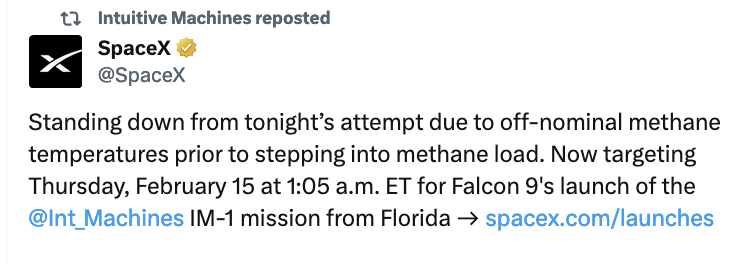
UPDATE 2: SpaceX and Intuitive Machines scrubbed the launch attempt originally planned for Wednesday morning. SpaceX is now targeting Thursday, February 15 for a Falcon 9 launch of the Intuitive Machines IM-1 mission to a lunar transfer orbit from Launch Complex 39A (LC-39A) at Kennedy Space Center in Florida. The instantaneous launch window is at 1:05 a.m. ET.
A live webcast of this mission will begin on X @SpaceX about 45 minutes prior to liftoff. Watch live.
Approximately two and a half hours prior to liftoff, teams will begin loading the lunar lander with cryogenic methane and oxygen on the pad ahead of stepping into propellant load for Falcon 9.
This is the 18th flight of the first stage booster supporting this mission, which previously launched GPS III-3, Turksat 5A, Transporter-2, Intelsat G-33/G-34, Transporter-6, and 12 Starlink missions. Following stage separation, the first stage will land on Landing Zone 1 (LZ-1) at Cape Canaveral Space Force Station in Florida.
SpaceX Preps for Wednesday’s launch
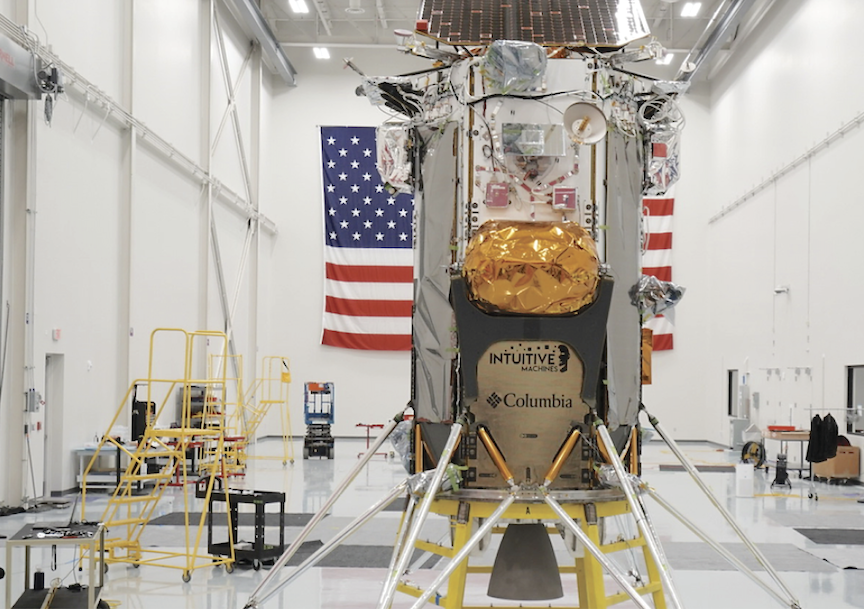
The mission, dubbed IM-1, has a 15-second launch window that opens at 1:05 a.m. EST (0605 UTC) at Launch Complex 39A. It will kick off a roughly eight-day journey to the Moon, culminating in a landing late in the day on Feb. 22.
A live webcast of this mission will begin on X @SpaceX about 45 minutes prior to liftoff. Watch live.
Approximately two and a half hours prior to liftoff, teams will begin loading the lunar lander with cryogenic methane and oxygen on the pad ahead of stepping into propellant load for Falcon 9.
This is the 18th flight of the first stage booster supporting this mission, which previously launched GPS III-3, Turksat 5A, Transporter-2, Intelsat G-33/G-34, Transporter-6, and 12 Starlink missions. Following stage separation, the first stage will land on Landing Zone 1 (LZ-1) at Cape Canaveral Space Force Station in Florida.