

UPDATE 3: Thursday, February 8 at 1:33 a.m. ET, Falcon 9 launched NASA’s PACE (Plankton, Aerosol, Cloud, ocean Ecosystem) mission to a sun-synchronous orbit from Space Launch Complex 40 (SLC-40) at Cape Canaveral Space Force Station in Florida.
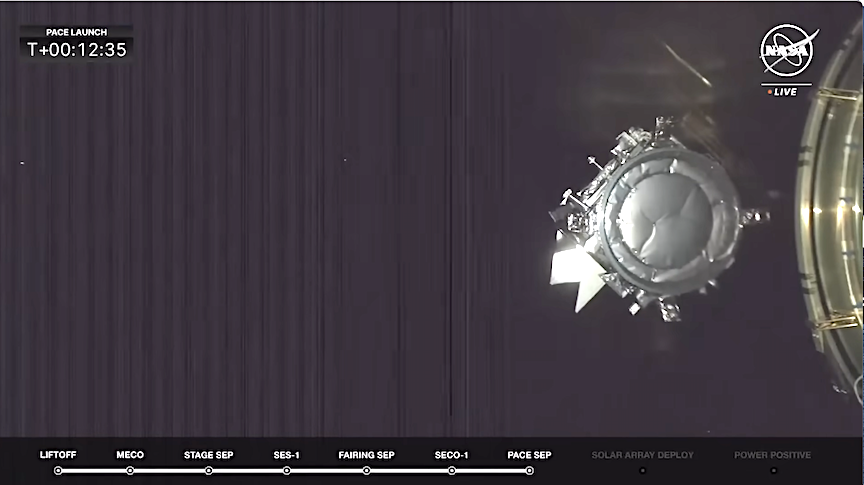
This was the fourth flight of the first stage booster supporting this mission, which previously launched Crew-7, CRS-29, and one Starlink mission.
NASA’s satellite mission to study ocean health, air quality, and the effects of a changing climate for the benefit of humanity launched successfully into orbit at 1:33 a.m. EST Thursday.

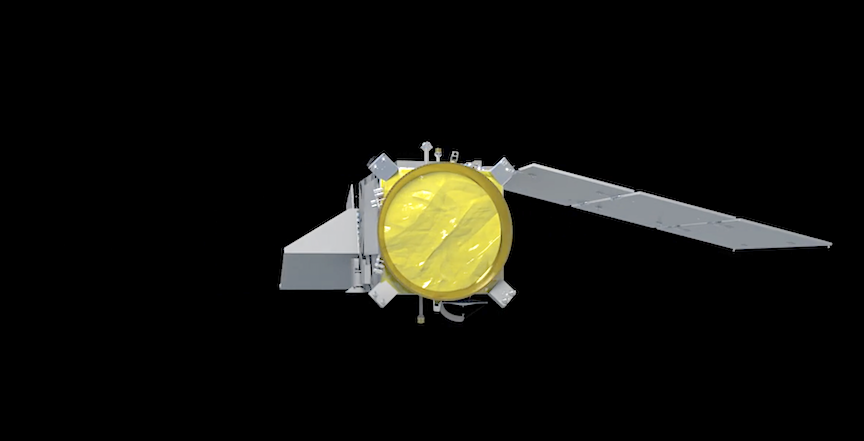
Known as PACE, the Plankton, Aerosol, Climate, ocean Ecosystem satellite, launched aboard a SpaceX Falcon 9 rocket from Space Launch Complex 40 at Cape Canaveral Space Force Station in Florida. NASA confirmed signal acquisition from the satellite about five minutes after launch, and the spacecraft is performing as expected.

Photo Credit: NASA Goddard/Denny Henry
“Congratulations to the PACE team on a successful launch. With this new addition to NASA’s fleet of Earth-observing satellites, PACE will help us learn, like never before, how particles in our atmosphere and our oceans can identify key factors impacting global warming,” said NASA Administrator Bill Nelson. “Missions like this are supporting the Biden-Harris Administration’s climate agenda and helping us answer urgent questions about our changing climate.”
From hundreds of miles above Earth, the PACE mission will study the impact of tiny, often invisible things: microscopic life in water and microscopic particles in the air.
The satellite’s hyperspectral ocean color instrument will allow researchers to measure oceans and other waterbodies across a spectrum of ultraviolet, visible, and near-infrared light. This will enable scientists to track the distribution of phytoplankton and — for the first time from space — identify which communities of these organisms are present on daily, global scales. Scientists and coastal resource managers can use the data to help forecast the health of fisheries, track harmful algal blooms, and identify changes in the marine environment.
The spacecraft also carries two polarimeter instruments, Hyper-Angular Rainbow Polarimeter #2 and Spectro-polarimeter for Planetary Exploration. These will detect how sunlight interacts with particles in the atmosphere, giving researchers new information on atmospheric aerosols and cloud properties, as well as air quality at local, regional, and global scales.
With the combination of the instrument and the polarimeters, PACE will provide insights into the interactions of the ocean and atmosphere, and how a changing climate affects these interactions.
“Observations and scientific research from PACE will profoundly advance our knowledge of the ocean’s role in the climate cycle,” said Karen St. Germain, director, Earth Science Division, Science Mission Directorate, at NASA Headquarters in Washington. “The value of PACE data skyrockets when we combine it with data and science from our Surface Water and Ocean Topography mission – ushering in a new era of ocean science. As an open-source science mission with early adopters ready to use its research and data, PACE will accelerate our understanding of the Earth system and help NASA deliver actionable science, data, and practical applications to help our coastal communities and industries address rapidly evolving challenges.”
“It’s been an honor to work with the PACE team and witness firsthand their dedication and tenacity in overcoming challenges, including the global pandemic, to make this observatory a reality,” said Marjorie Haskell, PACE program executive at NASA Headquarters. “The passion and teamwork are matched only by the excitement of the science community for the data this new satellite will provide.”
Earth’s oceans are responding in many ways to climate change — from sea level rise to marine heat waves to a loss of biodiversity. With PACE, researchers will be able to study climate change’s effects on phytoplankton, which play a key role in the global carbon cycle by absorbing carbon dioxide from the atmosphere and converting it into their cellular material. These tiny organisms drive larger aquatic and global ecosystems that provide critical resources for food security, recreation, and the economy.
“After 20 years of thinking about this mission, it’s exhilarating to watch it finally realized and to witness its launch. I couldn’t be prouder or more appreciative of our PACE team,” said Jeremy Werdell, PACE project scientist at NASA’s Goddard Space Flight Center in Greenbelt, Maryland. “The opportunities PACE will offer are so exciting, and we’re going to be able to use these incredible technologies in ways we haven’t yet anticipated. It’s truly a mission of discovery.”
NASA’s Launch Services Program, based at the agency’s Kennedy Space Center in Florida, managed the launch services for the mission. The PACE mission is managed by NASA Goddard, which also built and tested the spacecraft and the ocean color instrument. The Hyper-Angular Rainbow Polarimeter #2 was designed and built by the University of Maryland, Baltimore County, and the Spectro-polarimeter for Planetary Exploration was developed and built by a Dutch consortium led by Netherlands Institute for Space Research, Airbus Defense, and Space Netherlands.
UPDATE 2: PACE launch delay again as weather creates stand down
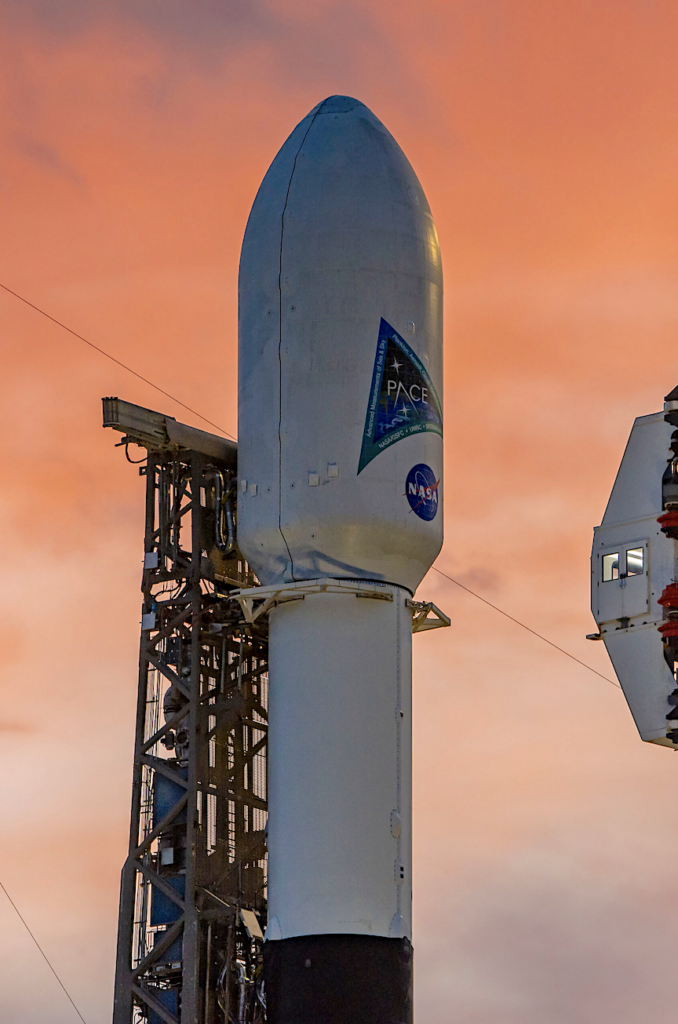
UPDATE 2: NASA and SpaceX are standing down from the Wednesday, February 7, launch of the agency’s Plankton, Aerosol, Cloud, ocean Ecosystem (PACE) mission due to ground winds preventing prelaunch checkouts. The team is targeting liftoff at 1:33 a.m. EST Thursday, February 8, on a SpaceX Falcon 9 rocket from Space Launch Complex 40 at Cape Canaveral Space Force Station in Florida.
The satellite and rocket remain healthy and ready for launch.
If needed, a backup opportunity is available Friday, February 9 at the same time.
A live webcast of this mission will begin on NASA+ and NASA Television about 45 minutes prior to liftoff.
This is the fourth flight of the first stage booster supporting this mission, which previously launched Crew-7, CRS-29, and one Starlink mission. Following stage separation, the first stage will land on Landing Zone 1 (LZ-1) at Cape Canaveral Space Force Station in Florida.
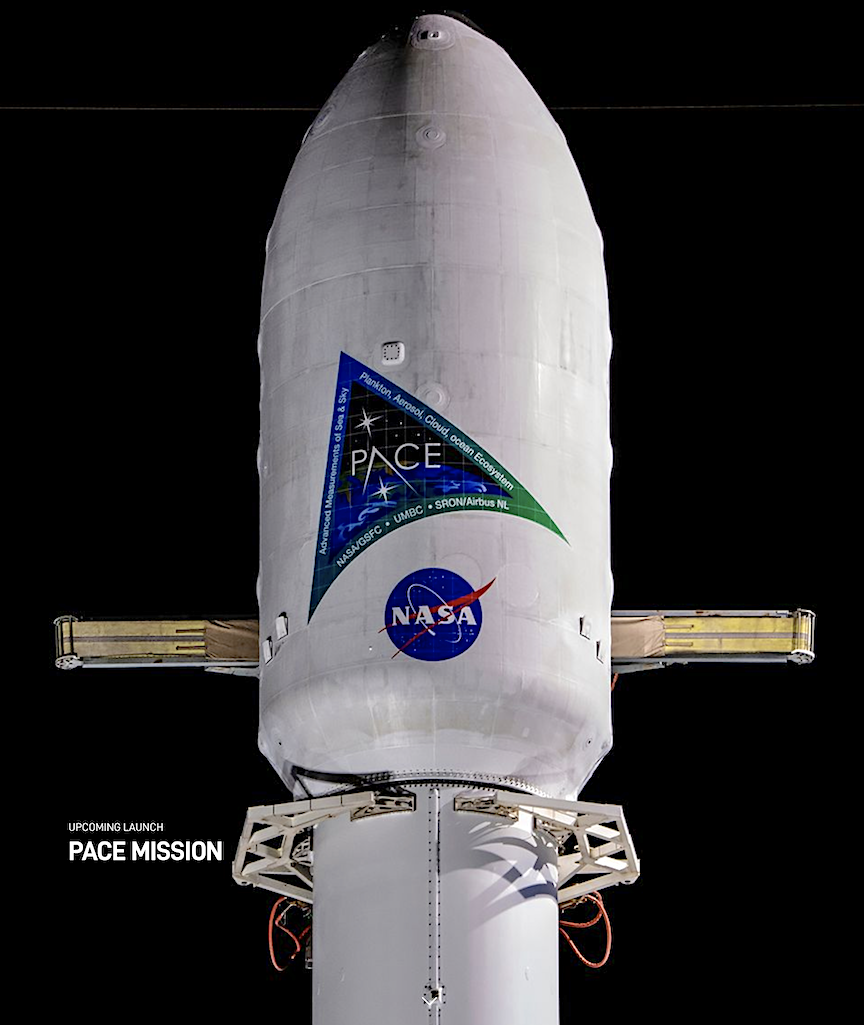
SpaceX is ready to keep pace despite weather and launch NASA’s PACE mission
SpaceX is targeting Wednesday, February 7 at 1:33 a.m. ET for a Falcon 9 launch of NASA’s PACE (Plankton, Aerosol, Cloud, ocean Ecosystem) mission to a sun-synchronous orbit from Space Launch Complex 40 (SLC-40) at Cape Canaveral Space Force Station in Florida. If needed, a backup opportunity is available Thursday, February 8 at the same time.
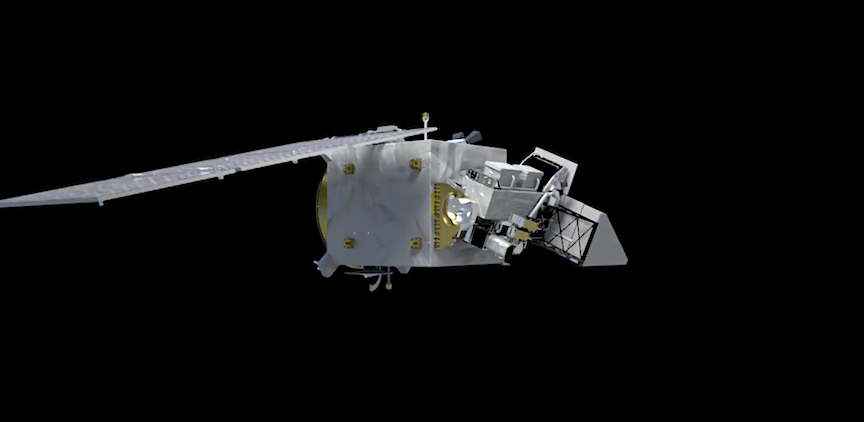
PACE is scheduled to fly from Space Launch Complex 40 at the Cape Canaveral Space Force Station on Wednesday, February 7, at 1:33 AM EST (06:33 UTC), during an instantaneous launch window. The flight was previously scheduled for February 6 but was delayed due to unfavorable weather conditions. Falcon 9 will take a southbound trajectory to a Sun-synchronous polar orbit that allows for the satellite to see a given spot on Earth at the same time every day.
A live webcast of this mission will begin on NASA+ and NASA Television about 45 minutes prior to liftoff.
This is the fourth flight of the first stage booster supporting this mission, which previously launched Crew-7, CRS-29, and one Starlink mission. Following stage separation, the first stage will land on Landing Zone 1 (LZ-1) at Cape Canaveral Space Force Station in Florida. January was a record-setting month featuring 10 launches for SpaceX and this will be a busy February as well.