
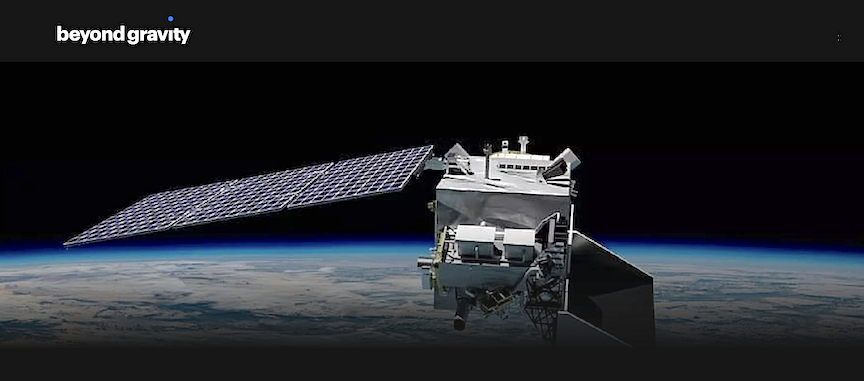
A new NASA climate satellite will be launched into space to monitor the health of the world’s oceans and air quality. A navigation receiver from Europe’s leading space supplier Beyond Gravity will determine the satellite’s position in space. Thus, making the climate data sent to Earth more precise. One of the three instruments on the NASA satellite is protected by thermal insulation from Beyond Gravity (formerly RUAG Space).
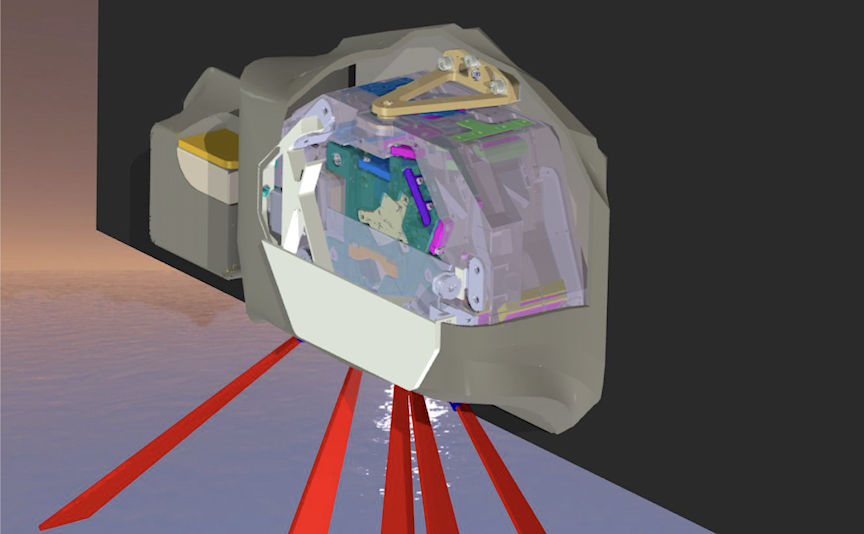
Copyright: NASA.
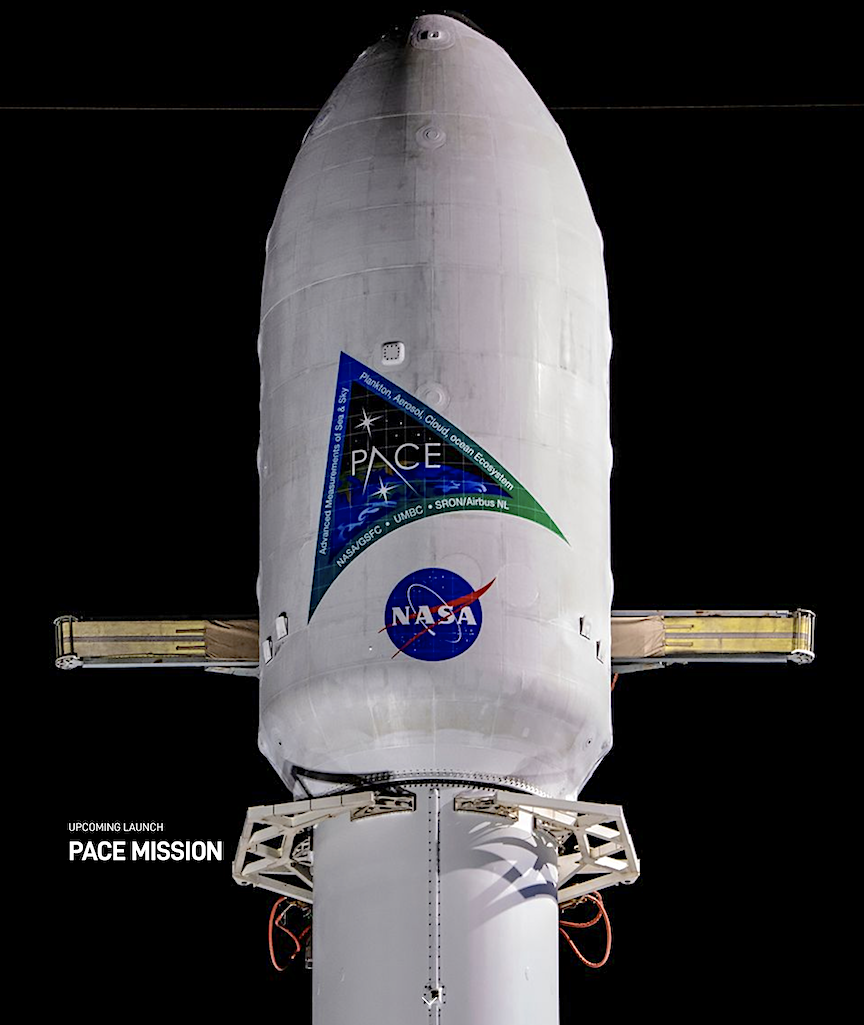
NASA is using a navigation receiver from Beyond Gravity, a space supplier for a new climate protection satellite that is due to be launched into space on February 6 or thereabouts. NASA’s PACE climate mission uses satellite technology to monitor changes in global marine biology, aerosols (small particles floating in the atmosphere) and clouds. PACE will provide important information about aerosols such as dust, pollen and smoke. These particles can affect air quality and lead to asthma and respiratory diseases in humans. The centimeter-precise position of the satellite in space is determined with the help of technology from Beyond Gravity. The more precise the positioning, the more accurate the data that the satellite delivers. The satellite will be launched from Cape Canaveral Spaceport in Florida on board a SpaceX rocket.
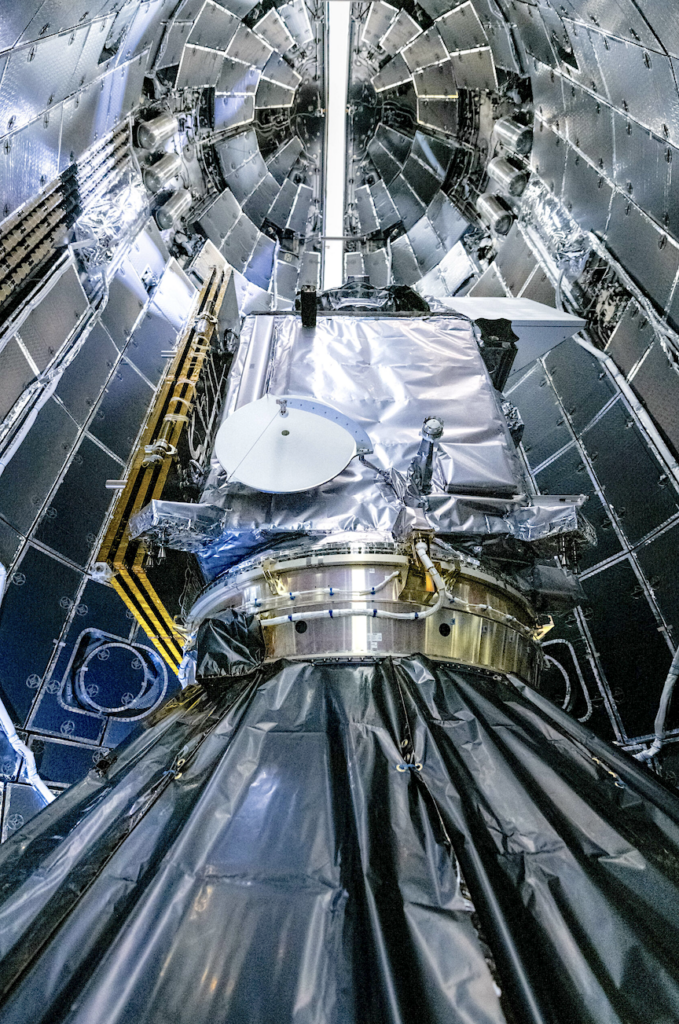
PACE stands for “Plankton, Aerosol, Cloud, Ocean Ecosystem” and will provides a better insight into ocean health by measuring the distribution of phytoplankton. Phytoplankton consists of tiny plants and algae that support the marine food web.
The PACE climate satellite also observes aerosols. These are small particles floating in the atmosphere. Examples include smoke from fires, desert dust, volcanic ash from eruptions and urban haze from industrial activities. NASA is interested in aerosols because of climate change, health and air quality, among other things. For example, PACE will provide important information on aerosols such as dust, pollen, smoke and haze. These particles can significantly affect air quality and lead to asthma and respiratory diseases in people at risk.
Beyond Gravity, headquartered in Zurich, Switzerland, is a supplier to both established customers and New Space customers. Currently, the company has 25 navigation receivers that determine the position of satellites in space. The navigation receivers are being developed and built at its site in Vienna, Austria. In addition, thermal insulation from Beyond Gravity, made at its site in Austria, protects an instrument on the NASA satellite from the cold and heat in space. The instrument measures the intensity of the sunlight that is reflected back into space from the Earth’s atmosphere, the land surface and the oceans.
Observing clouds from space is important for providing data for weather forecasting and climate monitoring, for example. Clouds reflect the visible light of the sun and can capture the heat radiation emitted by the Earth. A change in cloud cover can influence the Earth’s temperature balance. In future, PACE observations of aerosols and clouds will be used by industry, universities, authorities and scientists to better predict the weather and climate. The PACE climate satellite was built by NASA’s development team at the Goddard Space Flight Center (Maryland, near Washington DC).