
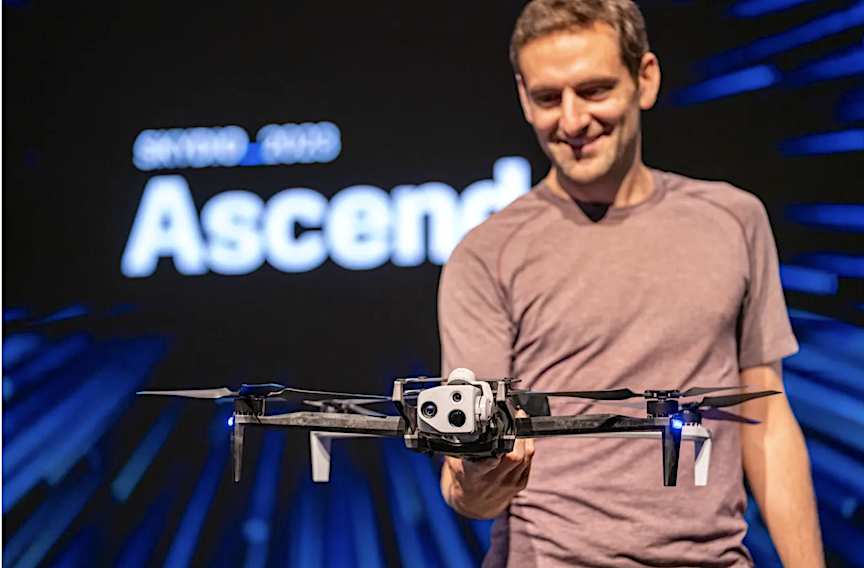
Skydio X10, a drone designed for first responders, infrastructure operators, and the US and allied militaries around the world has been released. It has the sensors to capture every detail of the data that matters and the AI-powered autonomy to put those sensors wherever they are needed. Never before has there been more capability and versatility in a smaller and easier-to-use package.
This drone is the culmination information taken over the 10 ten years delivering over 40,000 intelligent flying machines and serving over 1,500 enterprise and government organizations. It’s the first drone designed from the ground up with full insight into the needs of professional users in some of the most high-stakes scenarios. For the first time, world-class hardware, sensors, modularity, connectivity, is coming together as well as 10x increases in onboard compute power and navigation camera resolution in an airframe that can go from a backpack to airborne in less than 40 seconds.
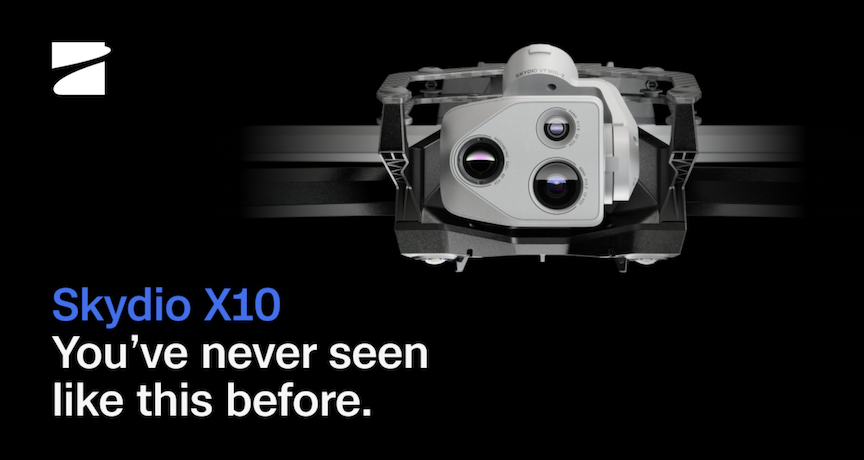
X10 fits right into existing drone operating procedures, but it also opens up a future of more scalable operating paradigms: 24×7 operations with NightSense autonomous flight in zero-light environments, fully automated data capture with 3D Scan, flight control by web browser from anywhere in the world via onboard 5G and Remote Flight Deck, and 1-operator-to-many-drone controls. These capabilities in the future would enable drones to become basic infrastructure, providing a perfect digital picture.
X10 brings these possibilities to life today. For example:
- Using drones to respond to 911 calls – a concept known as Drone as First Responder or DFR – will have a transformative impact on public safety. X10 is the tool to get started with DFR. The X10 can be launched on scene by officers on patrol, just as they do today, but then taken over and flown remotely, providing real-time aerial support to those on the ground, and enabling agencies that deploy it to start leveraging remote operations.
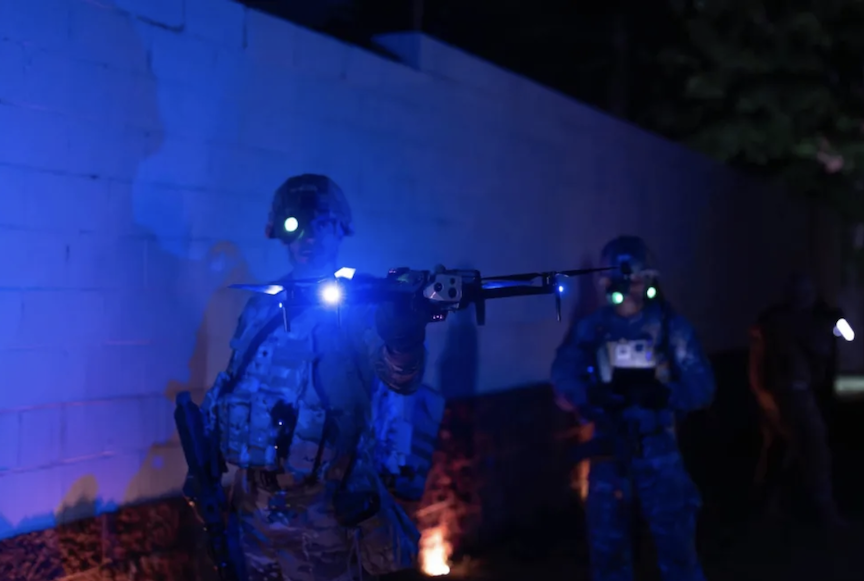
- Ukraine’s courageous defense against Russia’s invasion has illustrated how critical drones are, but it’s also demonstrated that on a modern battlefield GPS and radio link jamming are the norm. Small, smart, and survivable drones are the antidote. X10D (a model available exclusively for military operators and federal agencies) features a multi-band radio with dynamic frequency selection making it link jamming-resistant, and its visual navigation system means that it can fly fully autonomously without GPS.
- Critical infrastructure operators from State Departments of Transportation to Telecommunications companies to Energy Utilities have started using drones to inspect their assets. X10’s onboard AI and autonomy lowers the training barrier, enabling anyone in the organization to take full advantage of X10’s best-in-class sensors to detect everything from a 0.1mm crack in concrete to a failed solar cell via thermal inspection.
As drones have become increasingly important for critical industries, it’s also critical not to rely on systems beholden to the policies of foreign adversaries. Skydio started investing in US-based manufacturing capacity in 2016 at a time when many had written off the possibility of a US-drone manufacturing company. The company will be building X10s at a 37,000-square-foot Hayward, California facility.
The company has developed a robust set of services and support offerings, from training to regulatory consulting, and they’ve supported their customers in getting over 20 waivers for beyond visual line of sight (BVLOS) flight. There is also Skydio Extend, a set of APIs, workflows, and integrations that make Skydio an open platform and deliver end-to-end solutions for customers with partners like Axon, ESRI, and Trimble.
The success of X10 won’t be defined by specs or capabilities; it will be defined by the impact it makes for the customers and the civilization they power and protect.