
• Skip to primary navigation
  • Skip to main content
  • Skip to primary sidebar
  • Skip to secondary sidebar
  • NEWS:
  • SatNews
  • SatMagazine
  • MilSatMagazine
  • SmallSat News
  • |     EVENTS:
  • SmallSat Symposium
  • Satellite Innovation
  • MilSat Symposium
  • SmallSat Europe

SatNews

  • LATEST
  • EXPLORE ⌄
    • Missions & Constellations
    • Business & Finance
    • Military & Defense
    • Launch
    • Software Automation & Ground Systems
    • Government & Regulation
    • Services & Applications
  • Magazines
  • Events
  • Jobs
  • Calendar ⌄
    • IN PERSON
    • VIRTUAL
  • Subscribe

Canadian Space Agency: SCISAT — 20 years of discovery

August 9, 2023

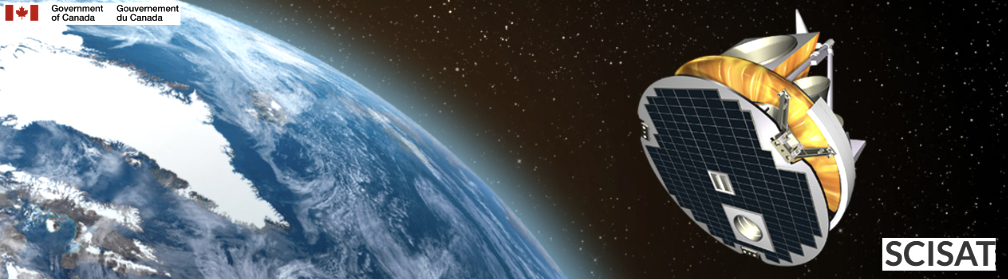
The Canadian Space Agency (CSA) is celebrating the 20th anniversary of the launch of SCISAT, an entirely Canadian satellite mission designed to help study the ozone layer and the substances that deplete it.

Originally intended to last two years, the satellite has far exceeded expectations. SCISAT is still operational and performing as it should and all signs point to continued success.

SCISAT measures 70 different substances in the atmosphere and establishes profiles of temperature and wind speeds. The science teams in charge of data processing are continually improving their methods in order to validate the data and extract even more information from it.

Thanks to recent advances, SCISAT has been able to detect a number of hydrofluorocarbons (HFCs). These powerful greenhouse gases are controlled substances. In addition, SCISAT shed light on a new way in which stratospheric ozone is being destroyed, involving aerosols and chlorine. This discovery was made after the 2019–2020 Australian bushfires, during which a large amount of smoke was injected into the stratosphere.

In January 2022, SCISAT was used to detect and monitor water vapor injected into the stratosphere when the Hunga Tonga volcano erupted. It was found that the water was from marine sources rather than the atmosphere.

SCISAT data on many molecules can be studied to better understand atmospheric chemistry, which is directly related to climate change. By measuring greenhouse gases and aerosols (fine particles), the satellite provides a deeper understanding of the atmosphere’s energy balance, a key source of uncertainty in climate models.

Filed Under: International Space Agreements

Primary Sidebar

Coverage

  • Missions & Constellations
  • Business & Finance
  • Military & Defense
  • Launch
  • Software Automation & Ground Systems
  • Government & Regulation
  • Services & Applications

Most Read Stories

  • Russia ‘intercepts Europe's key satellites’ placing NATO satellite at risk
  • Germany boosts military space program with satellites and lasers
  • Starlink vs AST SpaceMobile: Will the winner take it all?
  • ESA Expands IRIS² Low-LEO Component and Introduces Industrialization Cost Reimbursements
  • AT&T and Amazon Forge a Giant in the Skies: The Multi-Layered Strategy Behind the Kuiper-Cloud Pact

About Satnews

  • Contacts
  • History

Archives

Secondary Sidebar

We use cookies to ensure that we give you the best experience on our website. If you continue to use this site we will assume that you are happy with it.
x
Sign up Now (For Free)
Access daily or weekly satellite news updates covering all aspects of the commercial and military satellite industry.
Invalid email address
Notify Me Regarding ( At least one ):
We value your privacy and will not sell or share your email or other information with any other company. You may also unsubscribe at anytime.

Click Here to see our full privacy policy.
Thanks for subscribing!