
• Skip to primary navigation
  • Skip to main content
  • Skip to primary sidebar
  • Skip to secondary sidebar
  • NEWS:
  • SatNews
  • SatMagazine
  • MilSatMagazine
  • SmallSat News
  • |     EVENTS:
  • SmallSat Symposium
  • Satellite Innovation
  • MilSat Symposium
  • SmallSat Europe

SatNews

  • LATEST
  • EXPLORE ⌄
    • Missions & Constellations
    • Business & Finance
    • Military & Defense
    • Launch
    • Software Automation & Ground Systems
    • Government & Regulation
    • Services & Applications
  • Magazines
  • Events
  • Jobs
  • Calendar ⌄
    • IN PERSON
    • VIRTUAL
  • Subscribe

Gilmour Space is offering a tech demo satellite mission from Australia in 2024

October 23, 2022

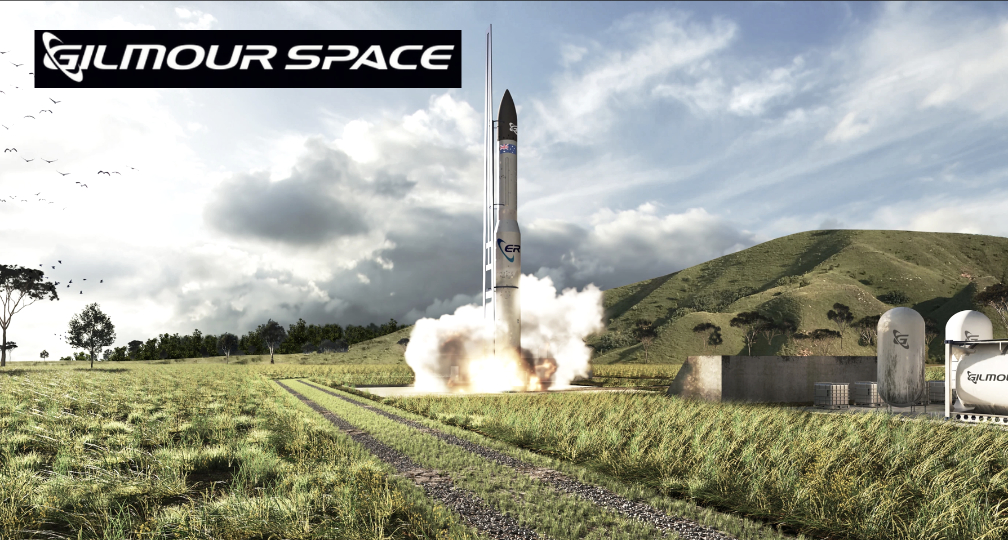
Australian rocket and satellite builder, Gilmour Space Technologies, is offering a new rideshare mission into LEO — this time, on one of the company’s G-class satellite buses (or G-Sat) scheduled to be launched in late 2024.

The G-Sat is a modular 100 kg. satellite bus or platform being developed by Gilmour Space in collaboration with Griffith University that can host multiple payloads, such as scientific instruments, thrusters, sensors, processors and other new space technologies.

Last month, Gilmour Space announced its first ‘Caravan’ to space, a dedicated rideshare mission on an Eris rocket that will launch from Australia in late 2024. “With this new mission, we can now say that we’ll have a ‘Kangaroo’ on board.”

“We’re calling this our Kangaroo-1 mission, and it will be capable of carrying 125U (or 125 units) of payload volume into a mid-inclination orbit. That is a lot of new space technologies that can be launched and tested in a single mission,” said Shaun Kenyon, Program Manager for Satellites at Gilmour Space — 125U is roughly equivalent to the size, weight and volume of a large microwave oven.

“Our Kangaroo-1 mission is aimed at customers with individual or specific payloads (say, an IoT receiver or hyperspectral camera) who want to ‘leap ahead’ in rapidly proving their tech without the risks and costs of a full satellite mission,” added Mr. Kenyon. “It will allow multiple organisations to gain flight experience, validate a business model, and develop their technology faster at a competitive price. Sharing a common G-Sat architecture also means that customers will be less restricted by a CubeSat volume (typically 1U to 12U), have access to more power, and that mission-level efforts and costs can be shared over many payloads.“”

Filed Under: International Space Agreements, Launch Providers Tagged With: Featured

Primary Sidebar

Coverage

  • Missions & Constellations
  • Business & Finance
  • Military & Defense
  • Launch
  • Software Automation & Ground Systems
  • Government & Regulation
  • Services & Applications

Most Read Stories

  • Russia ‘intercepts Europe's key satellites’ placing NATO satellite at risk
  • Germany boosts military space program with satellites and lasers
  • Starlink vs AST SpaceMobile: Will the winner take it all?
  • ESA Expands IRIS² Low-LEO Component and Introduces Industrialization Cost Reimbursements
  • AT&T and Amazon Forge a Giant in the Skies: The Multi-Layered Strategy Behind the Kuiper-Cloud Pact

About Satnews

  • Contacts
  • History

Archives

Secondary Sidebar

We use cookies to ensure that we give you the best experience on our website. If you continue to use this site we will assume that you are happy with it.
x
Sign up Now (For Free)
Access daily or weekly satellite news updates covering all aspects of the commercial and military satellite industry.
Invalid email address
Notify Me Regarding ( At least one ):
We value your privacy and will not sell or share your email or other information with any other company. You may also unsubscribe at anytime.

Click Here to see our full privacy policy.
Thanks for subscribing!