

• Skip to primary navigation
  • Skip to main content
  • Skip to primary sidebar
  • Skip to secondary sidebar
  • NEWS:
  • SatNews
  • SatMagazine
  • MilSatMagazine
  • SmallSat News
  • |     EVENTS:
  • SmallSat Symposium
  • Satellite Innovation
  • MilSat Symposium
  • SmallSat Europe

SatNews

  • LATEST
  • EXPLORE ⌄
    • Missions & Constellations
    • Business & Finance
    • Military & Defense
    • Launch
    • Software Automation & Ground Systems
    • Government & Regulation
    • Services & Applications
  • Magazines
  • Events
  • Calendar ⌄
    • IN PERSON
    • VIRTUAL
  • Subscribe

Initial Verifications Of The QZS-1R Successfully Completed By Mitsubishi Electric

March 25, 2022

Mitsubishi Electric Corporation (TOKYO: 6503) has completed initial verification of the functions and performance of equipment aboard the QZS-1R satellite, which the company built and delivered to the Cabinet Office of Japan and is now in quasi-zenith orbit as the successor to the original Michibiki Quasi-Zenith Satellite (QZS-1).
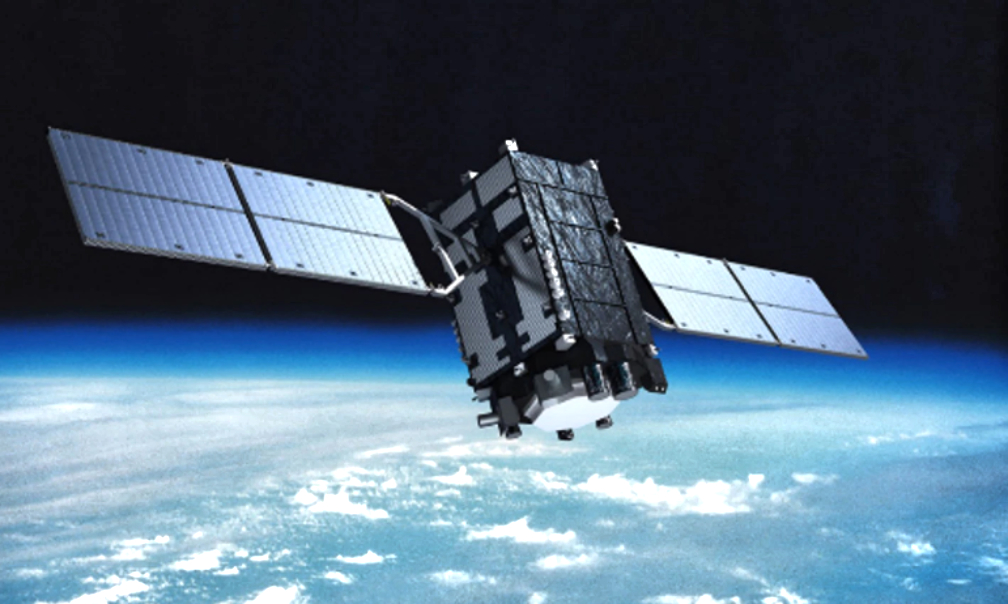

Artistic rendition of the QZS-1R satellite, courtesy of Mitsubishi Electric.

With Quasi-Zenith Satellite System Services Inc. also having completed testing of related ground systems, the Cabinet Office has started launching various positioning services via the QZS-1R.

Mitsubishi Electric, in addition to supporting these services, will continue developing satellite systems that the company intends to provide for forthcoming satellites (QZS-5 to QZS-7) that will support advanced, sustainable, high-precision positioning in Japan.

QZS-1R emblem.

The QZS-1R was launched on October 26, 2021 from Tanegashima Island in Kagoshima Prefecture. Compared to the first Michibiki satellite, the QZS-1R has improved durability that is expected to extend the satellite’s design life by about five years compared to its predecessor. The QZS-1R, together with the QZS-2, 3 and 4 (all launched in 2017), will support positioning, high-precision positioning augmentation and other satellite services.

QZSS is a Japanese satellite positioning system composed mainly of satellites in quasi-zenith orbits (QZO). However, the term “Quasi-Zenith Satellite (QZS)” can refer to both satellites in QZO and geostationary orbits (GEO). For that reason, the name “QZO satellite” is used when it is necessary to specifically refer to satellites in QZO. Satellite positioning systems use satellite signals to calculate position information. One famous example is the American Global Positioning System (GPS); the QZSS is sometimes called the “Japanese GPS.”

Filed Under: Ground Segment & Teleports, International Space Agreements Tagged With: Featured

Primary Sidebar

Coverage

  • Missions & Constellations
  • Business & Finance
  • Military & Defense
  • Launch
  • Software Automation & Ground Systems
  • Government & Regulation
  • Services & Applications

Most Read Stories

  • MDA Adds 340 Vendors to $151 Billion SHIELD Enterprise in Third Major Tranche
  • As SpaceX Targets 50,000 Starlink Satellites, China Files for 200,000-Unit Mega-Constellation
  • Rivada Space Networks: Time for an announcement?
  • Amentum Mitie Pacific Wins $656M Contract for Strategic Space Hub at Diego Garcia
  • SpaceX IPO Speculation Peaks as Analysts Weigh 2026 Valuation and Strategic Consolidation

About Satnews

  • Contacts
  • History

Archives

Secondary Sidebar

We use cookies to ensure that we give you the best experience on our website. If you continue to use this site we will assume that you are happy with it.
x
Sign up Now (For Free)
Access daily or weekly satellite news updates covering all aspects of the commercial and military satellite industry.
Invalid email address
Notify Me Regarding ( At least one ):
We value your privacy and will not sell or share your email or other information with any other company. You may also unsubscribe at anytime.

Click Here to see our full privacy policy.
Thanks for subscribing!