• Skip to primary navigation
  • Skip to main content
  • Skip to primary sidebar
  • Skip to secondary sidebar
  • NEWS:
  • SatNews
  • SatMagazine
  • MilSatMagazine
  • SmallSat News
  • |     EVENTS:
  • SmallSat Symposium
  • Satellite Innovation
  • MilSat Symposium
  • SmallSat Europe

SatNews

  • LATEST
  • EXPLORE ⌄
    • Missions & Constellations
    • Business & Finance
    • Military & Defense
    • Launch
    • Software Automation & Ground Systems
    • Government & Regulation
    • Services & Applications
  • Magazines
  • Events
  • Jobs
  • Calendar ⌄
    • IN PERSON
    • VIRTUAL
  • Subscribe

Orbital Assembly Corporation Recognized By NASA’s Commercial LEO Development Program

December 6, 2021

“If we are going to have large numbers of people experience the Overview Effect over long periods of time, we are going to need to have the right kind of infrastructure established throughout the solar ecosystem. That’s where OAC comes in and that’s why their mission is so important to our future.”
Frank White, OAC advisor & author of The Overview Effect

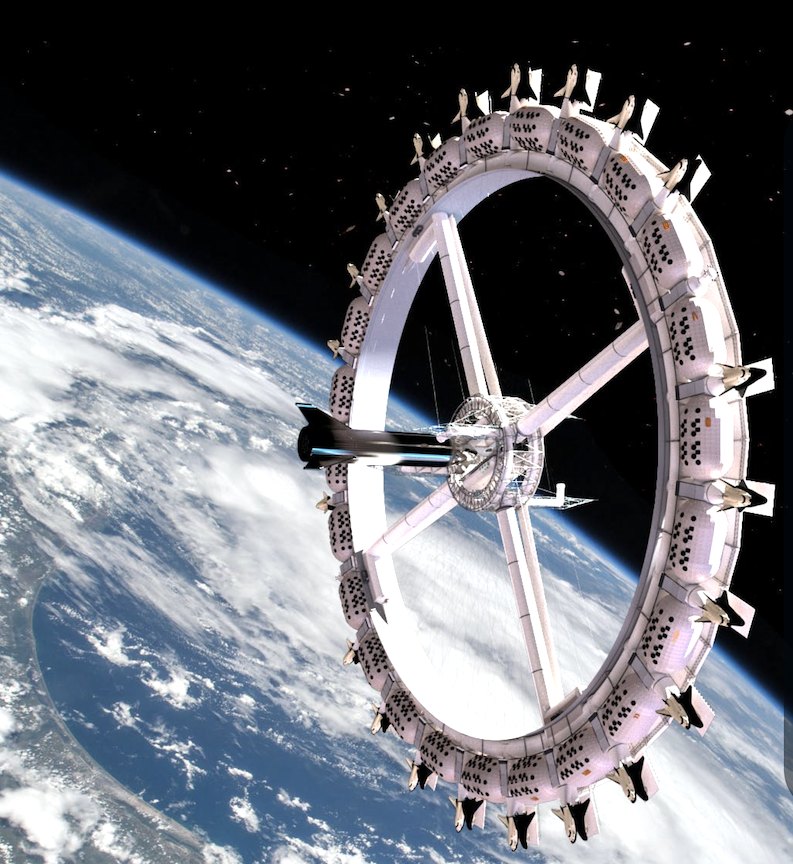
Orbital Assembly Corporation (OAC) described as the leader in providing low gravity technologies enabling humanity to work, play and thrive in the space ecosystem, has received positive feedback in NASA’s Commercial Low Earth Orbit Development Program (CLD) which announced funded providers yesterday.

The CLD program is part of NASA’s broader LEO commercialization strategy, tied to its plans to transition from the International Space Station to one or more commercial stations. Earlier this year, Orbital Assembly was the first company to announce a low Earth orbit space station with artificial gravity, similar to that on the moon.

According to NASA’s assessment of OAC in awarding contracts, “(OACs) significant strengths included a flight demonstration of automated on-orbit assembly of truss. Its strengths included more than two crew members at initial operations; modularity to increase flexibility and growth potential for the CLD; a design that provides capacity for large payloads; an artificial gravity proposal that includes external payloads, which could benefit future technology development; a maintenance crew for the CLD; and strong emergency response and redundancy planning.”

“I’m immensely proud of our team that turned around a robust, detailed CLD plan in the very narrow six-week window that NASA provided during the summer for proposal submission,” says Rhonda Stevenson, chief executive officer. “Although we didn’t win, this program advanced our time to an operable Pioneer Space Station by several years and our competitive advantage using artificial gravity. We congratulate Blue Origin, Nanoracks and Northrup Grumman on their contract awards.”

Filed Under: Contracts & Commercial Deals, Exploration & Science Missions

Primary Sidebar

Coverage

  • Missions & Constellations
  • Business & Finance
  • Military & Defense
  • Launch
  • Software Automation & Ground Systems
  • Government & Regulation
  • Services & Applications

Most Read Stories

  • SpaceX IPO Speculation Peaks as Analysts Weigh 2026 Valuation and Strategic Consolidation
  • Starlink vs AST SpaceMobile: Will the winner take it all?
  • Eutelsat prepares for its next expansion
  • FY26 Defense Bill: Congress Unlocks Billions for ‘Golden Dome’ and Restores SDA Tranche 3
  • ESA Expands IRIS² Low-LEO Component and Introduces Industrialization Cost Reimbursements

About Satnews

  • Contacts
  • History

Archives

Secondary Sidebar

We use cookies to ensure that we give you the best experience on our website. If you continue to use this site we will assume that you are happy with it.
x
Sign up Now (For Free)
Access daily or weekly satellite news updates covering all aspects of the commercial and military satellite industry.
Invalid email address
Notify Me Regarding ( At least one ):
We value your privacy and will not sell or share your email or other information with any other company. You may also unsubscribe at anytime.

Click Here to see our full privacy policy.
Thanks for subscribing!